It’s hard to pinpoint when, exactly, my unravelling began. My father’s death in mid-June 2023, after three gruelling weeks of trying to determine how severely his brain had been damaged by an episode of cardiac arrest, was a contributing factor. But it was less the death itself – something I had structure and community support to process – and more the long-term project of grieving that started to eat away at me. As the days turned into weeks and months, I felt less sure of what I was supposed to be doing, how I was supposed to be processing my pain. The attack in Israel and the war on Gaza took things even further. Suddenly, my personal grief was compounded by a much more public grieving process, one that dominated the headlines with unimaginable horror stories. Everywhere I looked, I was surrounded by death, loss and suffering, and I struggled to make sense of it all.
As winter rolled into spring, my troubles multiplied. In May, I learned from a stranger’s social media post that a friend had died after a year-long battle with cancer, one he’d kept secret from everyone but his closest family members. A week and a half later, I learned that another friend – my primary source of emotional support during that first year of grieving my father – had spent nearly a year lying to me about every aspect of his life, a violation that ultimately ended our friendship. And then there was my mother’s health: a year after my family had gathered in an ICU, desperate for good news about my father’s chances, I was in another emergency department with my mother, after post-surgery complications triggered a life-threatening amount of blood loss.
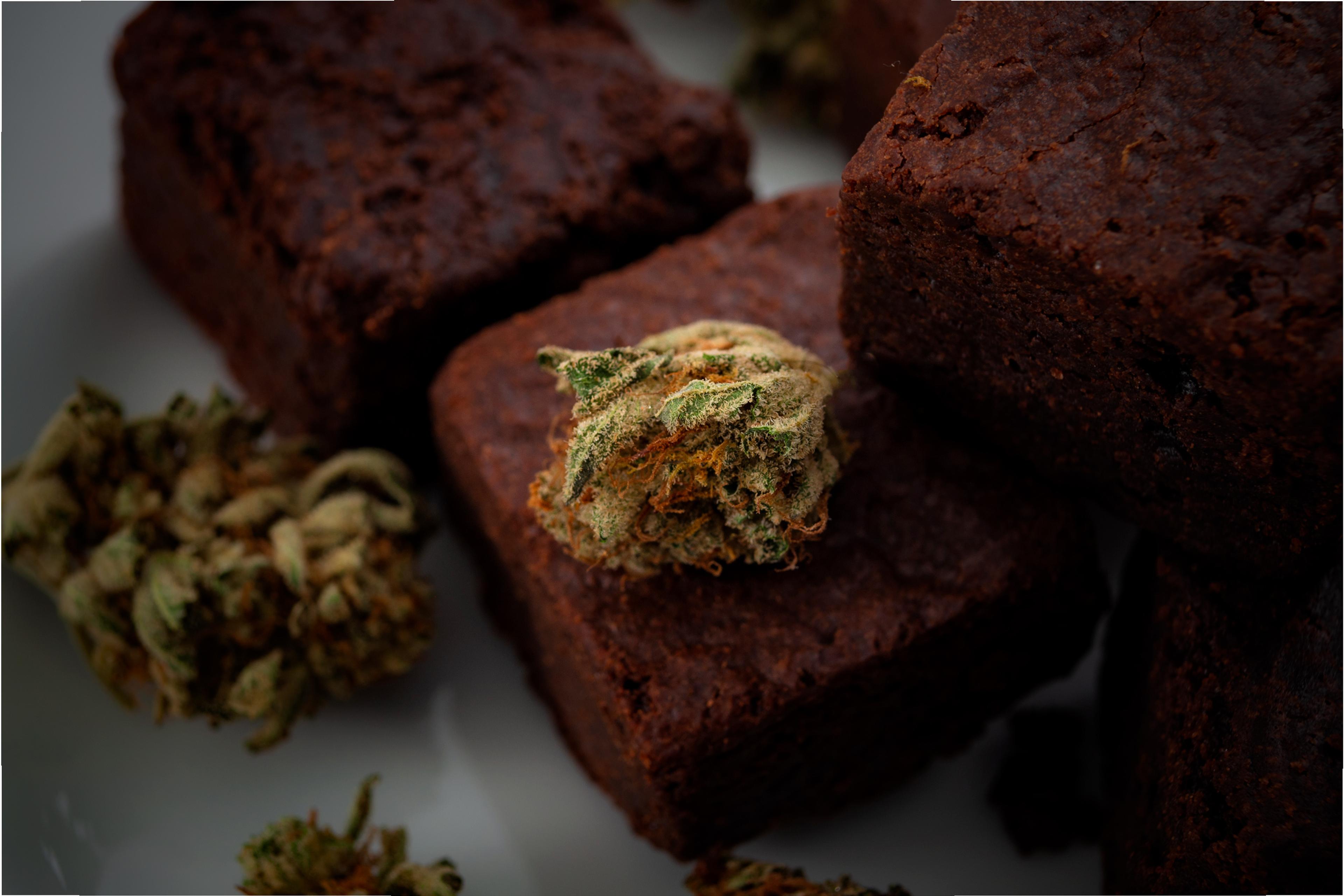
There was also, I think now, a chemical component. In the weeks leading up to the first anniversary of my father’s death, I scheduled a weekend getaway with a friend, which we spent relaxing in a suburban backyard, luxuriating under the influence of psilocybin. I had read so much about the therapeutic benefits of hallucinogenic mushrooms, how they could help people make peace with the inevitability of death. As I lay on a picnic blanket, feeling the hallucinogens reorganise my brain patterns, I began painting with watercolours and then washing the picture away as a metaphor for loss – a creative manifestation of grief I felt sure my unaltered brain would never have unlocked. I thought I was doing a good thing for myself. But I had not considered the impact even a weekend’s use might have on a brain such as mine.
What I can say for sure is that when I woke up on a mid-June morning, having spent the previous day in the hospital with my bleeding, terrified mother, I did not feel like myself. I was exhausted but the more I tried to sleep, the less refreshed I felt. I spent days in bed, paralysed: I couldn’t work, couldn’t leave the house, could barely even think. I became consumed with the fear that I was somehow dying and unaware of it. Dishes piled up in my sink. A stack of laundry grew in my closet. None of it mattered. All I could do was pursue a sleep that refused to come.
And for the first time in my life, I started to consider that I might be not just quirky or neurodivergent, but full-on disabled.
My journey to this point has been long and circuitous; roughly broken down into three time periods. There’s the Before Time – the 35 years before I was officially diagnosed with obsessive-compulsive disorder (OCD). When I think about that version of myself, she’s barely recognisable to me. Her brain was filled with constant noise: warnings about how she could never be late, how an incomplete dish set was a life-or-death matter that needed immediate rectifying. When she got stressed, violent images of self-harm flooded her brain: her fist punching her face, a bullet hole rending her cheek. She couldn’t pick up a kitchen knife without worrying she might accidentally (or intentionally?) stab herself in the eye – to say nothing of the fear she had that she would hurt other people against her will, a fear of her hands moving, without her consent, to grope or assault people she wanted only to protect.
I was so busy obsessing, he said, I’d completely worn myself out
And yet, even after receiving my OCD diagnosis shortly after my 35th birthday, even after a combination of cognitive behavioural and exposure therapy enabled me to graduate into my OCD Management era – the second time period – in the spring of 2018, I did not consider that early version of me disabled, even though OCD legally counted as a disability. How could I? She was confident and capable, an accomplished woman perpetually racking up impressive achievements. She’d graduated high school at 16, college at 20. She’d been made editor-in-chief of a well-known publication at 26 and taken that same website independent as her own company before 30. Sure, she’d always had trouble holding down a full-time job for long, and, yeah, she thrived best when she could set her own schedule, one that facilitated a good amount of sleep. But that wasn’t disability accommodation, that was just her.
Then I entered the third era, marked by a rapid decline into what I first saw as severe depression. What else could explain my sleepless nights, my exhaustion? But my therapist said it could still be OCD, an effective mimic, even though I’d never experienced it quite like this before. I was so busy obsessing, he said, I’d completely worn myself out. After the visit, I talked him into letting me take an hour-long nap in an adjoining office so I could recover enough strength to make it back home.
Either way, the solution seemed obvious: SSRIs, the go-to psychiatric treatment for both depression and OCD. As a teenager, I’d been put on them for a year after being diagnosed with depression, and though I’d been successfully managing my OCD without them, now seemed like a good time to go back on. My therapist agreed. My doctor and my therapist both warned me that SSRIs can make you feel worse before they make you feel better, that it can take several weeks to notice any concrete improvement. But, despite that warning, no one was prepared for what my first week of escitalopram did to me.
Least of all me.
On my second morning of SSRIs, I woke up with the world feeling blurry. A few hours later, I was marching around my apartment, pointing at different objects and shouting out their colours. I had lost my understanding of English and needed to relearn language, see. But if I just kept pointing and shouting, I knew it would all come back to me. My brain kept insisting that if I just followed the system – if I just continued the compulsion – long enough, it would all work out. At one point, I sat on my couch painting inspirational phrases to encourage myself. I couldn’t understand them in the moment, but I knew that later, I would, if I just held on.
My high-functioning performance has always been a tightrope act
The conviction that I was forgetting my entire self was only one of my obsessions that week. My fear of dying began to overwhelm me: I was terrified to leave the house, convinced that the summer heat would literally kill me. I was obsessed with the possibility of heatstroke, which I decided I had not only experienced but developed brain damage from. One night, I woke up at 1:30 am, convinced that my reality was nothing more than a lucid dream I was having while dying in a hospital bed, that I had to keep talking, keep shouting, to fight the spectre of death that lurked just inches away from me. Another night, I felt my brain shutting down, and decided that not only was I dying, but my beloved pet could tell: ‘My cat thinks I’m a ghost,’ I frantically texted my therapist before calling my mother and demanding she drive me to the hospital so someone could figure out what was wrong with me. (No one could.)
I was, to put it bluntly, not merely experiencing ‘bad’ OCD, but a full-on psychotic break, with an occasional dash of mania thrown in for fun – mania that encouraged me to pen deeply emotional thank you emails to my healthcare providers, that convinced me I was entering ‘fugue states’ during which an oracle would speak through me. As I’d learn later, this kind of temporary amped-up energy isn’t unusual with SSRIs but, in my fragile state, it manifested into something truly terrifying.
Fortunately, after just over a week on escitalopram, everything snapped back into focus. As my brain began to stabilise over the subsequent weeks and months, the manic version of me began to feel as distant and foreign as my pre-diagnosis self.
But I was, nevertheless, forever changed. Ever since that summer, ever since a darkness overtook my brain, I’ve been far too aware of the viciously disabling force that lurks deep within my psyche. What I live with is not simply a quirk or an inconvenience, but a life-threatening – or, at least, quality of life-threatening – chronic illness that I must structure my whole life to keep in check, lest it utterly upend me.
Having seen the darkest manifestation of my mental illness, it’s not hard for me to understand myself as disabled these days. It’s clear to me now that my high-functioning performance has always been a tightrope act. Any shame I might have once felt about ‘faking’ a disability or asking for ‘undeserved’ special treatment has faded away. My ‘disability accommodations’ are just a fancy word for the flexible scheduling and time I need to make sure I’m eating, sleeping, exercising and doing all the maintenance work I need to do to keep my brain in check – as well as legal protections against discrimination and support for the moments when I might once again lose control of it. This is the safety net I need to feel confident making my way through my day.
And there’s one more lesson I’ve taken from this, too: no more hallucinogens for me ever again.