NOTE TO SELFDECISION-MAKING

For maximisers, bad choices really sting

Listen to this article

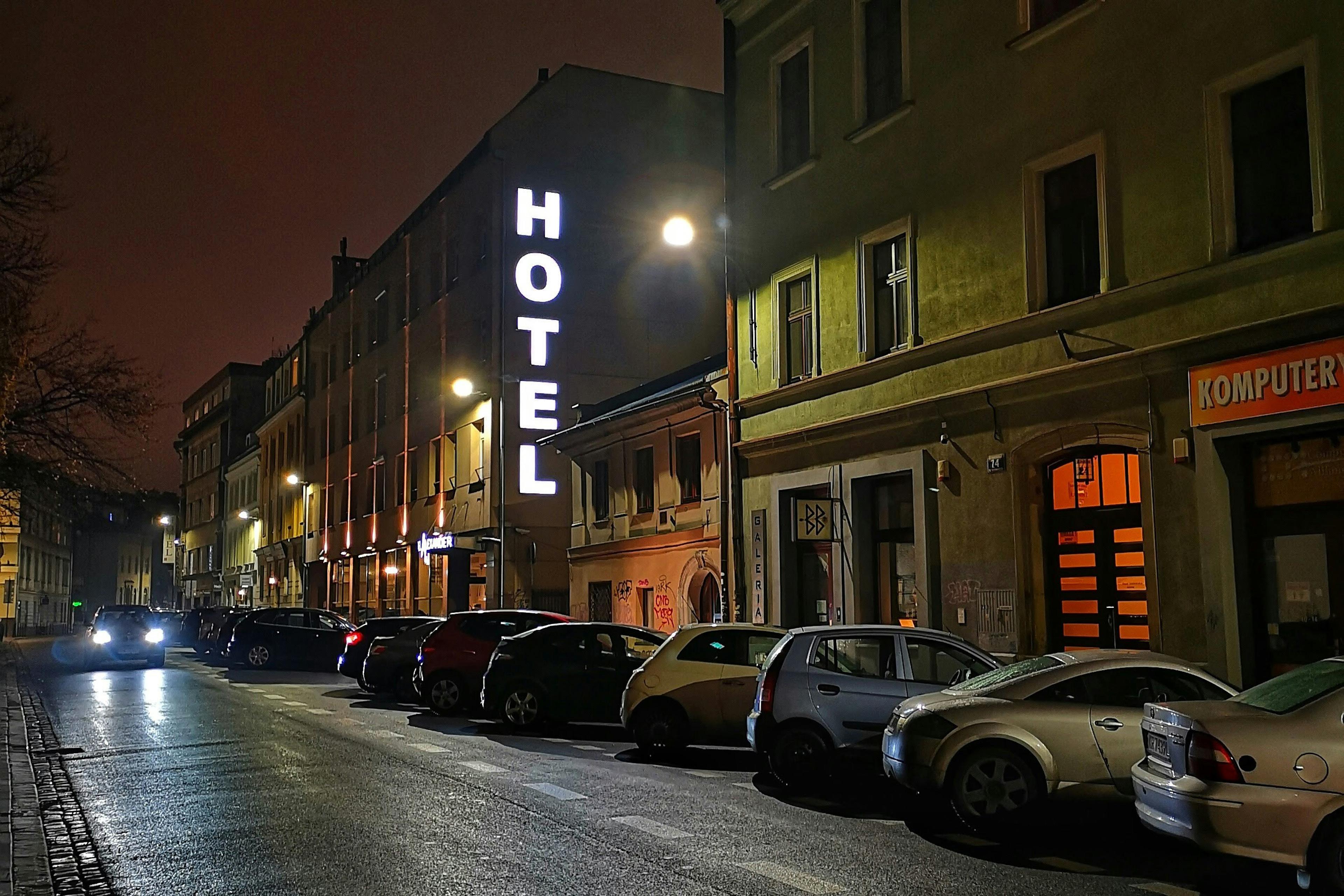
A dimly lit street with parked cars at night. A building has a large, vertical “HOTEL” sign illuminated.

Recently, I got food poisoning on holiday. I guzzled a glass of water from the hotel bathroom tap, after missing a sign saying it wasn’t drinkable. I regretted that decision, but what nagged at me more was something else: my choice of hotel in the first place.

Before a holiday, I often agonise over where to stay, weighing up every hotel I can find, with the goal of finding the very best option. Psychologists would call me a ‘maximiser’. Other people (like my partner, for one) are ‘satisficers’ who evaluate fewer options and choose one that’s ‘good enough’. Since the 2000s, maximisers have become of interest to psychologists because they often report greater regret and dissatisfaction with their choices afterwards. It seems their forensic searching for the ‘best’ reveals more options, but also inflates expectations of perfection and, once they’re locked in, they are painfully aware of all the rejected alternatives. One paper from 2024 suggested such habits can spoil a holiday.

In my nausea, I couldn’t shake the feeling that, in a parallel universe, I was enjoying another hotel sickness-free. So, since then, I’ve tried not to maximise so much, especially for semi-arbitrary choices. I might not find perfection but, according to the research, I’ll feel better about it.

My tactical satisficing has felt even more justified since I learnt recently about the work of the historian Sophia Rosenfeld. In an essay for Psyche’s sister site Aeon, she traces how and why choice became a fundamental right in Western societies – and why that right has created many problems. Choice, she argues, is not the same thing as freedom.

Clearly, it’s a luxury to have choices in life: many people don’t. But what I take from all this is that I could decide to be more mindful about how I choose.

by Richard Fisher

FIND OUT MORE

If you like Sophia Rosenfeld’s Aeon Essay, ‘The Explosion of Choice’ (2025), you can dive deeper into her historical research about the roots of choice in her book The Age of Choice: A History of Freedom in Modern Life (2025).

To learn more about making tricky choices, check out the Psyche Guide ‘How to Make a Difficult Decision’ (2022) by Joseph Bikart.


A brief escape from social media

A switched-off smartphone on a bright yellow surface with fingerprints and smudges on the black screen.

Earlier this year, I took a break from my phone for a full week while on vacation in Mexico. My somewhat impulsive decision to forgo an international plan and leave my phone in my hotel room led to one or two tricky situations. But mainly, it was refreshing to live in the present moment. I had been feeling fatigued by social media before the trip – Instagram being my particular vice – so by the end, it truly felt like I’d gone through a detox.

When I inevitably returned to my device, I felt newly, palpably aware of how much time I was wasting on social media. Why was I so easily consumed by parking lot spats, celebrity interviews and videos with captions like ‘___ will leave you speechless’, none of which had any real significance beyond holding my attention? The feeling reminded me of a quote I’d once encountered, about how easy it is to be distracted by disposable content. It perfectly summed up what’s so quietly frustrating about social media these days, but the irony was that I couldn’t remember the exact quote, or even where I’d seen it, due to the sheer amount of content I regularly consume.

I looked everywhere for the origin. I revisited my YouTube history and Instagram posts I’d ‘liked’, feeling horrified at how much time I had spent in the digital world. I thought for sure it was a quote from the YouTuber Mina Le’s insightful video ‘Why Is Social Media Not Fun Anymore?’, or from an audiobook I’d enjoyed. No, it must have been mentioned in one of the countless Instagram Reels that the algorithm has calculatedly served me. Eventually, I gave up my search, a decision that, in itself, was its own relief from the endless cycle of content consumption.

by Tamur Qutab

FIND OUT MORE

Evan Puschak, aka The Nerdwriter, who in my opinion is the best video essayist out there, explores this topic with humour and relatability in the essay ‘I Think the Internet Wants to Be My Mind’ from his book Escape into Meaning (2022).

If you, too, have an urge to change your relationship with social media, check out the Psyche Guide ‘A Psychologist’s Tips for Getting a Grip on Your Social Media Use’ (2024) by Daria J Kuss.


NOTE TO SELFFEAR AND PHOBIA

How scary is it really?

A silhouette pressing hands on a frosted glass door in an abandoned room with peeling paint on walls and door.

Many situations in life that are supposed to be fun also involve a high degree of uncertainty: dates with strangers, rollercoasters with unpredictable twists and turns, unrehearsed karaoke. For those of us who like to be able to see what’s coming, many of these potentially enjoyable opportunities may as well have warning signs hanging over them. Sometimes it’s tempting not to take the risk. But I recently came across a study that made me wonder if I should challenge myself more often.

The researchers, including members of the Recreational Fear Lab at the University of Aarhus in Denmark, surveyed visitors to Dystopia Haunted House – one of those immersive attractions where you wander past menacing costumed actors, not knowing what will pop out next. Before they went in, the participants completed some questionnaires, including one tapping their intolerance of uncertainty. (They rated how much they agreed with statements like ‘I can’t stand being taken by surprise’ and ‘Uncertainty keeps me from living a full life’.) As you might expect, visitors who were less tolerant of uncertainty had dimmer expectations about how the haunted house would hit them. They anticipated less positive emotion and more anxious and generally negative emotions than the uncertainty-tolerant did. And yet, afterwards, visitors across the board (including the uncertainty-averse ones) reported feeling more positive emotions and less unpleasant emotions in the haunted house than they predicted they would.

In other words: despite the frightening surprises they’d encountered, it wasn’t so bad after all. It seems that for me and other certainty-craving people, the real problem might not be the ghoul hiding around the corner or the possibility of singing off-key at the karaoke bar, but our pessimism about how it’ll make us feel.

by Matt Huston

FIND OUT MORE

If uncertainty causes you discomfort, too, you might benefit from reading the Psyche Guide ‘How to Embrace Uncertainty’ (2023) by Arie Kruglanski.

To learn more about research on haunted attractions and the benefits of horror, check out the Aeon Essay ‘Fear Not’ (2021) by Mathias Clasen.


NOTE TO SELFSLEEP PROBLEMS

Sleep is important, but not that important

A person lying in bed under a duvet, arms covering face; bedside table with books, a lamp, a mug and reading glasses.

Over the past decade or so, there has been a huge shift in our attitude to sleep in the Western world. We’ve moved from ‘I’ll sleep when I’m dead’, ‘Sleep is for wimps’ and ‘Money never sleeps’ to scientists, doctors and health bloggers alike emphasising the huge importance of getting our Zzzs.

It’s positive that people now take sleep more seriously but, as a sleep researcher myself, I fear things have gone too far. Increasingly, many people, who by any objective measure are getting enough sleep, are worrying unnecessarily that their sleep is not ‘good enough’. In 2017, a group of US sleep experts coined the term ‘orthosomnia’ to refer to a desire for ‘perfect sleep’. They described how people are now arriving at clinics clutching a sleep tracker or a popular science book, explaining that they had always considered themselves to be good sleepers until…

Another unexpected consequence of so much promotion about the importance of sleep is that people who, for reasons outside of their control, are struggling to get enough sleep are becoming increasingly distressed about it. This applies to many people in society but, as one example, consider those who care for others with disabilities that require around-the-clock monitoring or support, and who therefore miss out on what my colleagues and I call ‘sleep privilege’ – the luxury, enjoyed by some, to sleep under optimal circumstances and conditions.

Yes, sleep is undoubtedly important, but dramatic headlines stating it is the most important factor for health, or that too little sleep can be devastating, are typically unwarranted, and it seems that its value might be beginning to be overinflated. Looking ahead, could it be that some of the challenges caused by undervaluing sleep will be replaced by those linked to overvaluing it?

by Alice Gregory

FIND OUT MORE

Alice Gregory and her colleagues wrote about the dangers of sleep being overvalued in a recent open-access editorial for the Journal of Child Psychology and Psychiatry.

If you’re concerned about your sleep, check out these Psyche Guides: ‘How to Sleep Well Again’ (2022) by Chris James, and ‘How to Sleep Well When You’re a Perfectionist’ (2024) by Nick Wignall.


NOTE TO SELFPERSONALITY

What style of curiosity do you practise?

A man stands in a modern room looking at a large pink sculpture of tentacles outside the window.

Is there more than one kind of curiosity? I found myself reflecting on this after reading a recent study about different curiosity styles. An analysis of 483,000 Wikipedia users found that people pursue their curiosity in three ways. Some browse articles as ‘hunters’, targeting ‘specific answers in a projectile path’, and their interests are more likely to be in science and technology. Others are nomadic ‘busybodies’, who explore more, building broad, loose networks of knowledge; they gravitate toward arts, culture and the humanities.

A third group are the ‘dancers’ – a little harder to define, they tend to leap ‘in creative breaks with tradition across typically siloed areas of knowledge’, taking an unstructured and inventive approach to information-seeking, across radically different subjects.

This made me wonder what kind of curious I am. When I’m reporting as a science journalist, I tend to adopt the ‘hunter’ style. This helps me meet deadlines, but am I missing out on the serendipity of discovering knowledge like the busybody or the dancer? I’d like to believe I’m curious about the world, but realising that other people’s curiosity might be more nomadic or creative gives me pause.

Another downside to the hunter style is that it’s associated with what’s called ‘deprivation curiosity’. This is the desire to banish the discomforts of uncertainty and lack of knowledge. It can lead people to accept easy answers or false facts. It also correlates with overconfidence in one’s worldview, and lower wellbeing. I hope I’m not motivated by deprivation curiosity when I’m hunting knowledge, but I can’t guarantee that’s always true.

The psychologist William James described curiosity as ‘the impulse towards better cognition’. If I take his words and the Wikipedia study to heart, perhaps I ought to be more curious about my curiosity.

by Richard Fisher

FIND OUT MORE

Dive deeper into the psychology and neuroscience of curiosity in this open-access review paper by Celeste Kidd and Benjamin Hayden. It explores what’s known to scientists about the function, evolution and neural mechanisms of curiosity – and what unanswered questions remain.

Read the Psyche Idea ‘This Is How to Nurture Curiosity in Children (and Yourself)’ (2023) by Shayla Love, to discover how to foster a curious mindset in the young people in your life.

Explore more

Black-and-white photo of two people kneeling on sand examining a map with visible tracks in a vast desert landscape.

How to make a difficult decision

It’s tempting but unwise to delay important choices. Grasp the nettle by using both systematic checklists and gut instinct

by Joseph Bikart

A vintage voltmeter displaying a scale in volts and ampères with a brass base and needle indicator.

What a real-life ‘trolley problem’ reveals about morality

We used an electric-shock dilemma to test the strength of people’s moral principles when faced with real-world complexities

by Dries Bostyn

Photo of two people embracing one another, with a hand gently placed on the back of a person wearing a blue jacket.

Going with your gut feels good, but it’s not always wise

Research is revealing the mood benefits of making intuitive decisions, but some situations call for an analytical approach

by Carina Remmers

Photo of yellow taxis on Brooklyn Bridge with New York City skyline in the background on a cloudy day.

The mathematical case against blaming people for their misfortune

Complexity science reveals the hard limits of our predictive abilities, and makes a mathematical case for compassion

by David Kinney

Photo of a person diving into an ice hole on a frozen river landscape with ice chunks and distant trees visible.

The three reasons why it’s good for you to believe in free will

Regardless of whether humans do or don’t have free will, psychological research shows it’s beneficial to act as if you do

by Kennon Sheldon

Photo of a glass half full of water on a wooden table with a beige background.

How to appreciate what you have

To better face an imperfect world, try a deeper reflection on the things, people and legacies that make your life possible

by Avram Alpert

Photo of soldiers in camouflage sitting on a rocky terrain at dusk with a smoky horizon and distant lights in the background.
ETHICS

What luck in war reveals about the role of chance in life

From the battlefield to the playing field, don’t overlook the role of luck. It shapes how we judge others, and ourselves

by Andy Owen

A close-up view of a cheeseburger with multiple beef patties, melted cheese and crispy onion rings.

Guilty pleasures are more than just giving in to temptation

Psychologists are discovering what’s going on when you do something you enjoy, but also feel weird or embarrassed about

by LaCount ‘JJ’ Togans