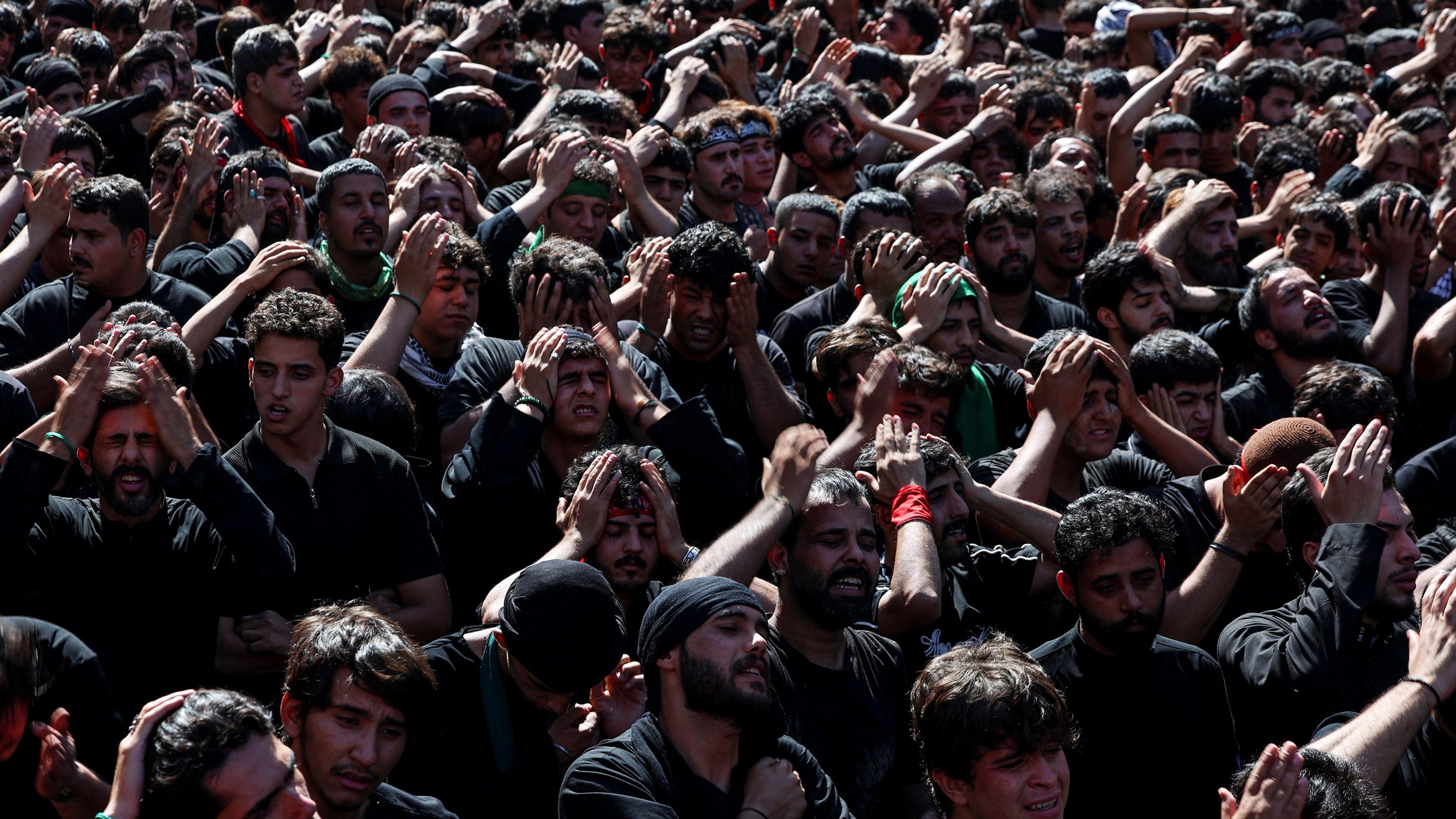
I find myself in the heart of a vast sea of mourners. Everyone is dressed in black, yet this is no funeral of despair – it is a procession of devotion. Under the scorching sun of Iraq, we walk together, step by step, toward the shrine of a leader who was martyred more than 1,300 years ago. Around me, grief takes many forms. In one corner, someone whispers prayers; in another, people rhythmically beat their chests. Nearby, a few people break down in tears as they hear the story of Imam Hussain’s martyrdom. Along the way, strangers offer free food and drinks, not as charity, but as gifts they plead with you to accept. To serve a pilgrim is, for them, a divine honour.
This is Arbaeen: the world’s largest walking pilgrimage. Each year, more than 20 million people walk the 80-kilometre route – with some travelling much longer distances, and some completing the journey barefoot. All are drawn by love, sorrow and unwavering faith.
As a researcher of religion and spirituality, I’ve always been fascinated by questions like: how can I truly understand these people? How can I study such experiences? What happens in the mind of someone who cries as if they’ve just lost a loved one – over a person who died more than 1,000 years ago?
Spirituality wears many other faces. It can emerge in the awe one feels during a walk in nature, in the stillness of a secular meditation, in prayer at a church or mosque, or even through intense and painful rituals like walking on fire. Each of these practices is, in its own way, an attempt to transcend the ordinary – whether the goal is closeness to God or simply a deeper calm and harmony with life.
Researchers increasingly recognise that spirituality is a vital part of human wellbeing, whether or not one identifies as religious. Understanding this dimension of life isn’t just an abstract pursuit; it could help people better harness the benefits of spirituality for their mental and physical health. But where should we look if we want to understand, scientifically, what’s happening in the mind during transcendent spiritual experiences? For many, the answer seems obvious: look at the brain. But, as we’ll see, that answer is incomplete.
It’s true that neuroscience provides remarkable insights into spiritual experiences. It has revealed, for example, how meditation affects neural networks associated with attention and self-awareness, and how these experiences alter the activity of the brain’s default mode network (DMN). It has demonstrated that contemplative practices can literally reshape brain structure over time. I have studied how brain activity changes during spiritual practices like meditation, contemplation, and dhikr – a mantra repetition practice in Islam. These practices share a common characteristic: stillness. They can be studied in a lab and fit well with fMRI scanning, which requires a subject to lie still in an imaging machine.
But, as my research progressed, I encountered the limits of this approach. If you want to study a Shia Muslim mourner performing chest-beating, a whirling dervish dancing in circles, a pilgrim walking for days toward a sacred destination, a practitioner moving through the postures of yoga, or a worshipper bowing and prostrating in the daily salat, many brain-imaging devices become basically useless.
I needed to rethink what I was even looking for when I said I wanted to understand the spiritual mind
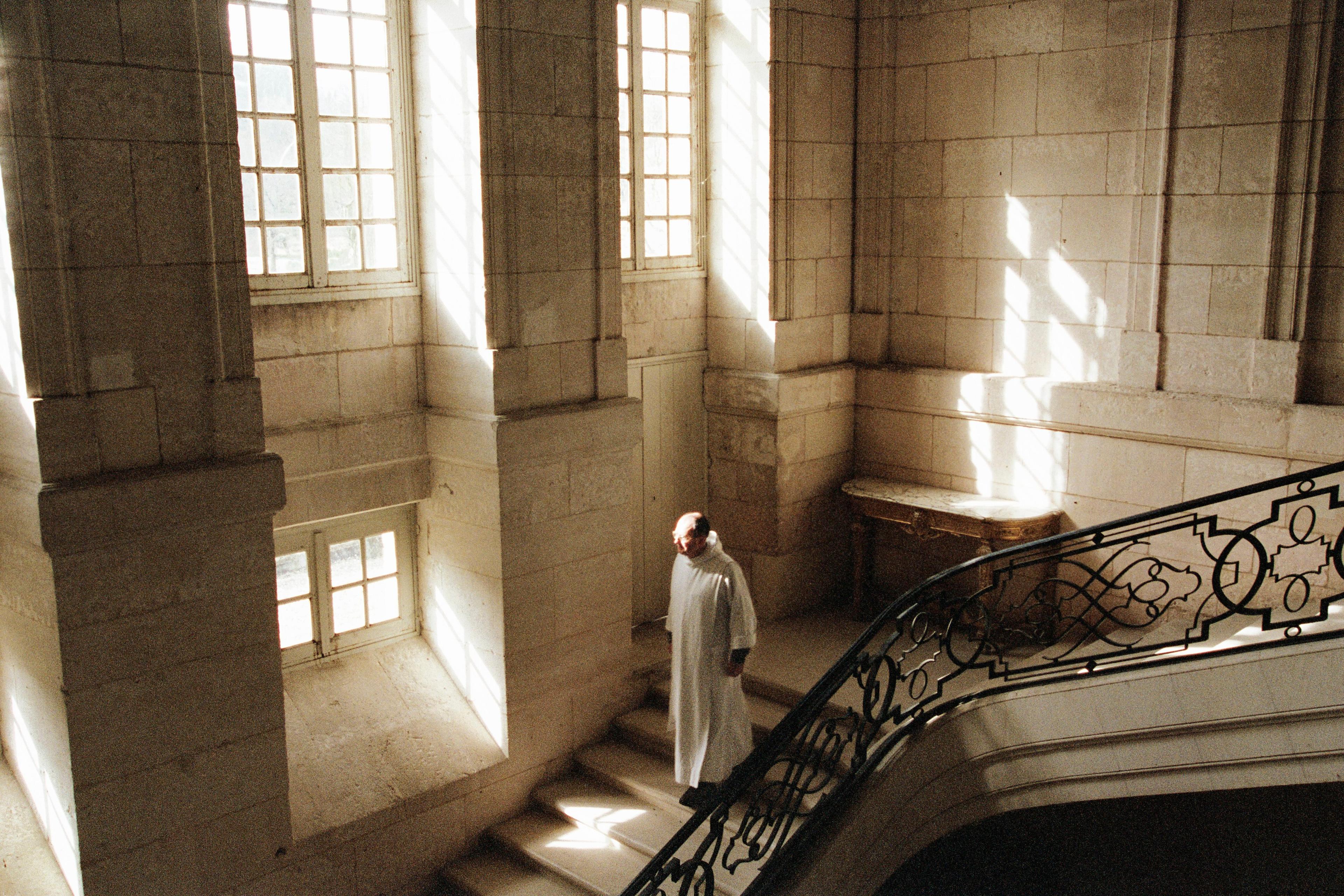
There are other, deeper problems. Brain-imaging studies, despite their contributions, often strip away the cultural and contextual richness that gives mental life its meaning. When researchers isolate variables for the sake of experimental clarity, we risk studying something that is far removed from the phenomenon we hoped to understand. Is meditating in the serene stillness of a monastery really the same as doing it in the cramped, humming confines of an fMRI scanner? Can we truly grasp the mind of a participant in Arbaeen processions – beating their chest in unison with hundreds, immersed in grief and devotion – by observing a lone volunteer rhythmically tapping in a lab, wearing a clunky EEG cap? Something vital gets lost in translation. Moreover, brain-centred approaches promote a narrow focus on what’s happening in an individual brain, apart from the body and world in which it is embedded. This is the kind of framing that ends up in headlines like ‘This Is Your Brain on God’ or ‘Neuroscience Explains Religious Belief’.
I began to think that perhaps the change I needed wasn’t just technological. Perhaps I needed to rethink what I was even looking for when I said I wanted to understand the spiritual mind.
Scientists and philosophers have developed alternative formulations of the mind that extend beyond the confines of the skull. For example, the 4E cognition framework proposes that the mind emerges through dynamic interactions between the body (embodiment, the first ‘E’), the environment (embeddedness), our actions (enactiveness), and even the tools we use (extended cognition). Each of these aspects is needed for experiences, including spiritual ones, to come alive.
Consider again the example of the Arbaeen pilgrimage. If we focus only on what happens inside the brain, we miss much of what gives this experience its spiritual depth. The act of walking for days along hot roads is part of the devotion itself; flying directly to the shrine might not produce the same transformation. The spiritual meaning unfolds through movement, rhythm and endurance. The experience is deeply embodied: the tears that come during mourning ceremonies and the shared rhythms of chanting draw the body into the experience of faith.
The beat of drums and the repetition of divine names draw participants into a shared state of awareness
This journey is also embedded in a rich sociocultural and physical environment. Along with the offerings of free food, tea and other drinks that pilgrims receive, devotees might repair a pilgrim’s shoes or give a gentle massage to ease a traveller’s exhaustion. These acts of care are not background details but essential to the shared spiritual atmosphere that sustains the journey. Meanwhile, everywhere along the route, flags, banners and the name of Imam Hussain create a symbolic landscape that carries and amplifies the pilgrim’s inner state.
The 4E cognition framework and similar perspectives, such as ecological psychology and enactivism, suggest that transcendent spiritual experiences are not simply a product of neural activity but are deeply intertwined with bodily sensations and the surrounding world. From the perspective of ecological psychology, humans experience the world like a radio tunes into signals. A radio works through alignment: it resonates with the electromagnetic patterns already present in its environment. In much the same way, perception and experience arise through a bodily attunement to the world – a dynamic resonance between our senses, our environment, and the people around us. You can see this, for example, in a Sufi dhikr ceremony, where the rhythmic beat of drums and the repetition of divine names draw participants into a shared state of awareness. One doesn’t need to analyse or interpret the sound; it is enough to pay attention and attune to it. The rhythm itself begins to move the body and align attention until the experience carries you.
One important implication of this perspective is that transcendental experiences are no less ‘real’ than ordinary ones. A brain-centred view treats such experiences as products of neural activity, which might lead some to see them as less real, or even illusory. But from an embodied, ecological standpoint, these experiences are not confined to the brain but extend into the lived reality that we share. Just as a trained musician can detect subtle harmonies that others miss, a spiritual practitioner may perceive traces of the divine or the sublime in situations where others might overlook them.
This view also shifts how we understand particular spiritual practices. Take, for example, salat al-jama’ah, the group performance of the Islamic prayer. Lined up in rows, the congregation follows an imam’s movements – standing, bowing, prostrating, and sitting – beginning each action only after the imam initiates it. Traditional brain-centred models would frame each participant as an individual machine, processing the meaning and experience of the prayer in their own brain. But our research, which used wearable devices to measure heart rate, breathing and movement, tells a different story.
What we found is that this spiritual practice is inherently collective, with coordinated bodies playing a crucial role in accessing the spiritual state. During the ritual, participants are advised to lower their gaze toward the ground rather than look at others. Yet, the entire structure of the ritual – the rhythmic recitations, the sound of voices rising and falling together, the subtle feeling of movement in those nearby – draws them into a powerful synchrony. It’s not only that their bodies move in unison; even their heart rates begin to align with one another and with the imam who’s leading the prayer.
Yes, the brain plays an important role – but it’s only part of the picture
Like a group of radios all tuning into the same frequency, the individuals engaged in prayer aren’t simply generating private, internal experiences. Instead, they are resonating with a shared, embodied and communal rhythm. We can see this kind of resonance in other rituals where people move and feel together, and their rhythms and emotions become intertwined – rituals that appear across various religious and spiritual contexts. Brain scans alone cannot offer a complete picture of what’s happening here. To truly understand spiritual experiences requires looking at all dimensions of cognition: our actions, our bodies, our tools and objects, our relationships, and the environments we inhabit. Wearable, naturalistic technologies such as heart-rate and electrodermal-activity monitors, GPS trackers, and motion-capturing cameras are likely to give us further insight into spiritual experience as it unfolds in real-world settings.
This shift in perspective doesn’t just help researchers study spirituality, it also makes spirituality more accessible. How can one become more spiritual and achieve transcendent experiences? Today, the focus is often on contemplative practices like meditation. But let’s be honest: meditation can feel boring, frustrating and hard to maintain. Part of the reason behind the contemporary emphasis on meditation is our overemphasis on the brain. Spirituality is often treated as a project of mental control – as if the goal were to calm, train or rewire the wandering brain on its own – which often downplays the roles of the body, the environment, and the people around us. This may actually make spirituality feel harder to access.
Yes, the brain plays an important role – but it’s only part of the picture. By widening the lens, we open the door to more creative, inclusive and meaningful ways of understanding spirituality and living spiritually. One can dance ecstatically like the whirling dervishes of Sufi tradition, or find release through crying in collective mourning rituals like in Shiism. These practices, rooted in different cultures, show that there are countless ways to have transcendent spiritual experiences, including ways that, for you, might feel more natural, more emotionally resonant, and more aligned with who you are.