I grew up in Sahil, a quiet town on the edge of the Caspian Sea, founded in the late-1940s by German prisoners of war. We lived in a nine-storey Soviet apartment block: my grandparents on the second floor, my parents, my sister and I on the first. My family were typical Soviet Muslims: they avoided alcohol during Ramadan, turned off the radio when passing a shrine, but had never read the Quran and certainly didn’t pray daily. They knew they were Sunni, but would explain the Sunni-Shia divide with a dismissive Two cousins fought over power, and that’s how this silly division started. In short, they were nominal Muslims: Dig too deep into religion, they warned, and shit hits the fan.
This always bothered me. You must dig into it, I thought. If you are a Muslim, you must live like one.
By the time I was thinking about these things, the Soviet Union was a thing of the past; Azerbaijan was an independent state. Atheism was no longer the official religion, and Iranians, Turks and Salafis from Arab Gulf states were flooding in to proselytise, all flush with money, each offering different versions of Islam. All around me, in Sahil, people were rediscovering religion, not just as a marker of collective identity but as a blueprint for self-discipline and obedience.
When a few of my Shia neighbours began praying, townspeople remarked upon the change approvingly. So-and-so’s son no longer drinks, and now brings his salary home, they would say. Most of them were originally from the villages around Baku, where many people worked in the stone trade. Weed was prevalent there, so the stereotype was that a Bakuvian would either become a drug-addled Kamaz truck driver or very religious. Everyone agreed it was better to pray than be addicted to drugs. Nobody minded their religiosity because the Shias didn’t really stand out in terms of their appearance or behaviour.
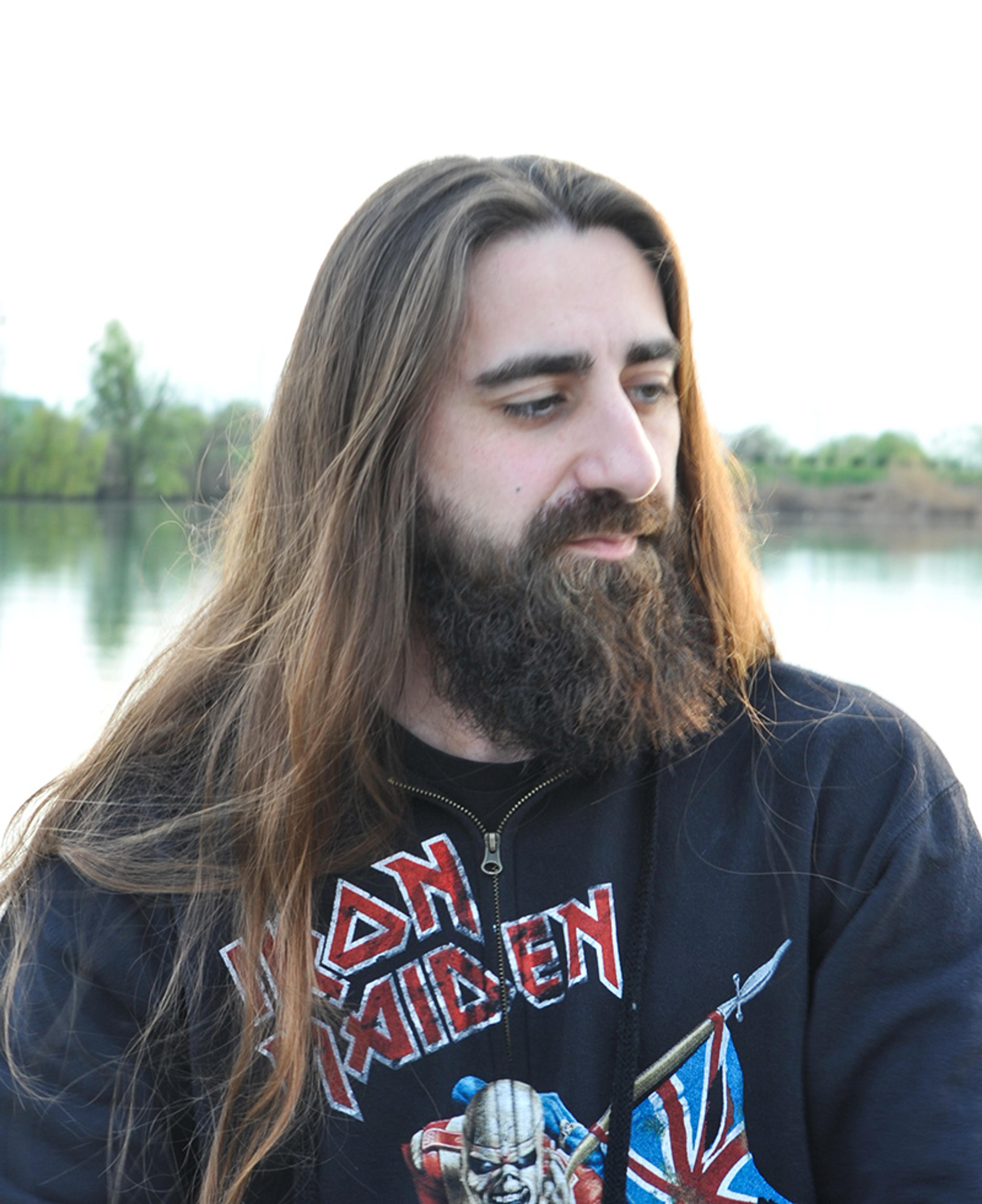
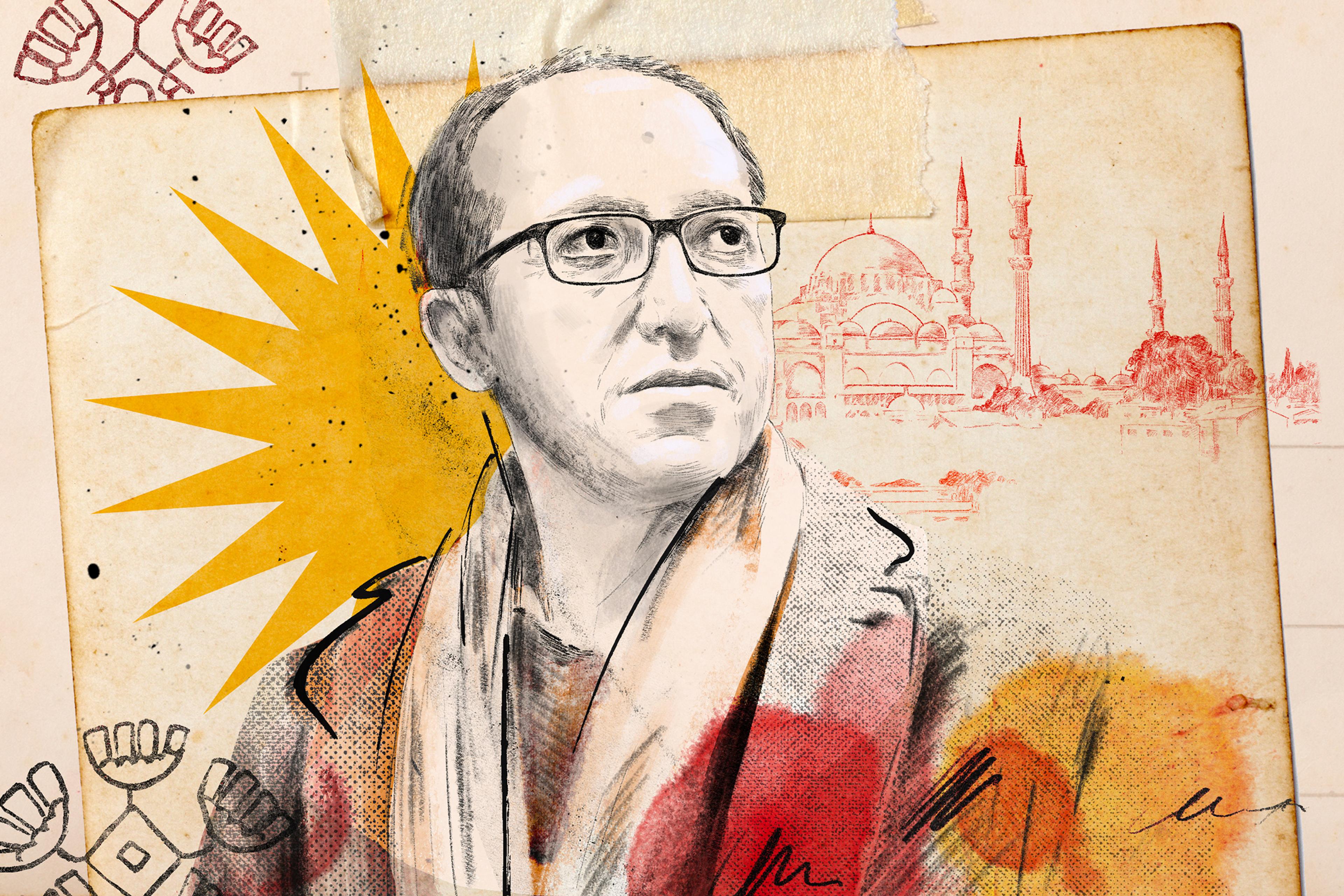
The author
Those who became Wahhabis – a revivalist sect associated with the Salafis – no one liked. Their beards were too long and unkempt, their dressing too different, their orthodox approach to religion too rigid. They looked ‘too Arab’ and thus stuck out in our local context; anti-Arab sentiment, after all, is not confined to the West. When the three brothers who lived on the eighth floor of our building – popular kids, some of whom would always dress up as Santa Claus for the New Year and as kosa for the Novruz celebrations – became Wahhabis, their relationship with the community grew very cold. Rumour had it that they were forcing their mother to cover herself and pray. One night, our building was surrounded by special forces; there were whispers that weapons and grenades were found in their flat. Two of the brothers were arrested.
What really led me to religion was my own predilection for consistency
Three afternoons a week, after I came home from the local state school, my grandfather Adalat would drive me into Baku for a private university-prep programme. There were many of these in Azerbaijan, operated by Turkish groups who were either followers of Said Nursi, a 14th-century Kurdish scholar, or mostly of Fethullah Gülen, a contemporary Turkish preacher whom everyone respected until he was accused of orchestrating that coup in Türkiye in 2016. There was no overt religious instruction at the prep centre, but each class had this young tutor – we called them ağabey, meaning ‘brother’ in Turkish – who’d sometimes drop hints like: Guys, we’re Muslims, you know that, right? The Turks were Sunni, like my family (in fact, one of my distant relatives had gone through a religious phase, during what was probably a midlife crisis, and tried converting me) but I couldn’t take them too seriously, in part because my family was paying them tuition. They seemed a bit too business-minded for supposedly religious folks.
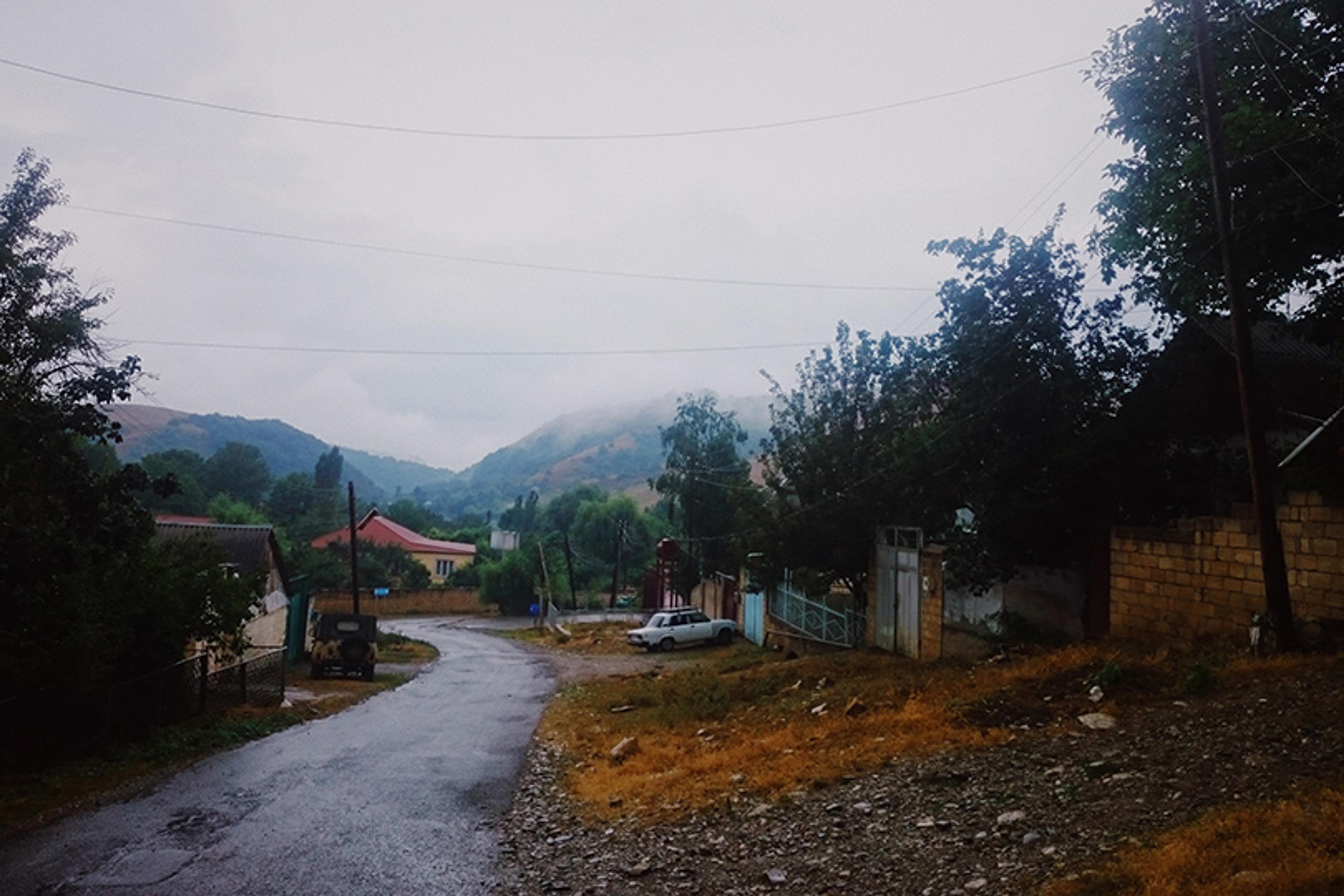
The village of Chukhuryurd, where the author started to pray
More than outside influence, what really led me to religion was my own predilection for consistency. My family might have had a more liberal approach – to them a good Muslim was simply someone who didn’t harm or harbour ill will towards others – but I seemed to be built differently. When I was in 10th grade, I announced to my family my desire to start praying. They told me to focus on my studies. I didn’t push the issue; if my family was reluctant, I figured that absolved me spiritually. The following year, I graduated and, that August, at our summer house in Chukhuryurd village, I asked a relative to teach me how to pray.
He explained the mechanics: the sequence of movements – standing, prostrating, then standing back up – that constitute a single unit or rakat, the number of rakats that make up the five daily prayers, as well as which rakats are obligatory, which are optional, and which are important, albeit not mandatory. I couldn’t understand the difference. I figured I’d do them all.
I approached Islam procedurally: to me, religion was simply a set of rules. Forty times a day – that’s how many rakats I was performing – I recited Arabic words I didn’t understand, stood, bowed, kneeled, then greeted the invisible angels on my shoulders. During summer, I ate a great deal of watermelon and drank lots of tea, which meant I was urinating frequently. Each time I went to the toilet, I had to perform ablution anew. I was exhausted. Consistency doesn’t come cheap, I told myself. Watching me wash my feet five times a day, my grandmother half-joked that prayer, like work, ought to have a weekend.
By following the rules, what I was really hoping for was that I would ultimately develop love for Allah. But a thought kept gnawing at me: why was an all-powerful entity, who ostensibly needed nothing, insisting on my daily adoration? Still, I kept at it. I followed all the rules like a robot, or like an apolitical citizen – like when the tax office puts a paper in front of you and says: Citizen, sign here, and you do so unthinkingly, to get them off your back. Alcohol is forbidden? I won’t drink. Sex outside marriage is prohibited? I won’t do it. Pork is haram? I won’t eat it. There was only one rule I broke deliberately: shaking hands with women. Since my relationship with Allah was purely bureaucratic, I thought this minor infraction might be overlooked if I followed most of the others. After all, a woman extends her hand only a few times a year.
I hoped my faith would one day be so strong that mere invocation of centuries-old martyrs would leave me bereft
On Fridays, after our last English class, I’d rush with a classmate to the mosque near my university for jummah prayers. During winter, we’d perform ablution as snow fell, shivering like dogs as we washed our feet. Inside, I’d listen attentively to the sermon. But the cleric’s words did nothing to deepen my faith. One day, I was summoned into the cleric’s room. I had, and still have, long hair and was wearing shorts that reached just past my knees; I was told my appearance wasn’t ‘appreciated in our religion’, even though I wasn’t breaking any religious rules. I responded politely but left seething and never returned.
Finding another Sunni mosque in central Baku was next to impossible, so I ended up going to the main Shia mosque in the Old Town instead. Once, during Muharram, a period of mourning for Shias, all the men around me began to sob. The cleric was weeping too, as he narrated an account that involved someone’s arm being chopped off. I sat there, immune to those emotions. I hoped my faith too would one day be so strong that mere invocation of centuries-old martyrs would leave me bereft. It was beginning to feel increasingly unlikely.
I had religious friends in Baku, but I never felt part of any religious community. Rather, we had a nonprofit where we translated and published books such as Brave New World, Fahrenheit 451, and A Young People’s History of the United States. (That last one was translated by me.) I was no longer reading religious texts. I didn’t like that they never had a critical approach to Allah. To me, these texts were like AzTV, a state-owned propaganda channel.
By this time, I was thinking more deeply about political authority: where it comes from, who can claim it. From birth, the state declares: You’re within my jurisdiction, these are the rules; if you don’t follow them, I’ll imprison you. How is that fair? At least in a democratic state, I could theoretically participate as a citizen in changing the rules. But, although Azerbaijan is a secular state and maintains a separation between religion and government, it is very oppressive: elections are openly rigged, opponents routinely beaten, imprisoned, and tortured. A friend of mine, who ran a Facebook page critical of the government, was arrested in 2014 along with many others in a crackdown that has only intensified since then.
This authoritarian state reminded me exactly of Allah. Allah didn’t ask if we wanted to be created; he created us and then demanded we follow his rules. How was that fair? Even though I followed all the procedural ones – except one, you remember? – there was much I disagreed with, particularly decrees with implications for how society should be governed, how women, homosexuals and non-Muslims should be treated. But Allah hadn’t given me the right to object to his rules. Whatever other doctrinal differences they may have had, the religious sects around me all insisted these were set in stone.
Music playing in the background, I drank whisky for the first time. I loved its bitter bite
In 2015, I moved to Budapest for further studies. Most of my classmates were from former socialist countries or the West. Almost none were Muslim. But they were good people. I was the youngest among them, just 21, and they made the effort to help me in class and in adjusting to life away from home. I had known that morality had nothing to do with Islam or any religion, but this was the first time I observed it directly. Still, I kept praying because my being Muslim had nothing to do with being good. That’s simply who I was – until the day it felt true to walk away from it.
In early January 2016, more than four years after that first lesson in Chukhuryurd, I prayed for the last time. The next day, I went to a jazz café in Budapest and, music playing in the background, drank whisky for the first time. I loved its bitter bite. Later, I wandered through the city, pleasantly dizzy in that warm, happy way.
Many of my acquaintances have a story of gradual religious departure: slowly drifting away while still identifying as Muslims. My journey was different. Caught between two suffocating authorities – Allah insisting Follow these rules or I’ll burn you, and an ostensibly secular state threatening Follow these rules or I’ll imprison you – I embraced a different philosophy altogether: I believe no authority should govern a person without explicit consent. At 17, I had taken my Muslim identity as a given and, for the sake of consistency, tried to shape my life around the prescribed rules of organised religion. In the end, that internal consistency demanded I relinquish this identity altogether. Nowadays, I call myself an anarchist and an apatheist. No authority is legitimate unless it is both founded and maintained with the explicit consent of those it governs. This means that no state is legitimate. In my ideal world, individuals should be free to organise their lives through voluntary cooperation.
As for Allah, even if he exists, I don’t care about him. Unlike atheists, I don’t torture myself searching for arguments to prove the non-existence of God. The topic is simply uninteresting to me. If he exists, the burden of proof is on him. He should earn my love, then convince me to follow his rules. I might consider the offer.