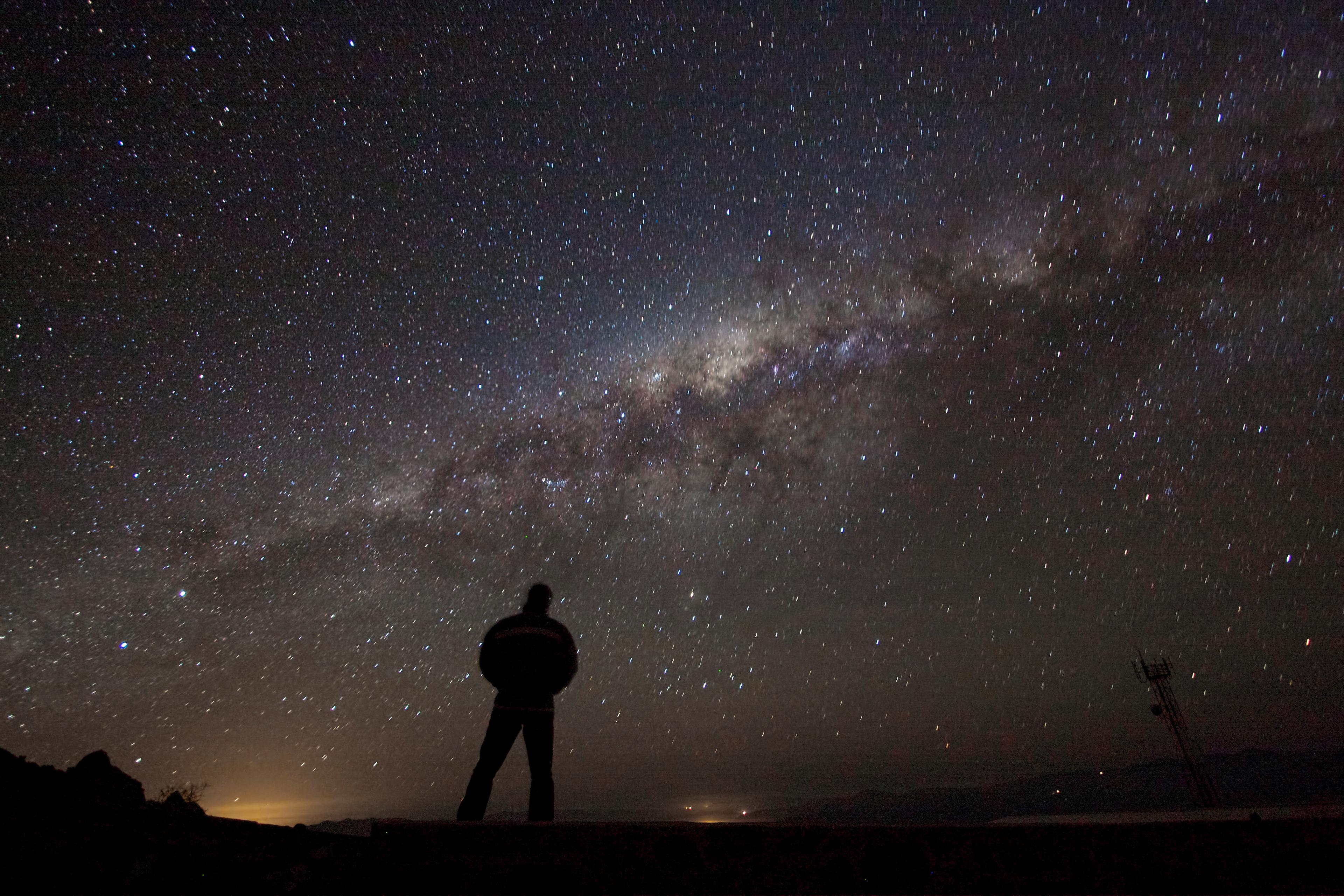
Recently, I met a group of people in Chile who not only embrace the dark, but actively seek it. I was visiting the telescopes of the Atacama desert, which has astonishingly clear, dry skies, perfect for astronomy. Here, light is strictly controlled. Signs reading ‘Dark Is Beauty’ encourage people to switch off, close blinds, and even drive without headlamps. The reward is a night sky so vivid you can see other galaxies with the naked eye – such as the Magellanic Clouds, appearing as pale green smudges on the black.
Back home, this led me to read a thought-provoking 2024 paper by the psychologists Christopher Barnes and Holli-Anne Passmore, proposing a ‘Night Sky Connectedness Index’. They argue it’s important to measure people’s relationship with the night sky (or lack of it), because, in a world where artificial light is obscuring the stars, we may be losing mental health benefits. It’s well known that people with a strong connection to nature have better wellbeing. Such individuals are more likely to flourish, function well psychologically, and report higher levels of personal growth. Yet Barnes and Passmore point out that the literature supporting this relationship has mainly focused on daytime activities, such as birdwatching or forest bathing.
Until I read this, I’d rarely thought about how I access nature at night. In the winter especially, I see daylight as my tonic. Darkness has its dangers, of course – I have no plans for midnight forest bathing – but there’s nothing stopping me switching off the lights at home, and looking up.
All this brought to mind the joke about the drunk man searching for his lost keys under a streetlamp. When asked why he’s searching only under the light, he replies ‘It’s easier to see here.’ All the while, what he needs is in the dark.