It was a sweltering July day in 1996 and Burhan Sönmez, a young Kurdish lawyer, was in a lake. His eyes closed, he trailed his hand in the water. How beautiful and peaceful, he thought.
He opened his eyes – or tried to, but couldn’t. Why can’t I open my eyes?
The scene crackled, as if something was glitching. It wasn’t water his hand was touching, Sönmez realised then. He was lying in a pool of his own blood.
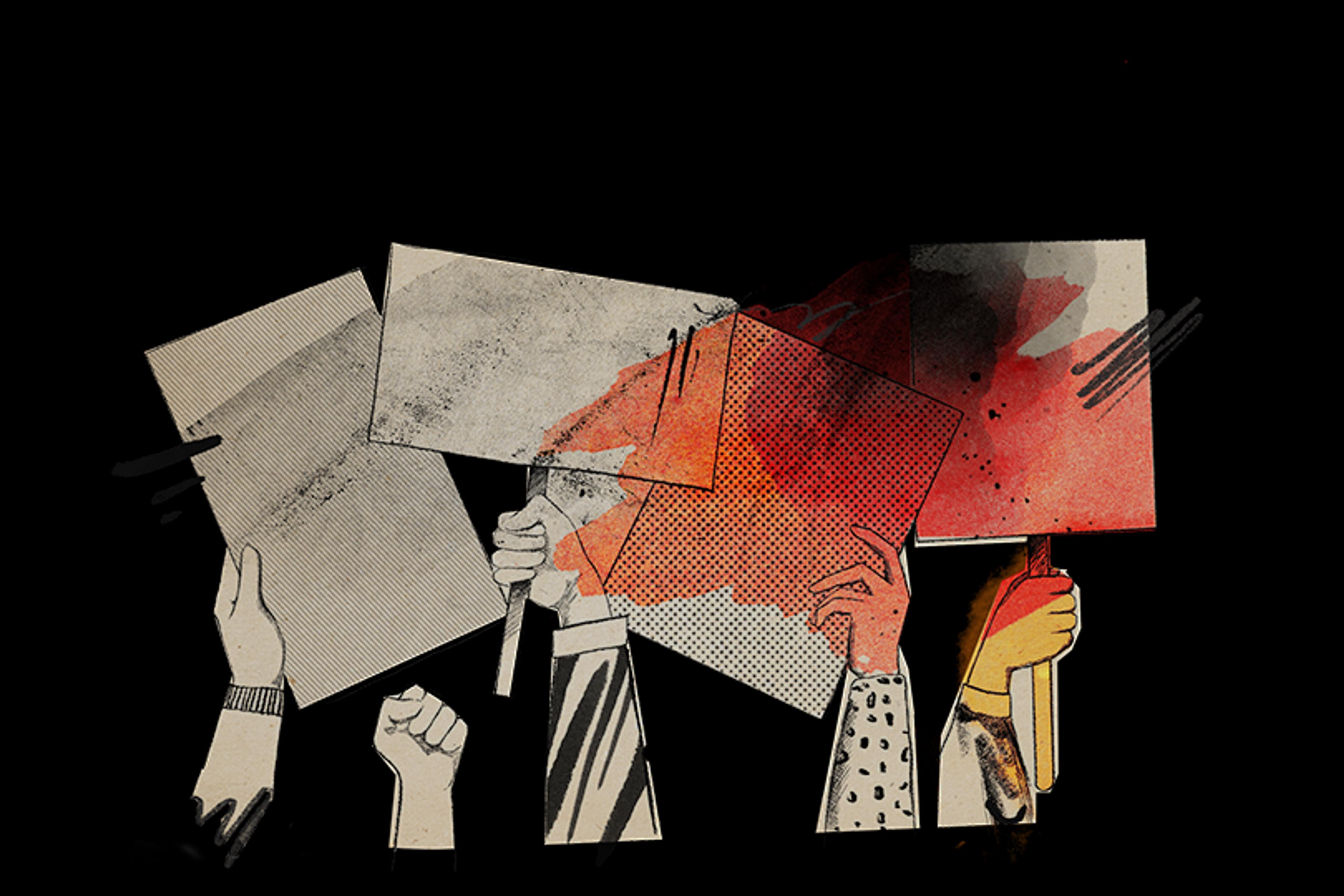
Earlier that day, he’d walked to Kızılay, a public square in Ankara. A squadron of riot cops glowered in one corner. For months, Turkey had been beset by large-scale hunger strikes by Leftist and Kurdish political prisoners, and thousands had taken to the streets in their support. But how had he ended up on the ground, drenched in his own blood? It came back to him jaggedly, sped up and slowed down, like in the movies. Two plainclothesmen passing him by, before pointing him out to the cops. A distinct shout, which made him turn around. Riot police, shields and batons in hand, running in his direction. Him falling on his side. Kicks to his head, the cops trying to crack his skull.
He passed out and found himself in the lake, in the happiest dream of his life.
When he woke up, a cop still hovered over him. ‘You’ll either love this country or leave it!’ he shouted and kicked him again. Then he left, convinced Sönmez was dead.
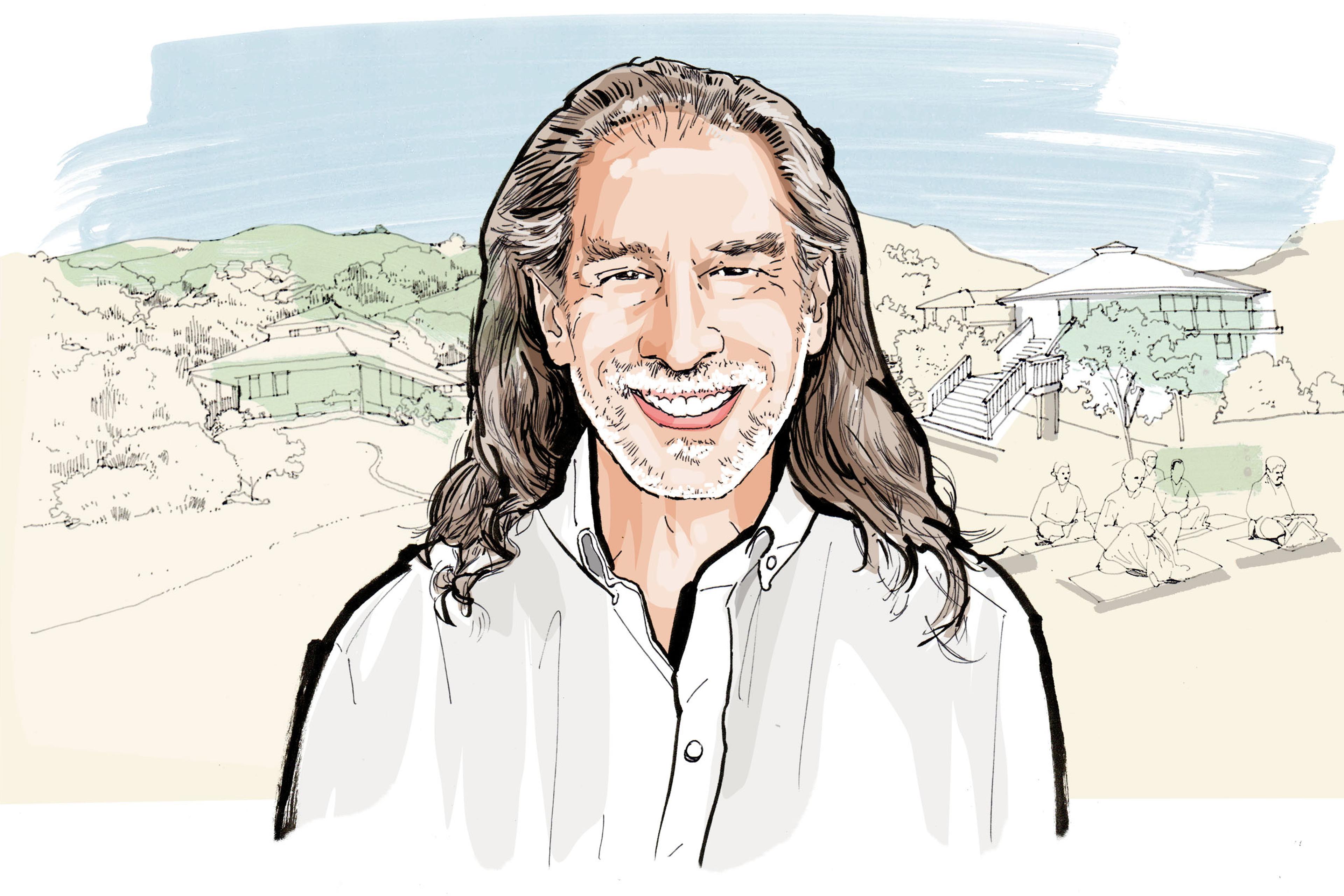
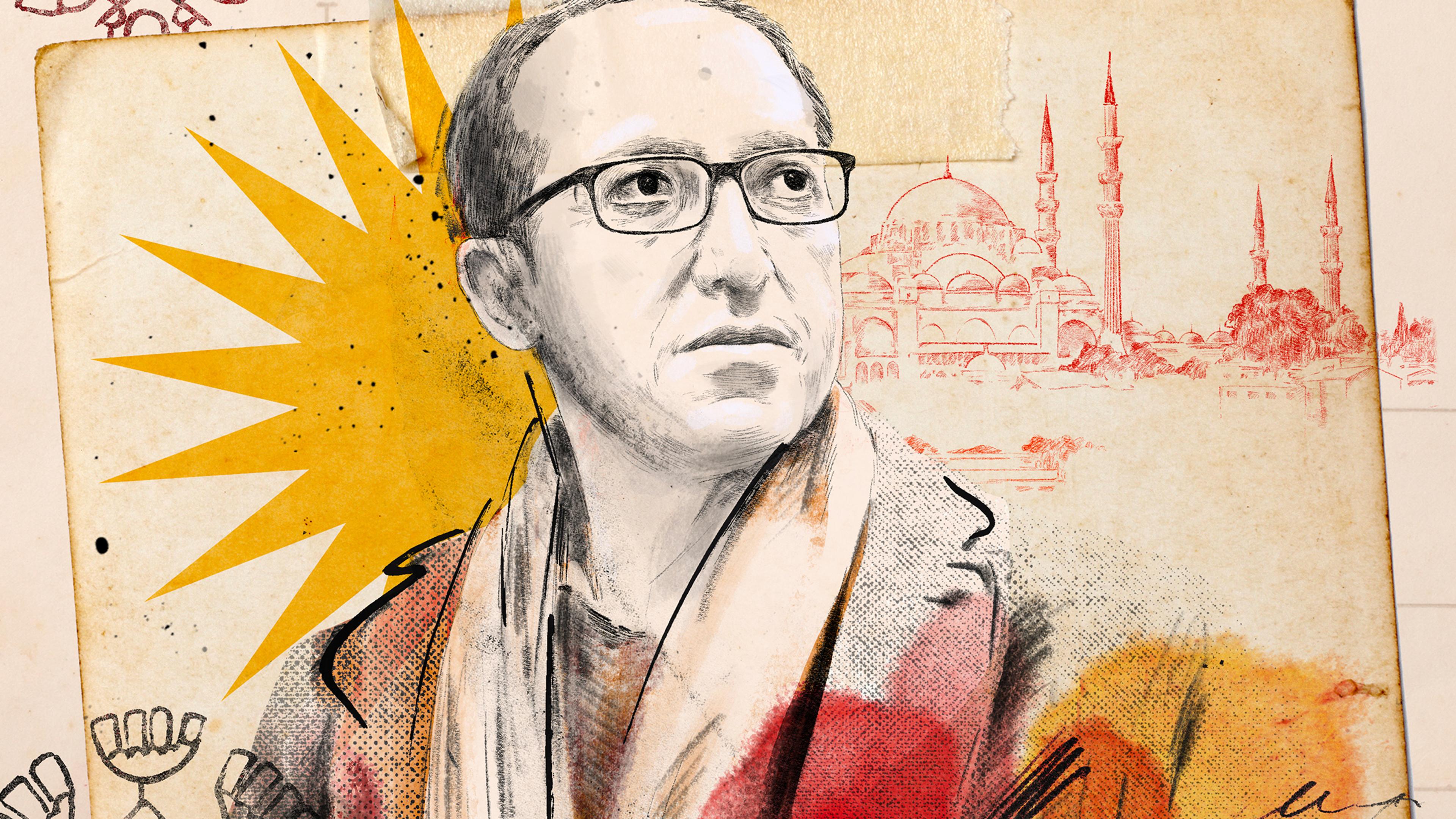
I visited Sönmez last August in Cambridge, England, where he has lived for many years. He was the picture of serenity. Nearly three decades since the attack that cut short a promising career in human rights law and, just as cruelly, wrenched him away from the place and people he was fighting for, Sönmez had established himself as a celebrated novelist, processing and transforming his pain – the physical and mental pain of a traumatic brain injury, the emotional and existential pain of exile – into six novels. When I met him, he was at work on a seventh. Since 2021, he has also served as president of PEN International, a worldwide association of writers established in 1921 to defend intellectual freedom.
Born in 1965, Sönmez grew up on the plains of Haymana, less than 100 kilometres south of Ankara but worlds apart from the Turkish capital. His mother was a dengbêj, a singing storyteller, and at night, she sang him tales of epic heroes who fought against Turkish overlords during the Ottoman era. There were no props or backdrops, no internet or movies to frame the stories – nothing but imagination. ‘Growing up in a small village gave me a sense of the richness of the interior world – the possibilities of the life of the mind, of reflection,’ Sönmez noted in an interview for the Harvard Review in 2022. In Haymana, the world expanded inward, rather than outward.
But the language in which he absorbed these tales – Kurdish, his mother tongue – was banned at school. It was verboten in all public life, in fact. In Turkey, where Kurds comprise one-fifth of the population, the state has historically restricted Kurdish cultural expression, a misguided attempt to foster a singular Turkish identity and quash aspirations of a Kurdish nation-state. As a result, Sönmez, like everyone around him, led a double existence: ‘Turkish became the language of reality – of our comings and goings in the marketplace and schools and workplaces – while Kurdish, with our village stories and legends and songs, served as a kind of language of imagination.’
‘My accident served another purpose: it saved my father’s life’
The attack that ruptured and reshaped Sönmez’s life wasn’t his first brush with death. An earlier incident was also influential in shaping his worldview, setting him on the path that ultimately attracted the wrath of the Turkish state. That was in Haymana, as a seven-year-old. One day, as his father set out on his tractor, Sönmez insisted on coming along. The path was full of potholes; as he stood next to his father on the lurching machine, he toppled over. His father panicked: instead of braking, the tractor accelerated, its large rear wheel rolling over his little stomach.
‘Something inside me exploded,’ Sönmez said. His shoulder and both legs were also broken. His father took him to the hospital, where he remained for 33 days.
Had father and son proceeded on that tractor, Sönmez would later learn, another danger lay in their path. There was an ongoing feud between two tribes in Haymana, serious enough that his father carried a gun with him at all times. On that very morning, members of the rival tribe were waiting to ambush them.
If I hadn’t fallen, my father would have been shot, young Sönmez realised. Usually, people die in tractor accidents like mine. But I didn’t and so, my accident served another purpose: it saved my father’s life.
There was a Kurdish tale his mother would tell him: Xal û Xarzê, ‘Uncle and Nephew’. The small boy in the tale could foresee all the dangers awaiting his uncle and saved him each time, often at great risks to his own life. Maybe he too was like that boy; maybe his life’s purpose also lay in risking it for others.
Sacrifice was a key moral value in the 1970s, not just for Sönmez but for numerous others in Turkey. Rejecting a life of self-interest and self-enrichment, Turkey’s Leftist youths fought for individual and collective freedom. But the state swiftly crushed this idealism, particularly when it expanded into the Kurdish struggle. As a result, Sönmez spent his teens with a growing sense of fury against injustice. He moved to Istanbul for university, deciding to study human rights law. In 1980 there had been a military coup in Turkey, which replaced authoritarian career politicians with authoritarian generals with political ambition. Ever since then, the city had become a site of fear. Detentions and disappearances were the norm. In 1984, Sönmez, who was involved in pro-democracy activism, was taken in for questioning.
‘They brought me to a floor of cells that was three storeys underground; each cell was one metre by two metres in size,’ he told me. ‘Depending on the day, we were held in groups of four or six. When I went to the torture chamber, blindfolded, I would count the steps and try to master my anxiety.’
‘It’s like in wars where soldiers always think the person next to them will die first’
The detention lasted several weeks, but only strengthened Sönmez’s commitment to social justice. He was released afterward but suspended from university, and wouldn’t graduate until seven years later. When he eventually obtained his law degree in 1991, he established his practice in Istanbul, defending political activists and torture victims. ‘I picked up so many bodies from the morgue,’ he said. ‘I attended so many funerals.’ He also became more directly involved in politics, serving as deputy chairman of the Freedom and Solidarity Party (ÖDP), the democratic socialist party he co-founded in 1996.
The risks escalated. When he applied for a passport, he was refused one. He was detained again, despite having no criminal record. His law office was raided, its doors broken twice in one week. He started receiving threatening messages. He dismissed the dangers, recognising this now as a form of magical thinking. ‘It’s like in wars where soldiers always think the person next to them will die first,’ he said. But at the time, the threats seemed normal because they were happening to everyone in Turkey working on human rights. When you live in hot water, he would reflect later, you don’t realise how hot it is.
When he woke up in a pool of his blood in 1996, Sönmez noticed a crowd had gathered around him. People were shouting at the riot police, telling them to leave the young lawyer alone. His comrades carried him to a hospital in Ankara. His face was shattered, his nose, forehead and skull broken. He received 17 stitches on his head. He spent the subsequent year bed-ridden, but unable to sleep.
The pain unmade him but it was the insomnia – ‘more cruel than any pain’ – that he couldn’t bear. Books had become incomprehensible; all he could do was watch TV. ‘I’d get up from my bed and walk around the room, but I felt I was dead,’ he said. Unable to read, he started to write. ‘The things I wrote about concerned death. I was also jotting down the stories my mother told us when I was little.’
One outcome of police torture is extreme police phobia. Another is complete indifference. During his bouts of detention, as Sönmez was taken to the torture chamber, he’d keep a countdown in his head. Only 30 seconds left, only 29 seconds left… ‘I confronted this fear and overcame it,’ he said. After the assault, however, his fear disappeared. He’d see riot police in city streets and walk through them, feeling nothing.
‘One of the best things we can do as humans is fight oppression, and I felt I could happily sacrifice myself,’ he recalled. The thoughts became darker. ‘I would die or commit suicide. I thought this was a good thing. I’d do everything I could until my suicide, and leave the world satisfied.’
He wrote down what he was feeling. ‘I honestly don’t know why or what I was taking notes on,’ he added. ‘But I filled multiple notebooks.’
‘It took me four years to understand that my old self was no longer alive’
In 1998, as he grappled with these thoughts, Sönmez’s Turkish doctors arranged a consultation with a London-based charity that provided psychological and physical therapy to torture survivors, today known as Freedom from Torture. When Sönmez first visited its premises, patients from the Philippines, Chile, Kenya and Iran were waiting for their appointments. Some had their eyes gouged out, others had their arms torn off, he would write in Turkish later, in the short story ‘The Names on the Stairs’ (2014), about his time there. They waited, haunted by the memory of an old pain. They didn’t speak; sometimes their gazes wandered around the room, looking at unfamiliar faces, and for a moment, they felt as if there was nothing but pain in the world.
To his doctor, John Rundle, Sönmez described his headaches and insomnia, his inability to comprehend books, and his growing disinterest in life as a bedridden man in his 30s. Rundle prescribed him a two-year treatment programme. Time passed slowly for the sick Burhan, quickly for the old Doctor. Keen on piloting, Rundle instilled in Sönmez a love for airplanes; they dreamed of flying together one day.
After eight months, Sönmez believed he was cured. ‘It was like 10 people’s energy had returned to me,’ he recalled. In 1999, he flew back to Istanbul. But in Turkey, the water was still hot. Within months, the migraines and insomnia returned. After Sönmez’s Freedom and Solidarity Party publicly condemned the reported torture incidents suffered by Kurdish militants, he received a suspended six months prison sentence for ‘insulting the morale of the Turkish army’. Plainclothes officers tailed him at rallies. A police chief in Istanbul told a friend of Sönmez’s how sorry he felt about what had happened in Ankara.
‘We’ll make it right and finish him next time,’ he sneered.
There is an African fable, Sönmez says, that best describes those years of his life. ‘A gazelle is shot as it runs. It doesn’t fall immediately; it takes another 20, 30 steps. They have this saying: It’s dead, but it doesn’t realise it yet.’ He was grateful to his friends and comrades – teachers, lawyers, trade unionists – who’d propped him up during this time: the ones who covered his expenses when he couldn’t work, the ones who would take care of him when he arrived in their cities for surgeries and consultations. But he couldn’t resume his old life. ‘It took me four years to understand that my old self was no longer alive.’
Sönmez came to a decision. He visited his parents in Haymana and told them that, after spending a week with them, he would be leaving for good. All that week, his mother recounted stories from her repertoire. He taped her. Perhaps I could turn these cassettes into something, he thought. But they would also be a memento of Haymana, a reminder of how he felt when he lived there. Then, in February 2000, he arrived at London Heathrow and applied for asylum.
Soon after he arrived in the UK, Sönmez was back in Rundle’s office. ‘Imagine a truck, loaded with 20 tons of cargo,’ he said. ‘It can carry it very easily. But when the tyres burst, it can’t any more. And because of the cargo’s weight, the driver can’t change the tyres – first they must unload it. That was me. My tires had burst.’ Rundle told him his brain needed to clear. ‘You’re going to change your whole life now. Don’t read books. Don’t meet people. Don’t get into arguments.’ Instead, the doctor advised him to settle in a small town in England. Sönmez chose Cambridge after visiting it in winter and seeing its willow trees. He found employment as a Turkish translator at police stations and hospitals.
When I visited Soňmez in Cambridge in 2025, he was waiting for me behind the turnstiles at the train station, sporting a tweed cap. He had an instantly reassuring presence: he knew the town by heart, I saw, and, as a political refugee, cherished its history and nature, and wanted me to share his appreciation. We were surrounded by European and American students visiting the town’s many colleges and language schools. Taking a cab to Chesterton Road, we began our walk by the River Cam, passing punters and ducks in the green water, eventually ending up at the Eagle, one of the town’s best-known pubs.
In February 1953, the scientists Francis Crick and James Watson proclaimed here: ‘We have discovered the secret of life.’ They were referring to the double helix structure of DNA, which revealed how genetic information is stored and copied. Sönmez would make discoveries of a more personal nature at the Eagle.
‘I wrote my first novel there,’ he said, pointing to a table in the corner.
The prospect of reaching into his past and processing it through writing was a certainty that kept him alive
In the early 2000s, he would visit the pub daily, notebooks in tow, which he filled with dream scenes. Still plagued with insomnia, he wrote when he couldn’t sleep. ‘I had all this material now, and I knew I could turn [the notebooks] into something one day, but the form hadn’t yet emerged in my mind.’ He began by weaving his memories with the transcriptions of his mother’s tapes, feeling a heavy ache in his heart in the process. ‘When I first came here, I was thinking, I’m going to die here, I won’t be able to return. My initial sketches were rooted in this terrible longing for my parents and my village.’ For some guidance, Sönmez enrolled in a one-year programme on modern fiction at the university. He’d initially approached fiction as a catalyst for self-healing but, ultimately, as he filled one notebook after another, he realised he had a novel on his hands, one about Haymana: Kuzey (2009), meaning ‘North’, is the story of a man who leaves his town and returns 20 years later as a corpse. His son journeys to the north to learn why he died.
Writing Kuzey took Sönmez a decade and became an integral part of his treatment. He had no money or regular income, yet the prospect of reaching into his past and processing it through writing was a certainty that kept him alive. ‘Until people read my first book, I didn’t see novel-writing as my future. I was thinking, Yeah, I’ve written this book, like so many others do. When people who read it said: “Oh, it’s beautiful,” I thought they were saying it out of kindness.’ But in the weeks following publication, he felt something changing within him. ‘I was able to confidently call myself a novelist,’ he said. The contours of a new life shimmered into view. ‘I would live, and I would live as a novelist.’
On my second day in Cambridge, Sönmez drove me to the Orchard Tea Garden. In the 1910s, the war poet Rupert Brooke rented a bedroom next door at Orchard House, which gave him unrestricted access to the garden, and turned the Orchard into a meeting point for the Grantchester Group, thinkers and artists whom Virginia Woolf dubbed ‘the Neo Pagans’. Woolf was a regular visitor, as was Bertrand Russell, E M Forster, John Maynard Keynes, and Ludwig Wittgenstein. This is where Sönmez wrote his second novel.
‘My curiosity about the city’s history, beyond simply living in it, began at the Orchard,’ Sönmez told me, as we took tea with scones, butter and marmalade, bees buzzing overhead. In the semi-autobiographical novel Sins and Innocents (2011), magical realist sections reminiscent of Gabriel García Márquez sit alongside chapters written in dry prose, set in Cambridge. In the course of the story, Brani Tawo, a Kurdish political refugee from Turkey, and Feruzeh, a student who fled Iran after the Islamic Revolution, meet and fall in love. Both struggle to hold on to life: Feruzeh’s family recalls a freer time in Iran, while Tawo, whose memories of his town in Anatolia are laced with violence, is infatuated with death. As was Sönmez at the time, obsessively visiting Wittgenstein’s grave.
This was Sönmez’s own project, as well: finding a language for the realities of his childhood and homeland
After tea, Sönmez invited me for a walk at a small cemetery nearby: the Ascension Parish Burial Ground. It started raining while we were there, Sönmez leading me past gravestones of various shapes and sizes, trying not to step on the dead or fall into a puddle. We came across a flat stone, engraved in a modern sans-serif font.
LUDWIG WITTGENSTEIN
1889-1951
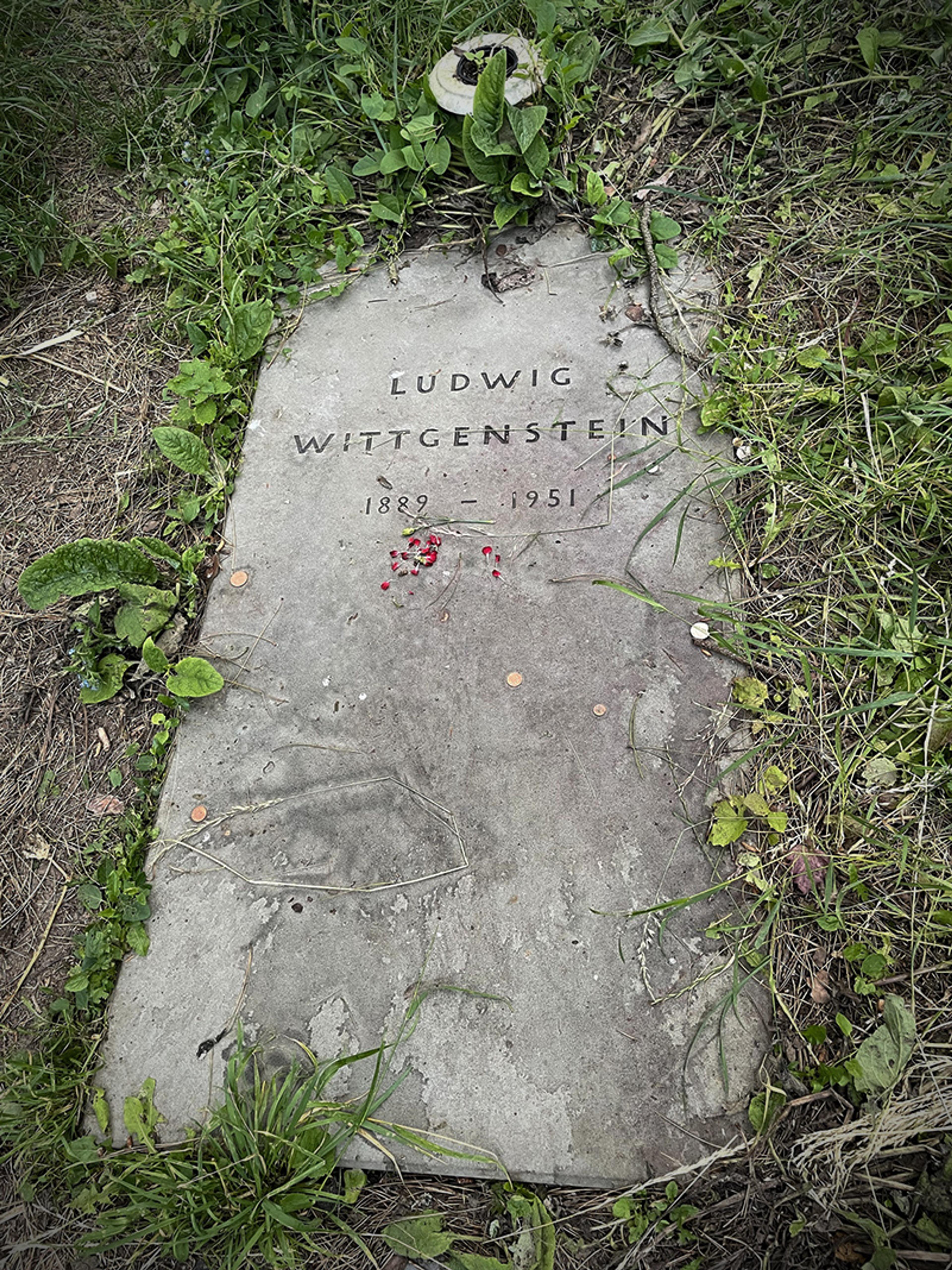
Courtesy Wikipedia
‘His gravestone embodies his thought: everything serves a purpose and an artwork’s content comprises the stark simplicity of its form,’ Sönmez said. His favourite book, he said, was Tractatus Logico-Philosophicus (1921), Wittgenstein’s only work published in his lifetime; Sönmez read it during his first year in Cambridge and admired its goal of identifying the relationship between language and reality. This was Sönmez’s own project, as well: finding a language for the realities of his childhood and homeland.
In 2011, while accepting a leading Turkish literary prize for Sins and Innocents, Sönmez met a ghost from his past. Did he remember him, the man asked. Nizam, Sönmez knew immediately: his cellmate from when he was first detained in 1984. They’d spent weeks together with two others in a subterranean cell where, in order to sleep, they learnt to arrange their bodies into an interlocking ‘herringbone’ pattern.
On his second day in the cell, Nizam had turned to Sönmez: ‘We’ll be touring Istanbul together.’
Sönmez asked exactly where they’d be going.
‘Today, we’ll tour the Dolmabahçe Palace,’ Nizam answered. The other detainees, who had already spent weeks in that cell, had devised a scheme of Decameron-like storytelling. In their minds, they got up and walked around the former seat of the Ottoman sultans, imagining the freedom and beauty of the city above. ‘We’ll go to Ortaköy this time, and walk by the Bosphorus,’ Nizam announced the next day.
The contrast between excruciating torture sessions and the city’s enchanting sites makes it a striking work of fiction
‘I couldn’t believe it,’ Sönmez recalled. People could survive cruelty and violence through the simple act of storytelling. Imagination healed the wounds inflicted by autocracies. Shortly after that chance meeting with Nizam, he began writing his next novel. ‘It would replicate that feeling of being underground and imagining the aboveground.’
In Istanbul Istanbul (2015), four political prisoners – the Doctor, Demirtay the Student, Uncle Küheylan, and Kamo the Barber – tell each other stories to keep themselves alive. The contrast between excruciating torture sessions and the city’s enchanting sites makes Istanbul Istanbul a striking work of fiction. After the book’s publication, former detainees at the Gayrettepe interrogation facility in Istanbul contacted Sönmez. ‘Why on earth have you written this,’ one complained. ‘We’ve lived it. You’re making us live it again.’
By the mid-2010s, Sönmez felt sufficiently self-assured as a writer and was preparing to explore Turkey’s wounded histories and suppressed rebellions in a new book. Then, millions marched against Recep Tayyip Erdoğan’s autocratic rule in Turkey. Sönmez watched the events from Cambridge. At 2 am one day, he saw thousands of people march over the Bosphorus Bridge and into Gezi Park, one of the last green spaces in Istanbul that activists tried to rescue from Erdoğan’s business cronies. ‘A revolution was happening in Turkey, I couldn’t be apart from it,’ Sönmez recalled. The values he cherished – self-sacrifice and altruism – called him to duty. He was on the first flight out of Stansted; the following evening, he attended protests in Beşiktaş, near Dolmabahçe Palace, where he observed the state’s heavy-handed tactics: ‘The police’s behaviour was the same as in the 1990s.’ Several civilians died during those protests (between eight and 22, according to different sources), and more than 8,000 were injured. To Sönmez, it was all too painfully familiar. The fury of the Turkish state against its citizens who demanded justice hadn’t dimmed – it had only grown with time.
As his literary reputation grew, Sönmez became a member of English PEN and of Kurdish PEN. His books were published in more than 20 languages, and he was travelling extensively. During a trip to New York, Jennifer Clement, the president of PEN International at the time, invited him to join the board of the organisation. ‘They said, we need someone from Turkey but also someone with an international voice.’ Initially, he wasn’t enthusiastic: since the 2013 Gezi protests, he was spending more time in Turkey, and was busy issuing press releases and attending court proceedings. ‘You’re doing many things on your own,’ one PEN administrator told him. ‘Do the same things, but do them with us.’ Sönmez liked this approach. In 2021, at the organisation’s centennial congress, he was elected the 24th president of PEN International.
In his home in Cambridge, where he’d resettled in 2018, Sönmez brought me upstairs to his office. In some ways, by presiding over one of the world’s earliest champions of free expression, he is combining his past and current selves: the human rights lawyer and the writer. When he assumed the PEN presidency, he’d promised to use his lawyerly skills to update the organisation’s dusty bylaws – but a more urgent matter consumed his attention: the return of Taliban rule in Afghanistan.
Sönmez speaks in a calm, unhurried manner when he describes his novels and literary traditions. But when he detailed his work for PEN, I could feel a great sense of urgency in his tone: ‘We had a powerful, active PEN centre in Afghanistan. They woke up one morning, and the Taliban had arrived. There were no trains, no planes. The borders were closed. Fearing death, all those people went underground. We conducted the largest rescue operation in our history. We rescued more than 100 writers and their families.’
‘At PEN we allow a very open democratic debate process and, if necessary, conflict’
Sönmez pointed to other crises – in Russia, Palestine, Belarus, Turkey, and Iran – where PEN International has intensified its focus. ‘Of course, I’m most aware of the situation in Turkey,’ he added. Sönmez also oversees the activities of both Turkish and Kurdish PEN, two of more than 140 autonomous PEN centres worldwide. ‘Unfortunately, the requests [by at-risk writers for assistance] from Turkey haven’t diminished at all.’
‘We’re among the world’s oldest human rights organisations,’ he said later, as we drank Turkish coffee in his garden. PEN, founded in 1921, is two decades older than the UN, founded in 1945, and four decades older than Amnesty, founded in 1961.
‘Why has PEN survived? Because we allow a very open democratic debate process and, if necessary, conflict. We don’t exclude dissenting opinions.’ Sönmez acknowledged that several crises in the past decade – such as the 2015 attack on the offices of the French satirical newspaper Charlie Hebdo, Israel’s genocide in Gaza, and Russia’s war on Ukraine – have generated vociferous debate among PEN members and centres
‘Divisions and debates among writers help keep us alive,’ he insisted. Fighting in an organisation like ours is as necessary and natural as it is in a marriage.’ The ‘dynamism of free discussion’ was the secret to survival. ‘The question is: how do you make up afterward? Do you resume talking in an hour or a week later?’
For years, I admired Sönmez as a member of Turkey’s socialist movement – a compatriot who was vocal both at home and abroad. I cast my first legal vote in 1999 for ÖDP. Reading his novels, I agreed with his perspective on Turkey’s history, especially his attention to the region’s rich heterodox legacies erased by the scourge of nationalism. In the 2010s, I watched many of my Kurdish friends – such as the novelist and artist Şener Özmen and the poet Kawa Nemir – turn to writing in their first language, years after launching careers in Turkish.
Last year, Sönmez joined their ranks.
The first time Sönmez read a novel in Kurdish, he was 35 years old. It was a novel by the exiled novelist Mehmed Uzun. ‘I didn’t understand all of it because I didn’t know Kurdish grammar at the time,’ he said. While writing his second novel, he’d catch himself thinking in Kurdish, then translating his thoughts into Turkish. He didn’t have the tools then to capture those thoughts in Kurdish on the page. But he was now ready to take on the challenge.
Sönmez maintains there is something unmistakably Kafkaesque about the Kurdish experience
A thriller set in 1968, in a Europe beset by student protests, Lovers of Franz K. was published in Kurdish in 2024 and a year later in English. It was inspired by the Czech novelist Franz Kafka’s real-life request to his friend and executor, Max Brod, to burn his manuscripts after his death, a wish Brod famously betrayed. Sönmez was intrigued by a chapter in the French philosopher Georges Bataille’s study Literature and Evil (1957) that explored the ethics and reception of Brod’s action. For instance, French partisans who’d fought the Nazis published a communist weekly paper, Action, in which the question was hotly debated. Their obsession had reminded Sönmez of the urgency and intoxication that literature held during his own university days. ‘Kafka wasn’t a central figure, but people read novels religiously: Dostoyevsky, Jack London, and Steinbeck gave meaning to our lives.’ In Lovers of Franz K., a young man named Ferdy Kaplan sets out to punish Brod for his betrayal of Kafka but kills a student by mistake and is interrogated by a police commissioner in West Berlin.
At the heart of the novel is the question: who owns literature? ‘Kafka had the right to remain unknown – he stated it absolutely,’ Sönmez said. But he admits he, too, would act as Brod did. Lovers of Franz K. received praise in the Kurdish press. ‘Still, critics asked: Why didn’t you tell the troubles of the Kurds in your first Kurdish novel? Why did you write about Kafka? What does that have to do with us?’ Kurdish is a wounded language, Sönmez countered, but that didn’t mean ‘we couldn’t enter world literature with our creative side, instead of showing ourselves solely through our wounds.’
Even so, he maintains there is something unmistakably Kafkaesque about the Kurdish experience. ‘The first traffic light was installed in a Kurdish city in the mid-1990s. This was at the height of the civil war, an era of intense village evacuations and extrajudicial executions.’ The traffic lights were, as they are everywhere, red, yellow and green. But these were also the colours of the Kurdish flag. When the townspeople saw those colours, they waited, just watching. So, the government replaced the green light with a blue one. ‘The traffic lights in [the city of] Batman were yellow, red, and blue,’ Sönmez marvelled. ‘Nothing could be more absurd. This is the definition of the Kafkaesque.’
As we parted for the day, he added: ‘Today, people wonder if the world described in Orwell’s 1984 could become reality one day. It’s reality today! There’s no point fearing it will happen. We’re already in it. Turks live in it. Americans are now entering it. Italians have been living in it for the past few years.’
On my final night in Cambridge, Sönmez took me to King’s College Gardens for a production of Twelfth Night. As we waited for Viola and Duke Orsino to appear, he handed me a sandwich he’d made earlier in the day, with strawberries, cream cheese, and sweetened bread. ‘The English people love this,’ he said. Despite the pessimistic political observations he’d offered the previous night, I noticed he seemed serene.
Death had haunted Sönmez’s work, starting with his first novel, Kuzey, which opens with the image of a dead body. His fourth novel, Labyrinth (2018), begins with a man jumping from the Bosphorus Bridge in Istanbul. He survives. Some of Sönmez’s own comrades died by suicide after undergoing torture. One friend jumped into Lake Geneva and never returned. ‘My obsession with suicide vanished in time,’ Sönmez told me matter-of-factly. Over a quarter of a century, he seems to have processed it into a literary subject.
‘I say it with a laugh, but maybe if the police hadn’t assaulted me that day, I would have been someone else’
As we sat on the lawn, Sönmez returned to Kafka, noting how the novelist couldn’t turn any of his engagements into marriages. ‘His illness and his clash with his father had cut his life in two. He is an unfinished man, and, thinking of him, I’d ask myself, “What is my unfinished half?”’ Unlike Kafka, Sönmez had found lasting love: he married his girlfriend in 2014, and they live peaceably with their young son in Cambridge. His unfinished half, he realised when he completed Lovers of Franz K., was his Kurdish self, the one that the state had tried to stamp out. Writing in Kurdish completed him.
After the play, as we walked outside King’s College Gardens under moonlight, Sönmez recounted his return in 2018 to the medical centre that saved his life. His doctor, Rundle, had died by then. Sönmez met the new staff, who invited him to a fundraiser, which he attended alongside the novelists Julian Barnes and Kamila Shamsie. ‘They were there as writers,’ Sönmez said. ‘I was there as a writer and former patient.’
‘The fear of death has returned since the birth of my son,’ Sönmez confided, before leaving me at the door of my hotel by the River Cam. The feeling of doing something for others remains overwhelming – during a recent vacation at Patara Beach in Turkey, Sönmez saw a woman struggling in the waves during a storm and jumped in to help, despite not knowing how to swim himself. But something has shifted. ‘Crossing the street nowadays, I fear that a car may run me over. I know this fear is part of a natural evolutionary impulse to protect my son.’ This too, I noted, was a sign of healing.
The police assault, in many ways, was the turning point of Sönmez’s life. ‘In a way, I’m grateful to them. I say it with a laugh, but maybe if the police hadn’t assaulted me that day, I would have been something, someone else.’ In a recent interview for PEN America, he was asked how that history of violence affected him as a writer. ‘Each of us has a song in our hearts. We want to sing it through our books, sometimes with the colours of politics, sometimes without those shadowy colours,’ he answered. ‘For myself, I feel that in each book I try to create a new form of truth and beauty. It is my challenge to oppression.’