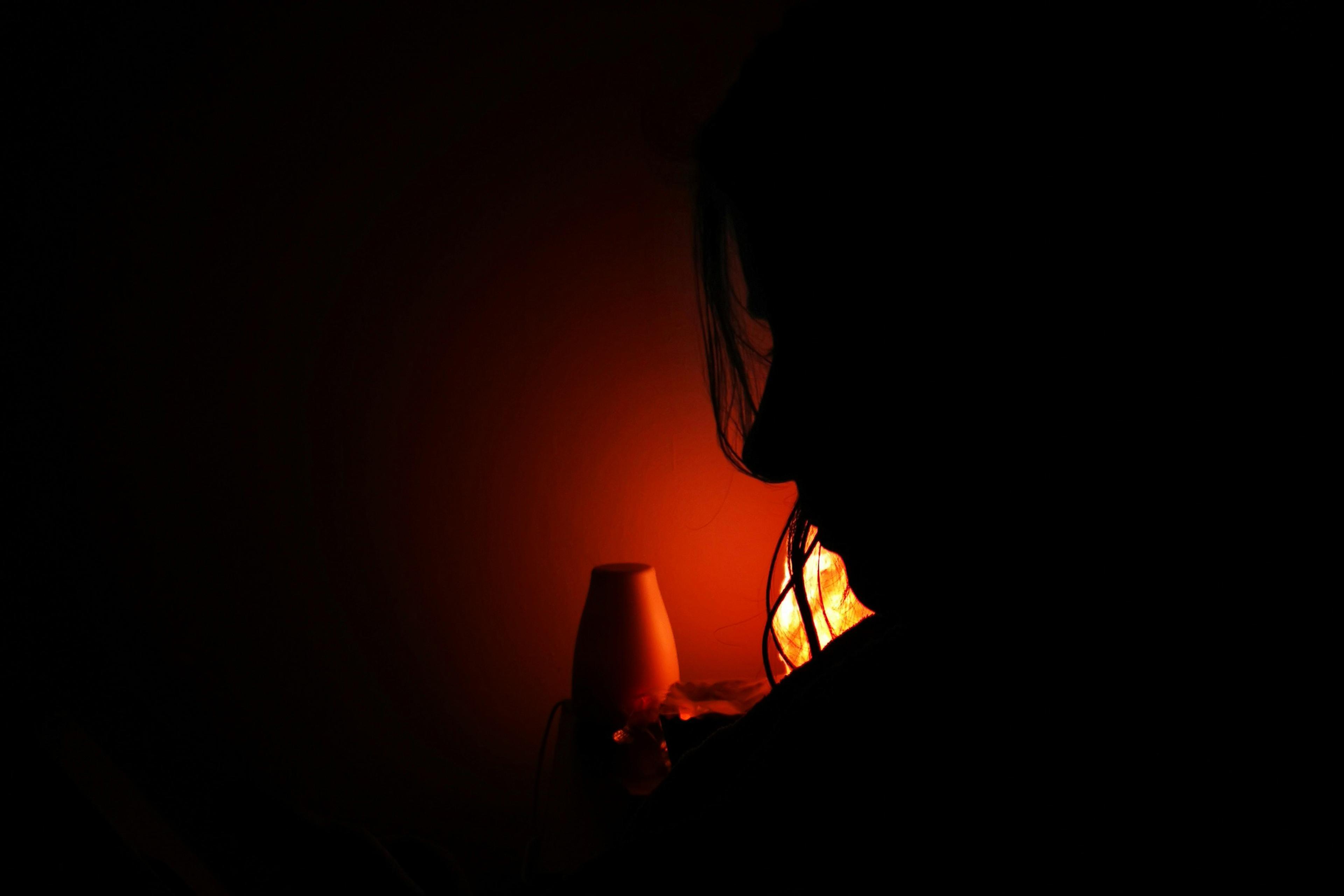
It starts as a burning itch on the upper corner of my left cheekbone, right below my eye. I press ice and rub lotion into the spot, hoping to soothe the fire on my face. Nothing helps, not even temporarily. In the time I wait for an appointment with my dermatologist, I mark in horror the slow spread of inflammation as it laces its way under my left eye and down my cheekbone. I keep my head turned so people see me only in profile – the good side. I pull my hair forward to cover the other half, my gaze now pointed downward instead of straight ahead.
The two of my three young children who can speak wonder aloud at my newfound hairstyle. ‘Why are you hiding your pretty face, mommy?’ I don’t know how to answer them; I don’t know what’s happening either. Long before the rash, I cruised through adolescence with the kind of skin people envied, free of pimples and pockmarks. Now, what I’d taken for granted is gone.
I experiment with a variety of medical creams that yield no change to my disfigurement, as well as every concealer and foundation I can lay my hands on. The people I befriend at my local beauty store become my lifeline. A place I once considered irrelevant is now the only place people are invested in me and my story. Whenever I return with yet another failed product, they hug me while I cry. Together, we turn to another technique and product that could work.
After months of delaying the inevitable, intent on covering up the rash until it magically disappears, I return to my dermatologist. It is the first day in months that I haven’t plastered on globs of concealer and foundation to cover up what I can no longer control. The doctor is insistent: in order to learn anything more, we must perform a biopsy.
I sit there as she first numbs, then carves out a piece of my face. The tugging and sewing lurch my stomach. Blood, guts, needles, birthing – none of that bothered me, but this tears me apart. I am in tears before I make it to my car, unable to glance at my face to see the damage firsthand. It isn’t the pain that disturbs me, but what I would see. What I would not be able to erase.
The results are inconclusive. The doctor cuts again. Still inconclusive. The third time, she suggests a plastic surgeon. I feel a marginal sense of relief knowing minimal scarring is the surgeon’s priority. But now they need two samples from different parts of my face.
This time, the results are definitive: lupus, an autoimmune disease where the immune system attacks healthy tissues and organs. I have a form of skin lupus, also known as cutaneous lupus. There are three main types – acute, subacute, and chronic – and mine turns out to be one of the chronic kinds, known as discoid lupus. Further research yields that it often begins as round, coin-shaped sores on the face, scalp, or ears – check. The skin can lose or gain pigment – check. Scars may form and never fade – check. And sometimes, the hair loss is permanent, a thought that makes my stomach drop.
Before the diagnosis, I could exist in denial, chasing elusive solutions. But now I was stripped of any illusion: my problem, and my new countenance, was here to stay. There seemed to be no cure or preventative measure for future flare-ups; I was forced to contend with the fact that my body would inevitably, time and time again, attack itself.
I had, of course, grappled with other illnesses and challenges: a debilitating bout of pneumonia that nearly killed me, another autoimmune disease, childbirth, and postpartum haemorrhaging immediately followed by a D&C (dilation and curettage) after my third child. But this was the first time I couldn’t conceal my suffering from the world. Lupus scarring was a constant reminder every time I looked in the mirror. It also hung like a question mark on other people’s faces. I learned to tell when they were going to bring it up, dreading that moment. Some battles people prefer to face privately.
After slicing off parts of myself over the years, was it so wrong that I wanted to keep the rest of me intact?
‘But you’re not dying,’ my friends tried to console me.
‘At least it’s not cancer,’ my parents said.
‘But it’s on my face,’ I screamed. ‘You can’t tuck it away and pretend it’s not there.’ I was expected to go about life appreciating that I had one to live. After slicing off parts of myself little by little over the years, was it so wrong that I wanted to keep the rest of me intact?
In those moments, I yearned for comfort and support from my family and friends. But also, from myself. I leaned more into makeup, stumbling through this now-familiar world with new eyes. Under bright lights and swirls of opalescent colours, I rediscovered the place that had offered me a lifeline before my diagnosis, a place I had for so long viewed as frivolous, lighthearted and vain. After a year of sampling products and learning techniques from makeup artists, I realised I’d been on a transformational journey. By camouflaging the damage with a host of sophisticated techniques, I knew my face again.
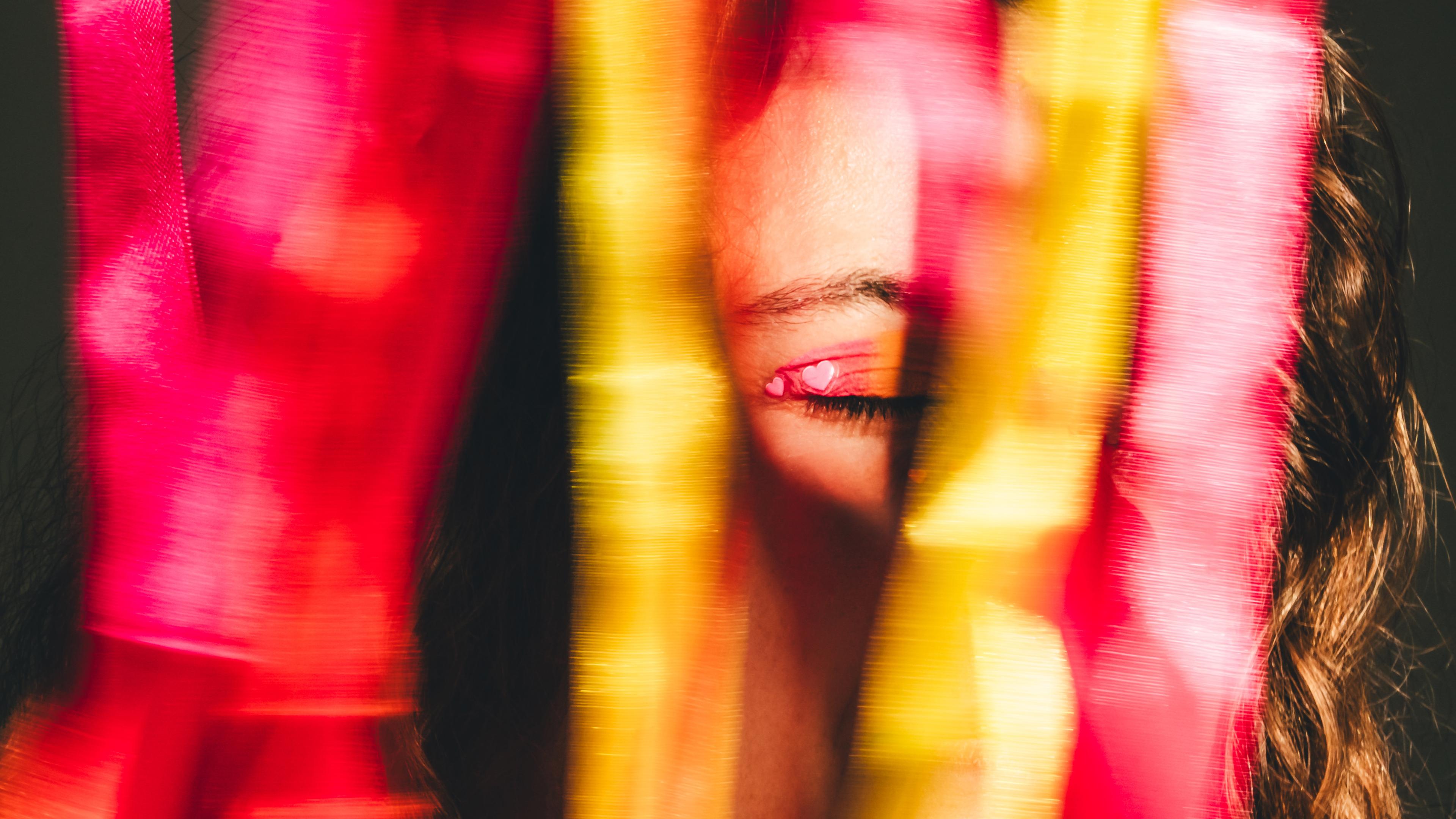
Slowly, I relinquished the tenacious hold I had on how I presented myself to the world and gravitated toward brilliant eyeshadows that scintillated, dazzled. Cosmetics weren’t a crutch only used to console myself or control how others saw me, but a liberating form of play. I swept dramatic colours across the arch beneath my brows, painting myself back to life. My eyes captured hues that twinkled and danced, my personality reflected in the rainbow of colours I could pick from at any given moment. I learned I could direct the eye away from my scars and toward the art I created on my face. No longer did I have to watch people’s gaze follow the constellation of scarring or answer questions like: ‘What happened to your face?’ or ‘Were you in an accident?’ or ‘Were you born with that?’ Instead, people engaged me on my art: ‘Wow, your eyeshadow is amazing! Can you share how you did that?’
Little by little, I rebuilt myself. And, where once this kind of covering-up was anathema to me, now it’s become my salvation. To learn I would find love and forgiveness in makeup both shocked and delighted me. But my daughters baulked.
Camouflage granted me the compassionate space no one else could
‘Didn’t you say it was bad for your skin?’ my elder daughter says. ‘Didn’t you say it clogs your pores?’ the younger one chimes in. ‘I’m never putting makeup on.’
When they listened, they really listened.
‘I’m using it to cover the scarring from my lupus,’ I’m forced to explain.
‘But why do you want to cover them?’ one of them asks.
‘Because they’re not who I am. I want people to see past them like you do.’
They nod. This is a conversation we’ll have again and again. It’s a work in progress. We all are.
Masking my illness extended an unbiased invitation for me to reinvent myself. Camouflage granted me the compassionate space no one else could. Even as I grieved, hiding in plain sight returned the very thing I lost: my face. Having regained control, I bare my face to the world now, the velvety comfort of my own skin feeling like home again, swirling my palette only when I want to.