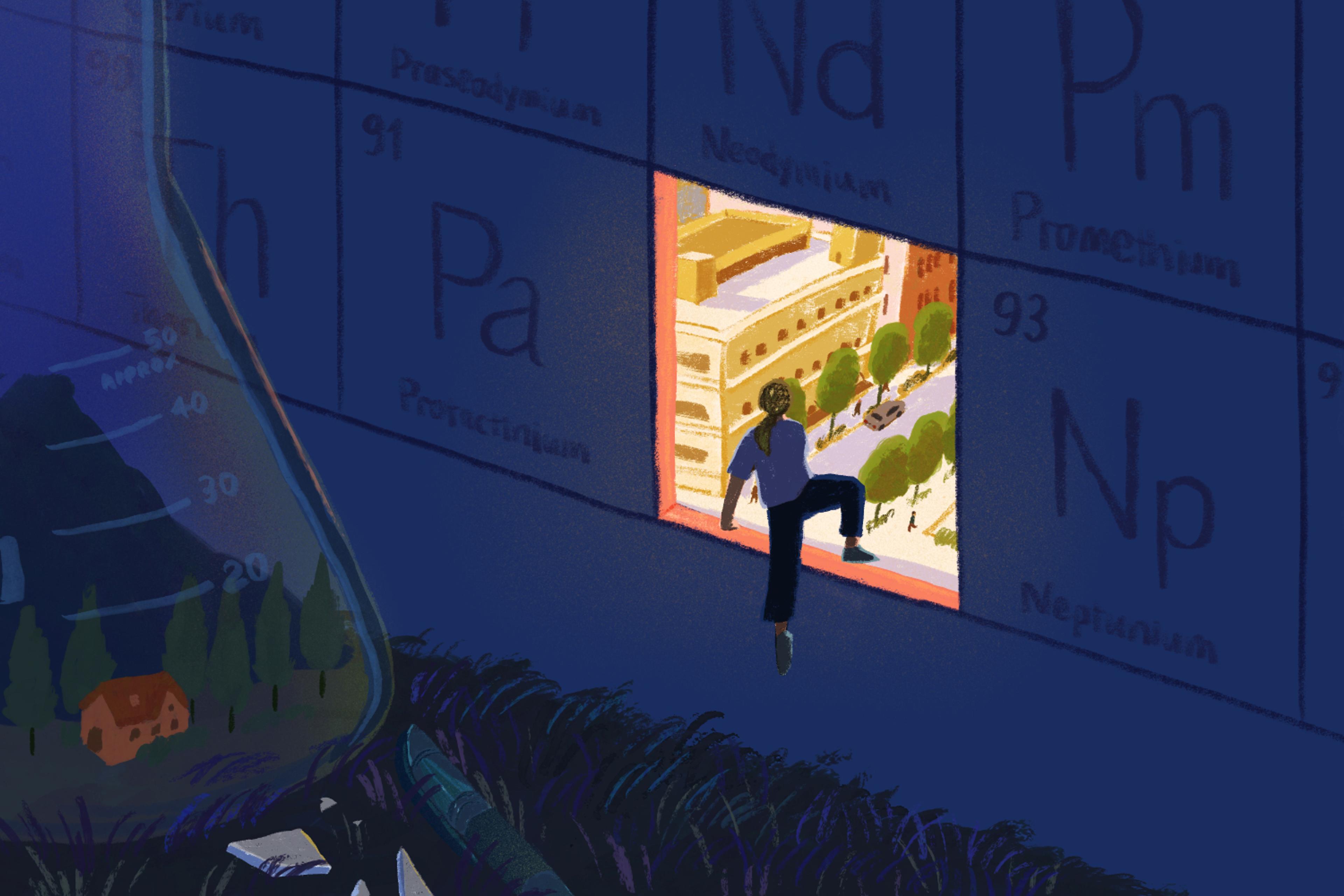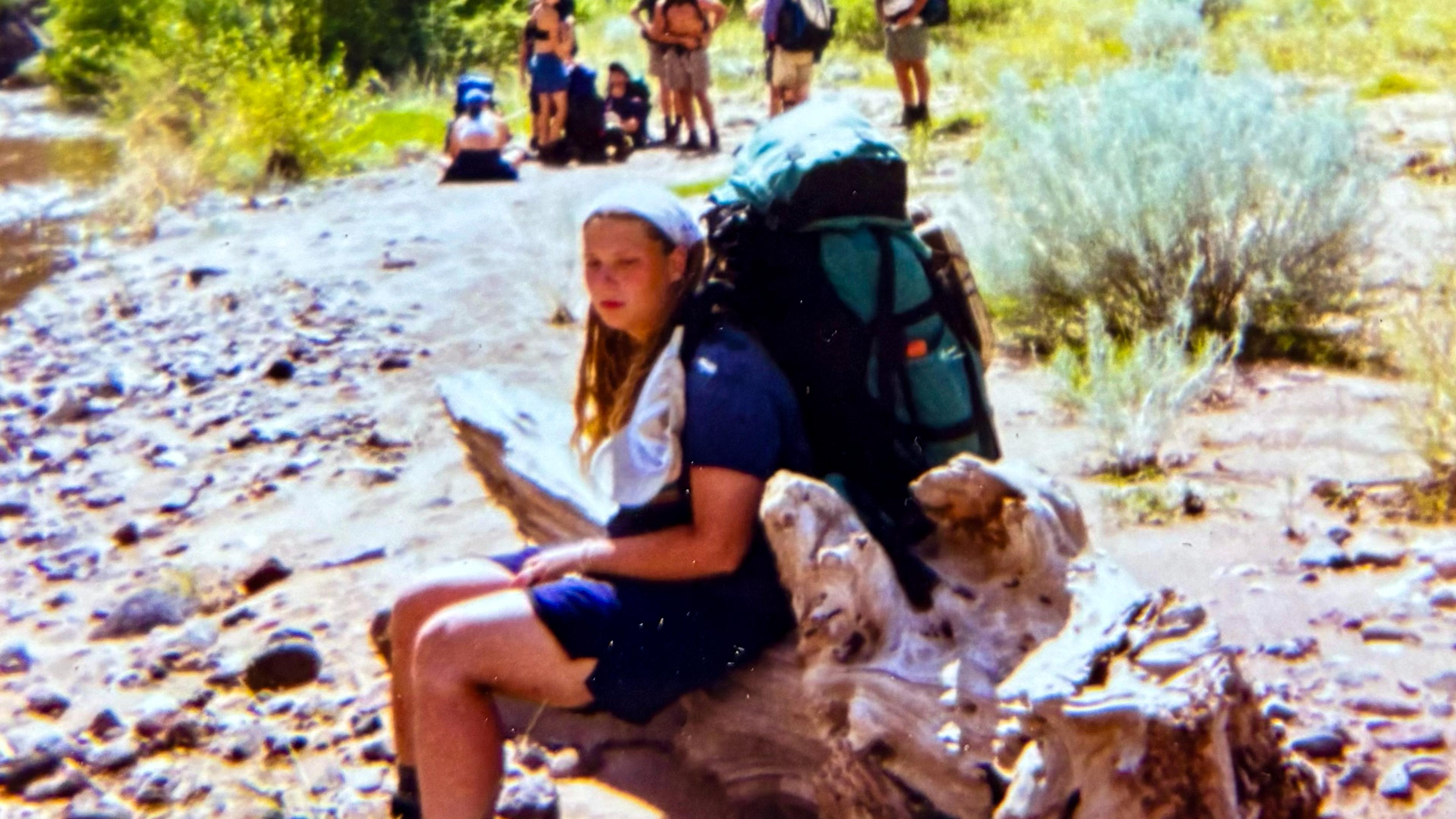
In the fall of 1998, I ride a Greyhound bus alone from Boston to Arizona, where I embark on an unconventional college orientation: a three-week backcountry hike. Technically, I am homeless as I begin my journey, carrying nothing but a pack, my college acceptance letter, and the vague promise of securing off-campus housing after my return from the wilderness. Just months before, I was a ward of the state and, by comparison, this feels like pure freedom. I have never so much as been on a nature walk, but the prospect of sleeping outside, drinking river water purified with iodine, and a two-day ‘solo’ sounds sufficient to mark my hard-won transition into adulthood, an opportunity to exchange my identity as a foster kid for a life lived on my own terms. Yet my first stop, the posh hotel where incoming freshmen and their families gather, is a stark reminder that I don’t belong. With every introduction, I am forced to explain myself in terms of absence – my parents aren’t with me, I have no housing, not even a prospective major. Even that old standby – Where are you from? – leaves me lost for an answer. I’m grateful when it’s time for families to leave, and I can be just another first-year student, excited and uncertain.
My group will be trekking through the Blue Range Primitive Area, a remote expanse of rugged mountains, deep canyons and abundant wildlife. Our leaders – three college seniors finishing degrees in Adventure Education – run the standard ice-breakers (name: Skye. Likes: sour candy and soda).
While I spent summers making minimum wage, I learn that most of my peers earned bragging rights in mountaineering and rock climbing. The college’s gear warehouse is like a museum of foreign artefacts to me: propane stoves; rubber dry bags; a hand trowel; and ‘mids’, lightweight, open-air tents that sleep a dozen. Backcountry meal planning is its own adventure, introducing me to dehydrated hummus, boxed tofu, and powdered falafel (or feel-awful). Staying alive is reduced to a set of new rules: the dire importance of protecting our feet, the dangers of cotton underwear, and how to layer our synthetic clothes for hot days and cool nights. I even discover how to ‘take care of business’ in the backcountry (cue the hand trowels). Armed with this knowledge and a hiking pack weighing roughly 70 pounds, I promptly topple backward into my new life, flailing like a turtle flipped in the road until someone reminds me I can simply unhook my pack straps.
The trip unfolds just as one would expect for someone accustomed to a diet of nachos and cigarettes suddenly hiking 10 miles a day. Despite my best efforts to tend to my feet, my heels form blisters, and my ankles prove unsteady, wobbling and bending under pressure. I discover I have short legs, which makes my pace appear leisurely while leaving me exhausted. I trail behind, unable to catch my breath. When my thighs chafe from the friction of so many steps, I’m too ashamed to ask for help, and the soft skin bleeds and scabs in a cycle that lasts the entire trip.
While I expected physical challenges, I didn’t count on the culture of outdoor recreation, populated mostly by young men from upper-middle-class backgrounds. My peers form friendships among each other and occasionally ask how I am faring. But I slow them down and, in the spirit of ‘small group dynamics’, become their problem to solve.
First, they decide I should lead, but my pacesetting proves worse for them than my trailing. Next, the group shortens the time they spend waiting for me, setting off as soon as I became visible in the distance. Fortunately, there are two other city slickers who become my companions plodding along at the back. Each night, we poor performers are asked to share our thoughts and feelings as part of the group’s process. While my two peers find ways to engage, I remain silent. Overwhelmed by my inadequacy, I respond to enquiries with nothing more than a shrug, coming off as uninvested and antisocial.
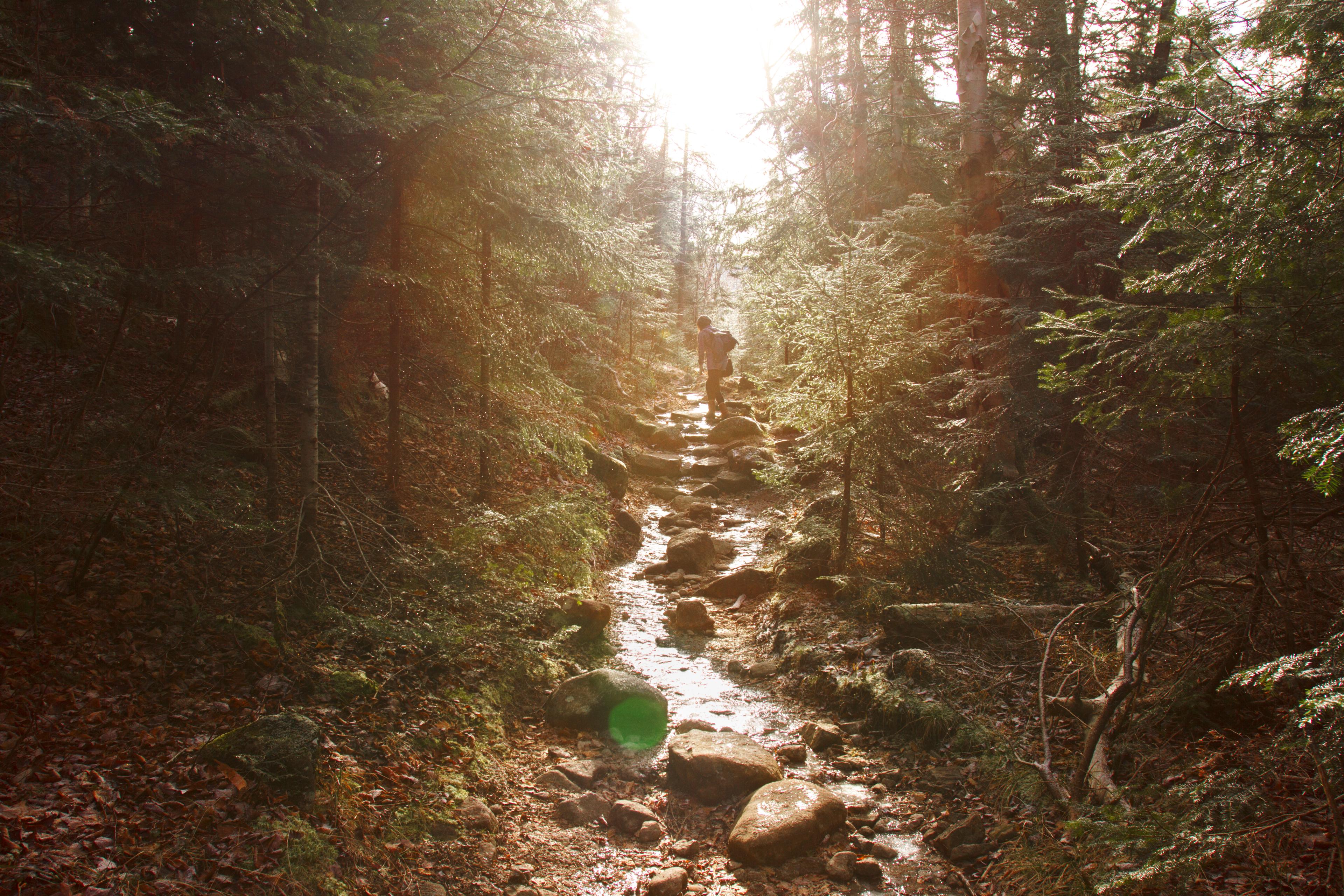
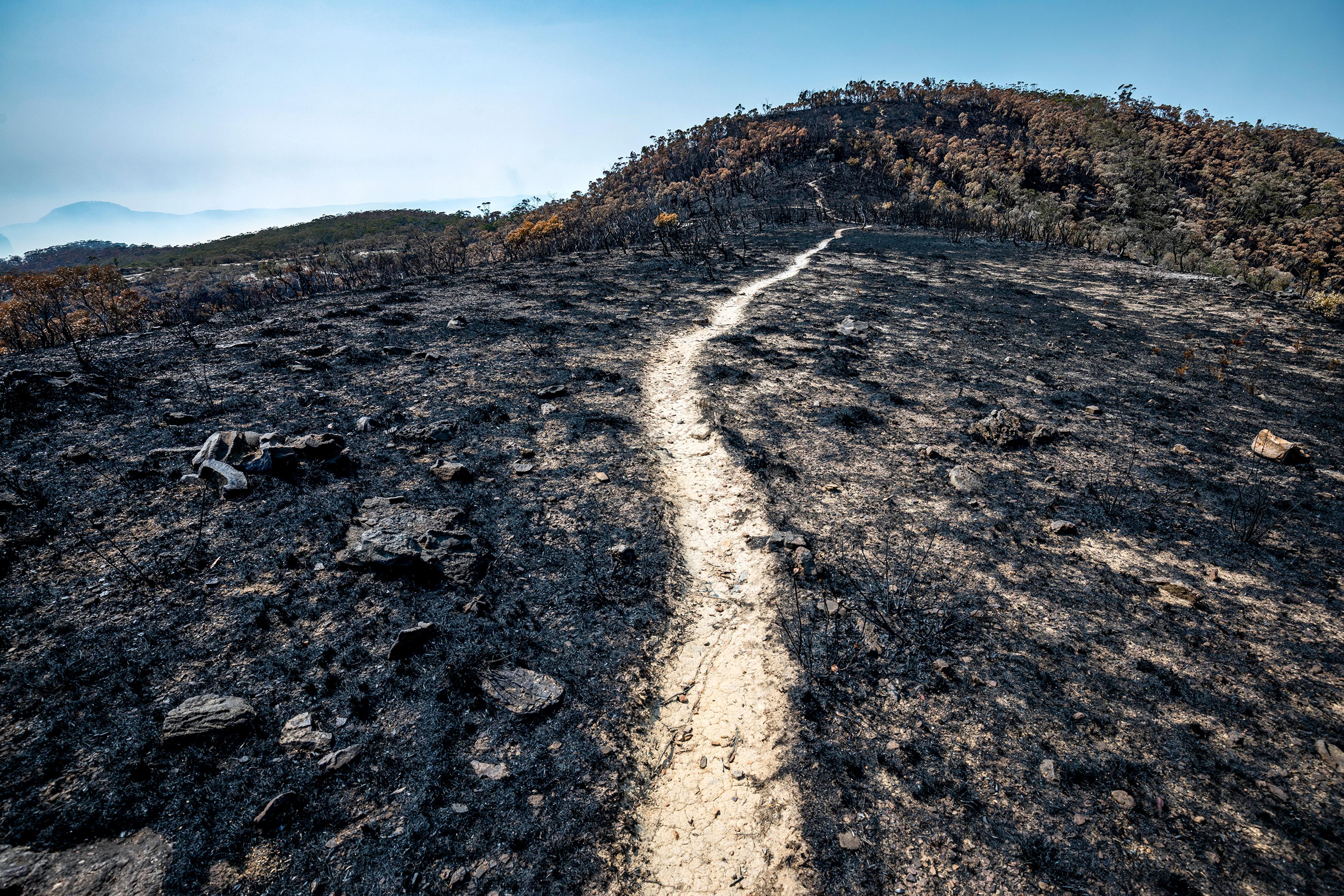
Pacing becomes urgent the day we must cross a narrow slot canyon before the weather closes in, threatening flash floods. One leader is supposed to ‘sweep’ behind the group, but neglecting this duty has become the routine. As usual, there is no one behind us and, with no one waiting ahead, we realise we have lost our way. I know, in theory, that peaks and valleys can be read in the relative distance between squiggly lines on a topographic map, but the knowledge does nothing to translate the vast landscape to me. We’d hiked beyond the relative safety of meadows and ponderosa pine forests, to a place where trails petered out and the land turned to stone. Pale green scrub oaks and bright red desert paintbrush sprout among craggy boulders cut by intermittent streams that, in the dry season, look like scars. I don’t see how a world like this could be trapped between lines.
I don’t remember exactly how three city teens finally reach the Little Blue Box, a slot canyon where the group has already crossed the Blue River, except that we find our own way. In my memory, we face a majestic version of a dangerous alleyway where the wide-open landscape narrows into two stone walls that squeeze and quicken the river. High above us, sticks and debris mark the height of past floods. Archimedes’ elemental theory of displacement seems miraculous now, as we send the full weight of our packs floating before us into the canyon. We wade until the riverbed drops away, and then we kick, paddling with one arm, the other wrapped around a pack.
I emerge on the other side, feeling just as I would years later, contracting inside a well-practised silence while my midwife slept and I birthed my first child – proud of my courage, awed by what I had done, and gravely disappointed in those I had trusted to support me. Still, I would never change how my daughter entered the world, guided by my hands, the two of us labouring together in the birthing pool.
At night, lying awake and aching beneath a dome of desert stars, I feel something new: belonging
Perhaps this explains why, after the river crossing, I refuse to be evacuated when the guides urge me to give up. I am stubborn, yes, but maybe my younger self has already intuited the power of shared strength. Though I didn’t realise it then, learning to hike reveals new dimensions of connection. I’d never played a sport, never guessed that a body can learn to yield, even evolve, in conjunction with a landscape. When an upward climb is nearly vertical, lifted heels can level the approach. On a steep descent, a body can turn parallel to the mountain and sidestep to ease the decline. In the absence of civilisation, a person learns to walk alongside water, keep time by the sun, and watch the sky for clouds. In the backcountry, the truth of human life is distilled: we relate to survive.
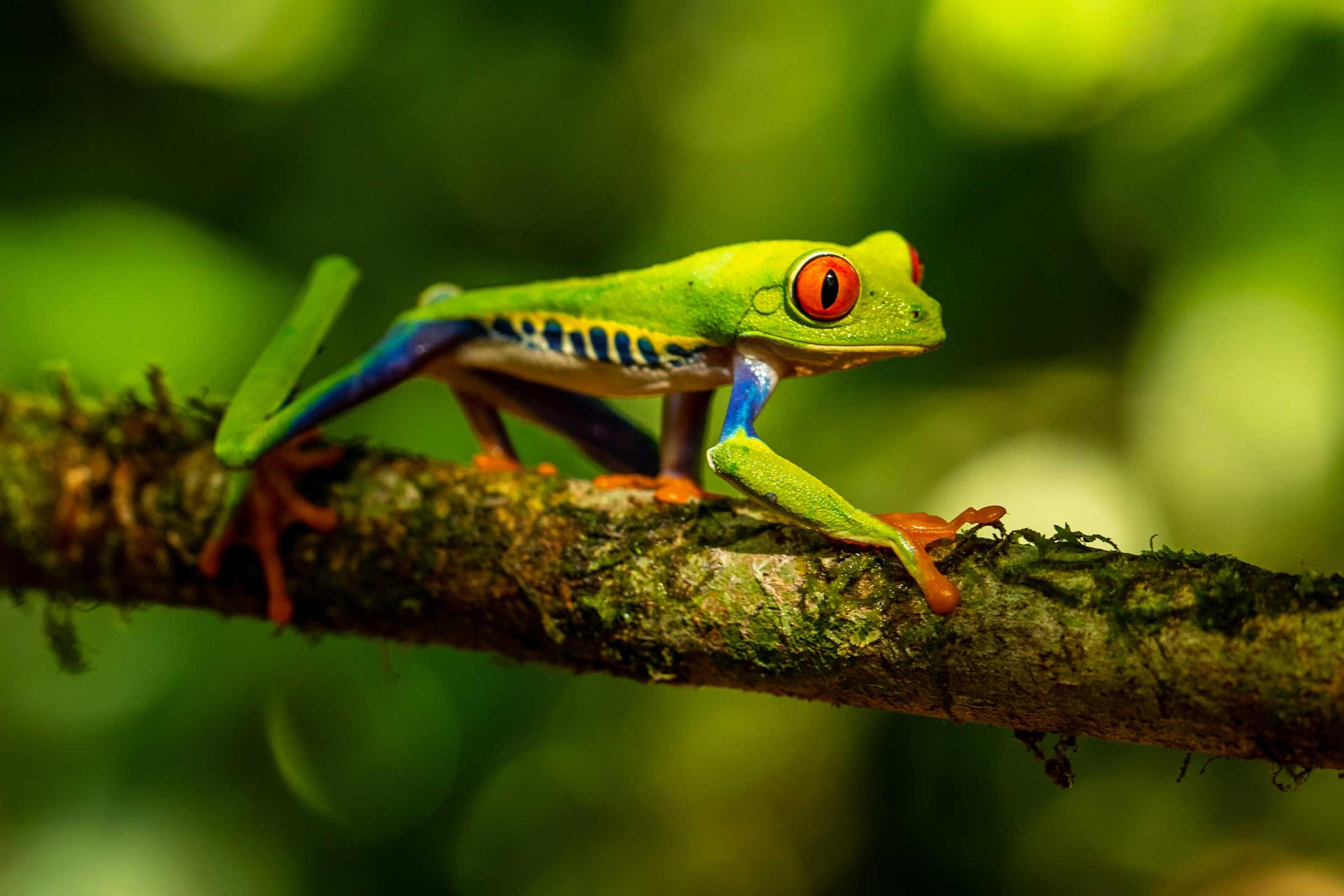
Ironically, while each day brings physical pain and social isolation, at night, lying awake and aching beneath a dome of desert stars, I feel something new: belonging. The desert acts as a mirror that seems to say: You are like me – harsh, inventive, and full of life. To the uninitiated, the desert appears stark, the landscape often rendered synonymous with emptiness. Yet this is only a superficial impression of a place where rattlers coil behind rocks, Gila monsters lurk in dry grasses, and mountain lions stalk the cliffs. Sections of the Arizona desert are bright with wildflowers: desert marigolds and globemallow, brittlebush, lupine, and fairy dusters. All of these are essential to the ecosystem. The desert teaches me not only to move, but to notice.
If someone had asked me then what I’d learned in the wilderness, I would have said not much. Lessons in desert ecology would come later, and hiding my wounds was nothing new for me. I thought I knew how to fend for myself. I must have told the story of completing my three-week college orientation with two sprained ankles as another example of my resilience. Yet decades later, the story I tell is more holistic and sustaining: the desert taught me what people could not, and it was because people had failed me that I was left to attend to its lessons.
Being out of place and out of doors helped me understand that true resilience isn’t an androcentric, alpha-male ideal of resistance or white-knuckled endurance. It’s biocentric, drawing sustenance from a complex, interdependent system. This form of resilience doesn’t avoid obstacles; it integrates them into its ecology of growth.
Those steeped in a culture that treats mountains as trophies struggle to imagine this kind of resilience
These days, my partner and I take our children camping for three weeks every summer. On the trail, we move with awareness and share the load. When the children grow frustrated, I tell them they are learning to be inside the challenge the way seeds of desert wildflowers might wait for rain, with determined attention.
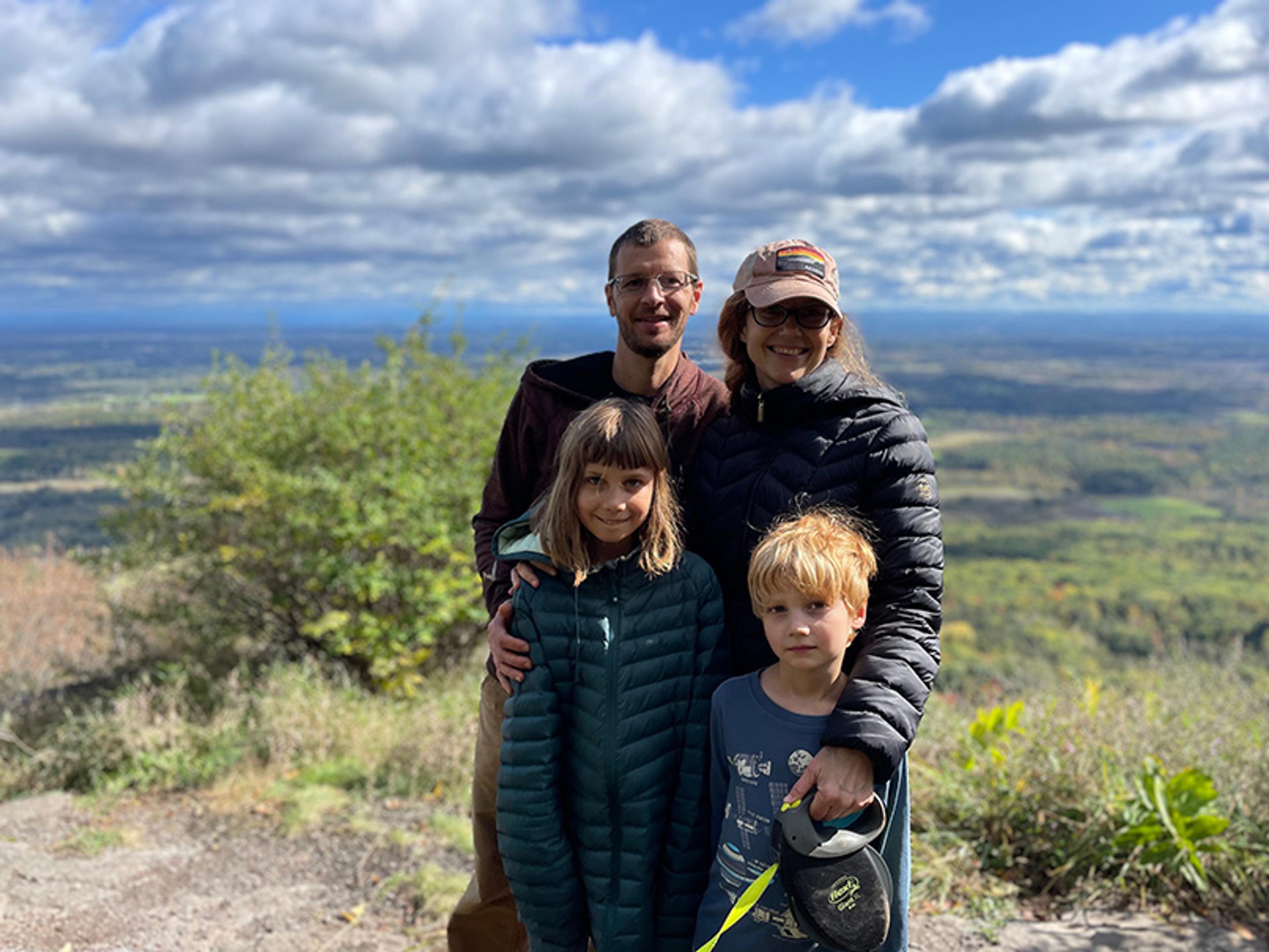
Watching my children find their pace, I think about how those steeped in a culture that treats maps as absolutes and mountains as trophies struggle to imagine this kind of slow, shared resilience. I had not, all those years ago, suddenly begun life on my own terms, because change moves slowly and in confluence with forces beyond the individual. We see this in desert arches and spires carved by wind and heavy rains connected to ocean tides. My group had been trained to believe that conforming to one ideal of strength was the same as self-sufficiency. But homogeneity and rigid independence are unnatural, even maladaptive.
In truth, we evolve together, across generations, and through our differences. Turning 18 didn’t unbuckle the straps binding me to my difficult past. Instead, I carried forward a source of empathy my children may inherit. When they excel, I teach them there is something to be learned from those who struggle, and when they feel lacking, I show them how wisdom can be born of absence.