Matthew and I hadn’t been on the West Coast that long when my brother was diagnosed with pancreatic cancer. At the University of California, San Diego medical library – where I was a postdoc in neurobiology – I searched for treatment options, only to confirm his physician’s prognosis: the disease was terminal.
I sat in the library carrel crying. It was 1982, long before online searches. I had just turned 30. Kenny, across the country, was 33 with a seven-year-old son. I worried about my nephew growing up without a father. Despair for my brother, myself and the rest of my family overwhelmed me.
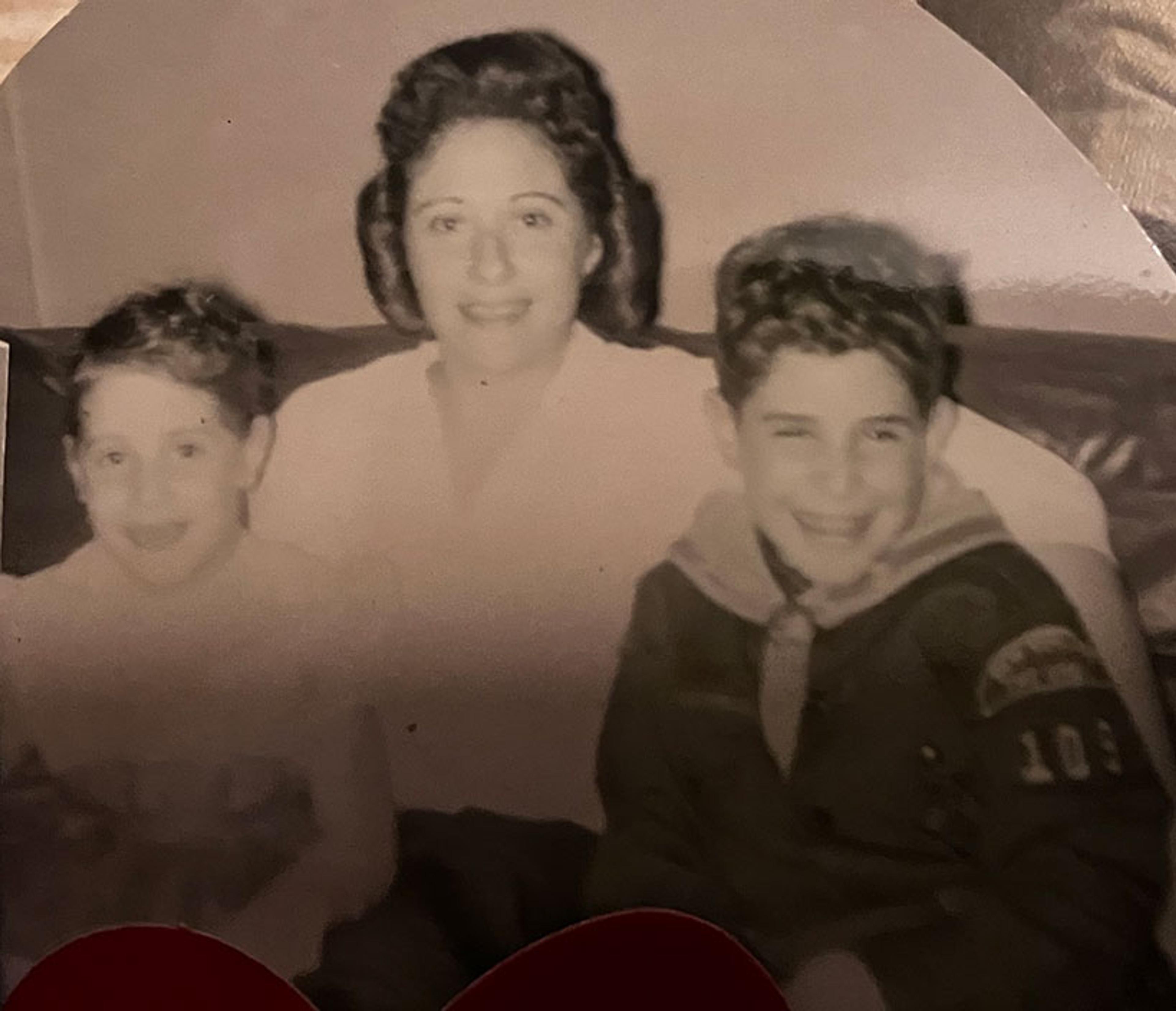
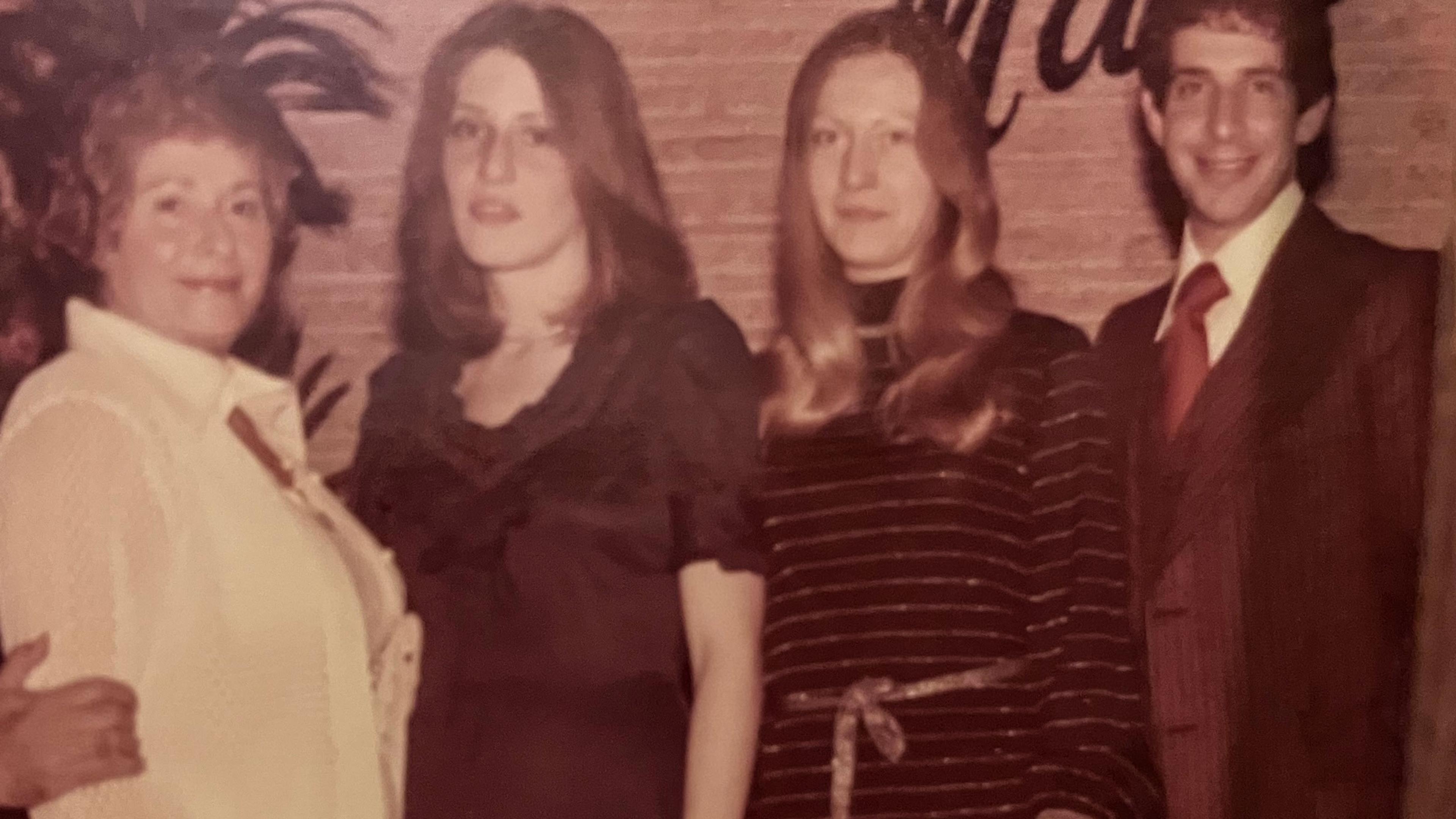
Michele and Kenny with their mother, Annette.
When we were little, Kenny treated me kindly as long as no one else was around. But when his friends came over, he made fun of me. I was a nerdy student. Kenny would ditch his homework and alter grades on his report card, faking our parents’ signatures. Only when he discovered flying did he become an eager learner. He worked as a sales rep for Oneida silverware, but his passion was piloting planes. He flew moguls in private aircraft and gave flying lessons.
Kenny didn’t want to hear about a timeframe, choosing to live as normally as possible for as long as he could. We started talking weekly by phone, sometimes more often. Two months into this routine, my mother was diagnosed with breast cancer. She was 54.
I figured the three of us had all been exposed to some kind of carcinogen, but why did they develop cancer while I had not? They drank more diet soda than I did. Maybe it was the saccharin? I kept waiting for the other shoe to drop. I began looking at people, wondering from their faces how you grow old. What was the secret to surviving?
Kenny, Matthew and I went all-in on a macrobiotic diet – low-fat, lots of brown rice, protein mostly from plant foods like nuts but with some fish thrown in. The science wasn’t robust, but we needed to do something. Matthew and I each lost about 25 pounds; we became positively scrawny. Kenny couldn’t take eating cold rice for lunch at work; the regimen drove him crazy.
A year later, I flew back east to be with him during his final hospital stay. ‘I’m never coming out,’ he had said to his wife.
On that last visit, I told him I was proud of him: he had stayed true to his goal, doing what he loved. Late one night, as I kept vigil, he woke briefly and we waved to each other across the darkened hospital room. ‘I’m here for you,’ I was telling him silently. ‘We’re going to go through whatever happens together.’ His own wave signalled he was happy not to be alone. Within a couple of hours, he slipped into a coma and succumbed the next day.
Still reeling from Kenny’s death, I wasn’t ready to lose my mother
Not too long after, Matthew and I married. I wanted to have children after Kenny died; I wanted something positive to happen in my family, soon, before it was too late. We moved back east, too. It was time to come home, and I took a position running a neurobiology lab in Massachusetts, just a few hours’ drive from my mother.
Keith, named for Kenny, was born in 1988, and my mother was still holding on. But the chemo ravaged her body, and at one point her kidney function flickered dangerously. When the cancer spread to her bone, she underwent radiation. The oncologist told me the cancer was everywhere.
I couldn’t process it. In retrospect, I realise he was trying to prepare me. But my mother’s breast surgeon kept saying she should ‘keep fighting’. He never said cure, but I held on to his optimism. Still reeling from Kenny’s death, I wasn’t ready to lose her.
Four years later, I was expecting again. I was 40 going on 41. My mother, still alive, had turned 64. I gave birth to a second son we named Gary, Kenny’s middle name, and right afterwards my mother came to stay with us for three wonderful weeks. But the cancer and the pain were getting the better of her. Her doctor, the optimistic one, took a leave of absence; he said he needed a break from the stress of losing people he cared about, a break that wasn’t available to me.
We started visiting my mother every weekend and, when she became bedridden, we’d put Gary on the mattress with her. One Sunday night, driving home, I told Matthew it was a mistake to leave. We returned the next day. She was looking at Gary beside her when she smiled for the last time. Making sure she had time with the boys was my gift to her when I couldn’t give her anything else.
Even when I was checked for lumps during physicals, my doctor never suggested genetic testing
A few years later, in 1997, I was recruited by Tufts University to run a neurobiology lab at the medical school there. Matthew and I eased up on macrobiotics, but we continued to eat healthfully with lots of plant foods, bought a house closer to my new office, and raised our two bright, active sons. Around the same time, the BRCA gene was discovered, showing a connection to breast and ovarian cancer and then to pancreatic cancer.
I wasn’t aware of the discovery. While I had been studying genetics as a neuroscientist for close to two decades, my field wasn’t cancer but the influence of genes on neurons, impacting how they send – or fail to send – messages across synapses.
Even when Angelina Jolie inserted the BRCA gene into the public’s consciousness – by publishing an op ed in The New York Times in 2013 about her decision to undergo a double mastectomy after she tested positive for the BRCA mutation – I didn’t make the connection. I was still thinking my family’s cancers had come from an environmental insult – if I was thinking about it at all. My mother had been gone almost 20 years. While cancer was always in the background for me, I was healthy and living my life.
My lack of attention to a genetic possibility was influenced by the fact that my mother had a sister and a brother, and neither of them nor any of their children had developed cancer. My mothers’ parents hadn’t died of cancer, either. The disease had just come for my own nuclear family. Even when I was checked for lumps during physicals, my doctor never suggested genetic testing. If someone had suggested it, I don’t know that I would have followed through. To me cancer had a death sentence. Why learn of a future I couldn’t do anything about?
Then my shoe dropped. Late in 2018, after I had just turned 67, a friend was moving out of state. Wanting to travel light, she gave me a gigantic plant in a heavy pot. Carrying it from the car into my house, I pulled some muscles in my chest, and after a couple of days one side healed, but the other side still felt funny. I decided to go for a new mammogram, and something didn’t look right. While waiting for the biopsy results, I braced for death, for a drawn-out, painful journey to the end. Kenny was in such horrible pain just before he died that he said he would have killed himself if he could have. Sure enough, the result came back positive. I feared I would never know my grandchildren.
One breast oncologist recommended a lumpectomy, followed by a test for the BRCA gene mutation. But a second oncologist said: ‘No way are we doing anything until we get genetic testing.’ She explained the results would help me decide whether to go with more aggressive options – remove one breast, remove both, remove the ovaries. A faulty gene would mean the cancer could keep coming back.
So far, I am healthy. But I will never be cancer-free
The test came back positive; the genetics counsellor credited my years of healthful eating and active lifestyle for delaying it.
The malignancy was very small but, armed with the BRCA result, I opted for a prophylactic double mastectomy rather than a lumpectomy. The decision proved prescient. After the operation, the pathology report showed precancerous spots in the other breast. I also chose removal of both ovaries as recommended. I was put on tamoxifen for five years to block oestrogen receptors that could help cancer develop and grow. Today, seven years later and almost 74, I go for annual testing, with pancreatic monitoring the priority. It can’t ever be said that every last cancer cell was removed.
So far, I am healthy. But I will never be cancer-free. Keith, a clone of Matthew, tested negative for the BRCA mutation, so he will never have to worry. Which means neither will my granddaughter, his toddler, Amina. Kenny’s son, my nephew Jeffrey, and his own son are off the hook, too. But not Gary, not my sweet later-in-life boy who resembles Kenny and me.
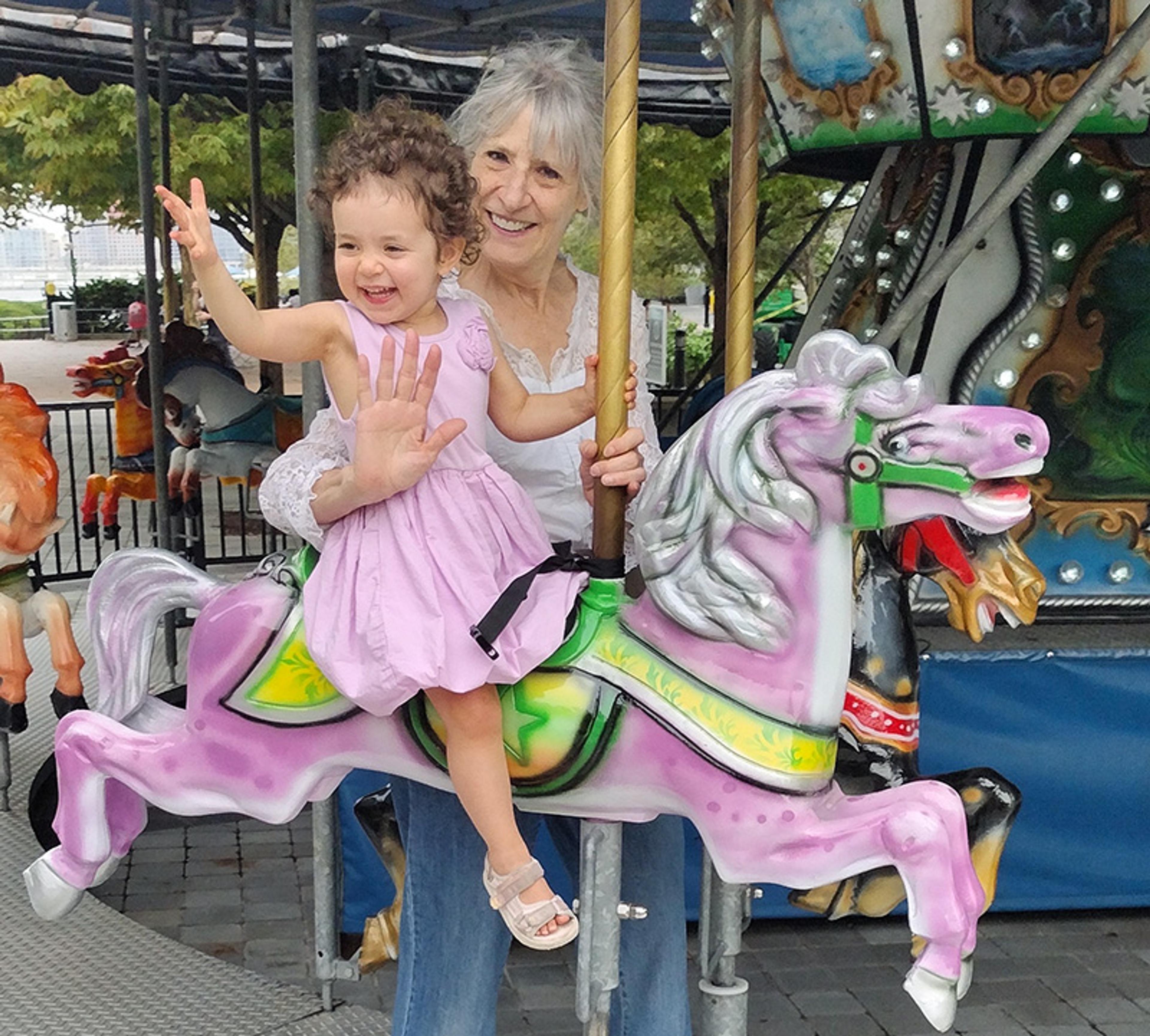
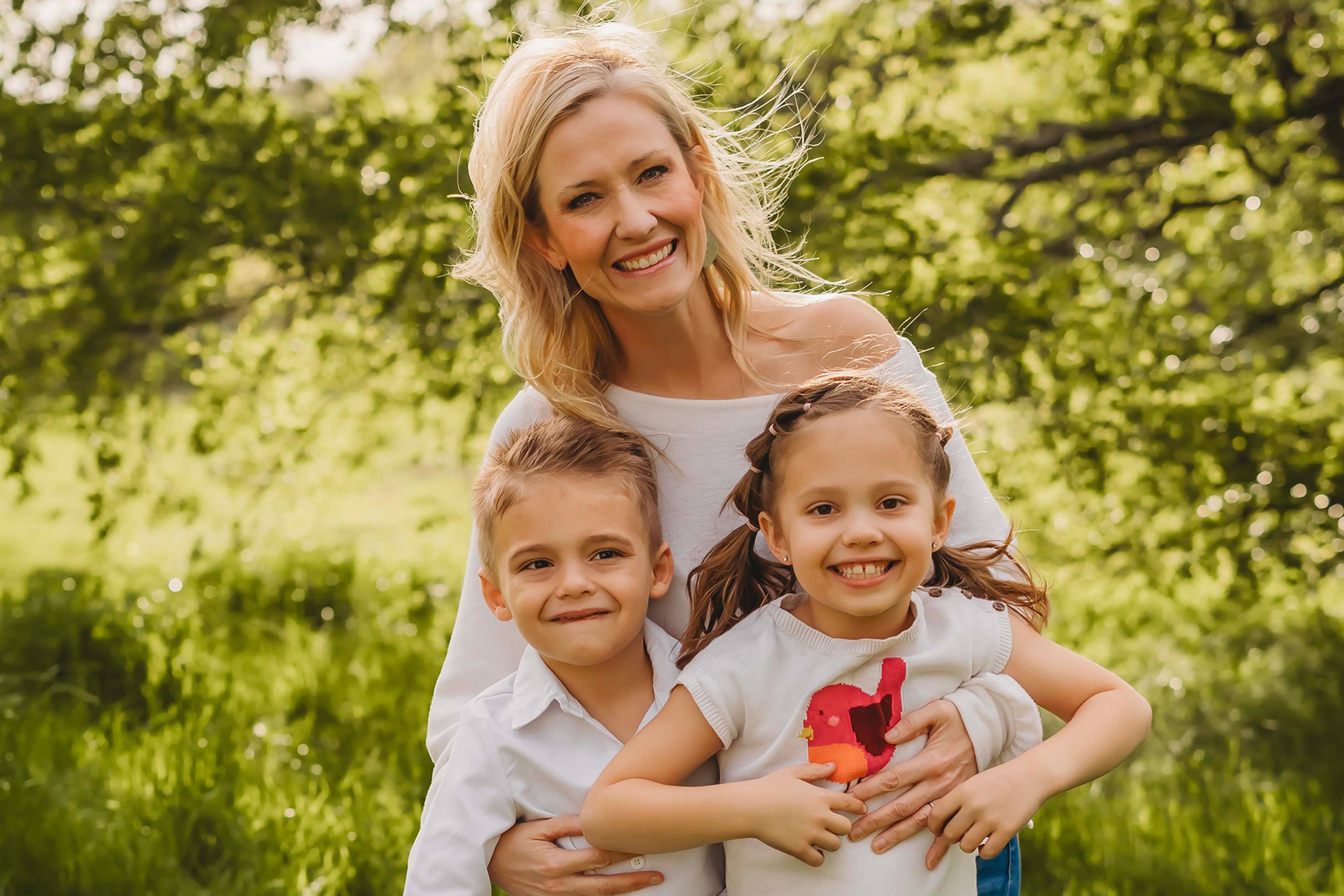
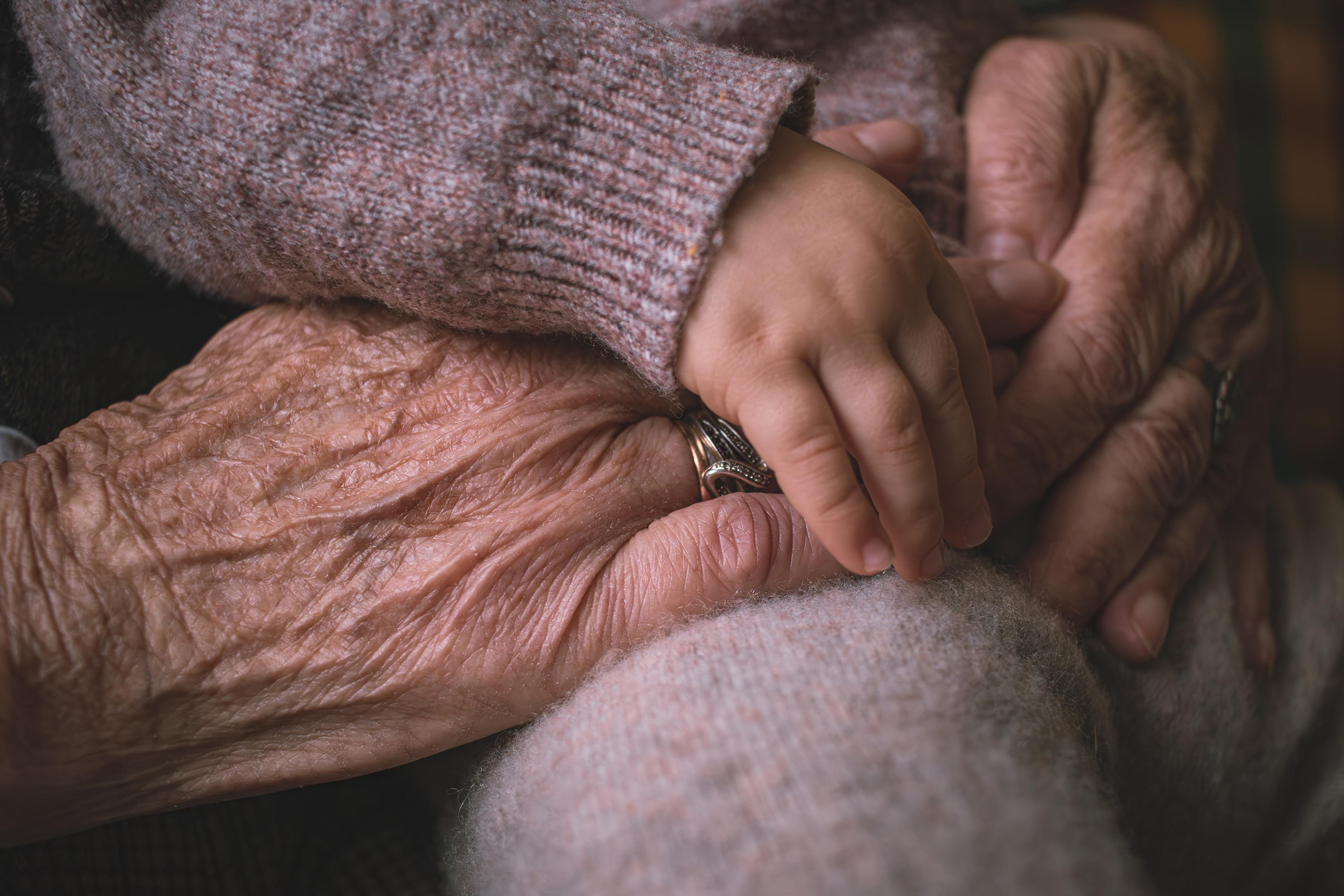
Michele and her granddaughter Amina, today.
He hasn’t yet opted for monitoring, which would include a close watch on his pancreas and prostate as well as breast self-exams. I have my annual checkup with my oncologist coming up, and I know she’s going to ask where he stands.
It’s reasonable to suspect that within Gary’s lifetime science will come up with gene therapy to correct the genetic malfunction. But probably not during mine. In the meantime, it’s a holding pattern. Monitoring is Gary’s decision, just as it was mine. He is 33, the same age Kenny was when he was diagnosed. I am back to researching possibilities for effective treatment – and, this time, prevention.