On 3 June 2024, I was shot in the neck in broad daylight while taking my six-year-old to school. My friend was driving, I was in the passenger seat, and my son was strapped in the back, when I heard sharp popping sounds near my right ear. The window shattered, and I felt a piercing thud in my neck, then nothing.
In a blur, I pulled down the mirror and saw my hair sticking out of my neck, like weeds sprouting from a bright red hole. ‘I’ve been shot, and I’m gonna die,’ I said aloud. I begged for a chance to stay, to fight, to see my son grow. Then our truck was rear-ended and spun 180 degrees. The car that hit us ploughed into a telephone pole. For a moment, I thought the shooter would emerge from it – until I realised that driver was a victim too.
The man who pulled the trigger was on parole, with a long history of violence. That day, he sprayed bullets recklessly into passing cars, ending one life instantly, and forever altering mine.
In the hospital, they surgically extracted the bullet that had penetrated the front of my neck through an incision in the back. They gave me fentanyl – a synthetic opioid so potent it’s usually reserved for surgery or the worst trauma – but it barely dulled the pain. As soon as the bullet was out, the physicians moved to send me home. I pleaded to stay, desperate for time to stabilise, asking: ‘If you got shot in the neck, would you be able to go home the next day?’
Three days later, I was discharged with no mental health plan, no follow-up, no support. The medical system that I’d hoped would protect me had delivered its message loud and clear: survive, then figure it out later, alone.
I returned to work far too soon, still in pain both physically and mentally, because I needed the income. Pure shock carried me through the first few weeks, but when it wore off, the psychological symptoms set in. I had stepped back into my old life – walking the same streets I grew up on – but everything felt darker and more dangerous. If a car pulled out too fast or backfired, my stomach instantly dropped, my head grew heavy, and my limbs buzzed, restless and uncontrollable. I’d reach for grounding tools – breath work, a fidget toy – but it was rarely enough. Instead, I’d end up hyperventilating, dizzy, flung back to that nightmarish day, as if the world could collapse at any moment, with nothing to catch me.
More than once, I had to pull over, close my eyes, and cover my ears, hoping no one would see me or approach my car. If I opened my eyes, they’d dart wildly from side to side in a hypervigilant frenzy. My heart pounded in sync with the tremble of my hands and knees. It felt like my nervous system was exploding from my chest down through my abdomen, arms, groin, wrists, fingertips and toes – a feral panic straining to break free.
The scariest parts were the intrusive thoughts and nightmares, so vivid they made me fear for my sanity. In those dreams, the bullet would slip past the window and find my son’s abdomen, leaving him lifeless in the backseat as I pulled myself through the shards of glass to reach his body. I heard phantom gunshots while driving, and my strong, beautiful boy waited in the backseat as I tried to gather the shattered pieces of my overwhelmed mind.
Eventually, I cracked. Six months after the shooting, I stopped work to focus on recovering from the PTSD that had taken hold of my life.
After months of unravelling, my psychiatrist finally referred me for intensive outpatient services, which included daily group therapy with others who understood trauma, individual counselling with clinical providers specialising in PTSD, skill-building workshops focused on coping strategies, and regular psychiatric check-ins to carefully manage my medications. The goal was to provide consistent, structured support without hospitalisation, while I stayed with my son.
All this might have helped, but the therapists at Kaiser Permanente – the large US healthcare organisation responsible for all my medical care – were on strike. I asked for my therapy to be delivered by an outside provider instead, and that request was approved. However, my medical records didn’t transfer, forcing me to start the evaluation from scratch. I was alone in a system that felt cold and indifferent.
The promise was lasting relief from the intrusive memories and hypervigilance that define PTSD. It felt like my last chance
Then, after months trapped in relentless panic with no relief in sight, I stumbled upon a testimonial video about transcranial magnetic stimulation, or TMS, a treatment for anxiety, depression and PTSD. As the patient documented her recovery from depression, I saw the light return to her eyes in each clip, and by the end she had sparked a sense of hope in me too.
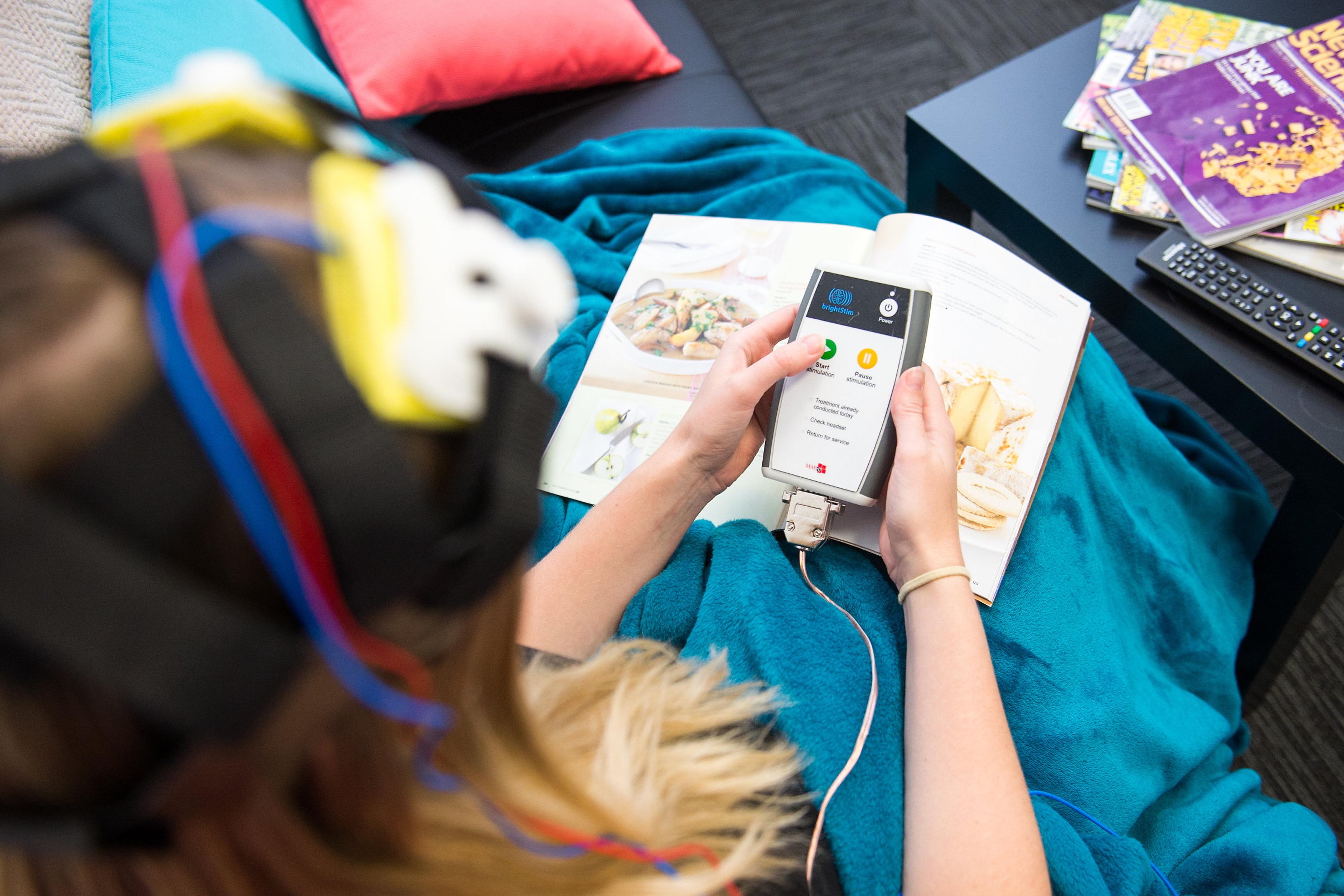
Through more research, I learned how it works. TMS is a non-invasive therapy in which a magnetic coil, sometimes built into a helmet, is placed on the scalp. It delivers targeted pulses to the prefrontal cortex, the brain region tied to memory, decision-making and emotional regulation. By modulating the firing patterns of cortical neurons, TMS indirectly recalibrates deeper circuits – such as the amygdala and hippocampus – that govern fear and stress.
Delivered daily over several weeks, this repeated stimulation is believed to strengthen healthier brain pathways and weaken maladaptive ones. The promise was lasting relief from the intrusive memories and hypervigilance that define PTSD. It felt like my last chance.
I managed to find a clinic near me, but it didn’t take my insurance. Desperate not to lose the chance, I called the California Victim Compensation Board to ask if they would pay for this kind of mental health treatment. At first, they said no, but I insisted they ask their headquarters. By the following Monday, they confirmed that I qualified, and I booked my first appointment.
Five days a week, for about 20-40 minutes, I found myself in a small, dimly lit treatment room with a magnetic device ticking against my skull. The magnetic coils pressed against the flat, figure-eight-shaped headpiece, held steady by the crane arm as the technicians adjusted and locked them in place over the precise spot on my head. Relaxing music played faintly in the background until the pulses began.
The TMS technicians moved around me, warm and welcoming. Every five sessions, they placed electrodes on my scalp to record an EEG, mapping my individual alpha and beta brain rhythms, and revealing the hidden patterns of my nervous system. With each scan, the intensity was gradually increased. Sometimes the stimulation was shifted to a new location on my head or delivered at a higher frequency, each pulse targeting neurons in my prefrontal cortex.
My son came with me for more than half of the treatments, and the staff easily accommodated his high-energy presence. A large TV played looping nature scenery, and, when he was there, I slipped on my headphones to meditate while he watched his show.
Slowly, I’m beginning to believe in kindness, in safety, in the quiet goodness that exists
The TMS pulses snapped gently through my skull, surfacing buried emotions, memories and reactions I had long avoided, sometimes unearthing deeper wounds I could finally begin to heal. Relief came gradually – a flicker of calm here, a potential trigger passing without disruption there – and I was startled each time I did not react to the sounds or sensations that once overwhelmed me. With the steady rhythm of treatment, my ability to stay anchored in the present and resist being pulled under by fear grew stronger. Within 15 treatments, the flood of reactions to sound and sensation dulled, as if mufflers had lifted from my mind, and moments of peace began to thread through my days.
I often felt trapped inside my own mind, wishing someone could help me sort through the knots. That’s what my TMS therapists did. They didn’t just apply the technology; they offered steady encouragement, reminding me to treat myself with compassion and care. Their support, combined with the treatments that helped rewire my brain, opened up my capacities in ways I hadn’t believed were possible. I’m no longer thrown into a panic attack every time I sense fear; now, I notice it, anchor myself with my breath, and keep myself grounded – something I never had the emotional or physical threshold to do before TMS.
Today, after 40 treatments, I face the world with a curious openness, no longer convinced it’s only filled with danger. Slowly, I’m beginning to believe in kindness, in safety, in the quiet goodness that exists. My triggers haven’t vanished, but they’ve shrunk into a force so small that I have taken back my life. My final EEG results showed great neurological improvement, with PTSD and depression scores declining significantly – lower is better with these two. This growth gave me breathing room and strength to face the hardest parts of healing.
I remember the aftermath of one session in particular. I’d just finished my daily meditation and was walking out of the building when I pulled my Bluetooth earbuds out of my ears to put them away while I put my sunglasses on – an unusual act of bravery for me, since I’d always kept my earbuds in to block out the world. That day, I heard the traffic on the freeway clearly, without the flood of loud, anxious thoughts racing through my mind. I wasn’t waiting for a car to backfire or for a bang to shatter the fragile stillness. For the first time in probably my entire life, I actually enjoyed the sound of the traffic – a simple, powerful reminder that peace was possible, after everything.