During a 2019 episode of the popular TV show Britain’s Got Talent, the hosts, Ant and Dec, surprised the audience. ‘In the last 15 years,’ Dec said, ‘there has been a staggering 48 per cent rise in anxiety and depression amongst British children. But something as simple as talking together and listening to each other can build our mental wellness.’ The time for listening began immediately, with the hosts announcing an awkward, minute-long pause to the show. Signs asked viewers to ‘use our silence to talk to each other’. So ITV’s ‘campaign for mental wellness’, named Britain Get Talking, was officially launched. ‘See, wasn’t hard, was it?’ Ant said after the silent minute was up. And then the show went on.
It is a widespread assumption that silence in mental illness is intrinsically harmful, an idea that has been drilled into us by countless mental health campaigns such as Britain Get Talking. They warn that people are ‘suffering in silence’ and that mental illness is a ‘silent killer’. So they urge us to ‘break the silence’.
Campaigns like this take a broad aim. They target both the metaphorical and literal silences of people with and without a mental illness. A silence is metaphorical when it describes a situation in which people aren’t speaking about a particular issue, such as mental health problems, or are not being properly heard when they do speak about that issue. Literal silence, by contrast, is when someone physically doesn’t speak. Britain Get Talking urges us to fight both kinds of silence.
Both of these silences can be harmful for people with mental illness. Mental health stigma can coerce them into suffering in both literal and metaphorical silence for fear of how others would react if they told them about their struggles. Such imposed silences can be reinforced by other people’s failure to talk about, or be open to conversations about, mental health – that is, by their metaphorical silences. Ant and Dec were trying to help people with mental illness who suffer in imposed silence by creating a space, however brief, in which they feel comfortable opening up, and in which their family members or friends encourage them to do so.
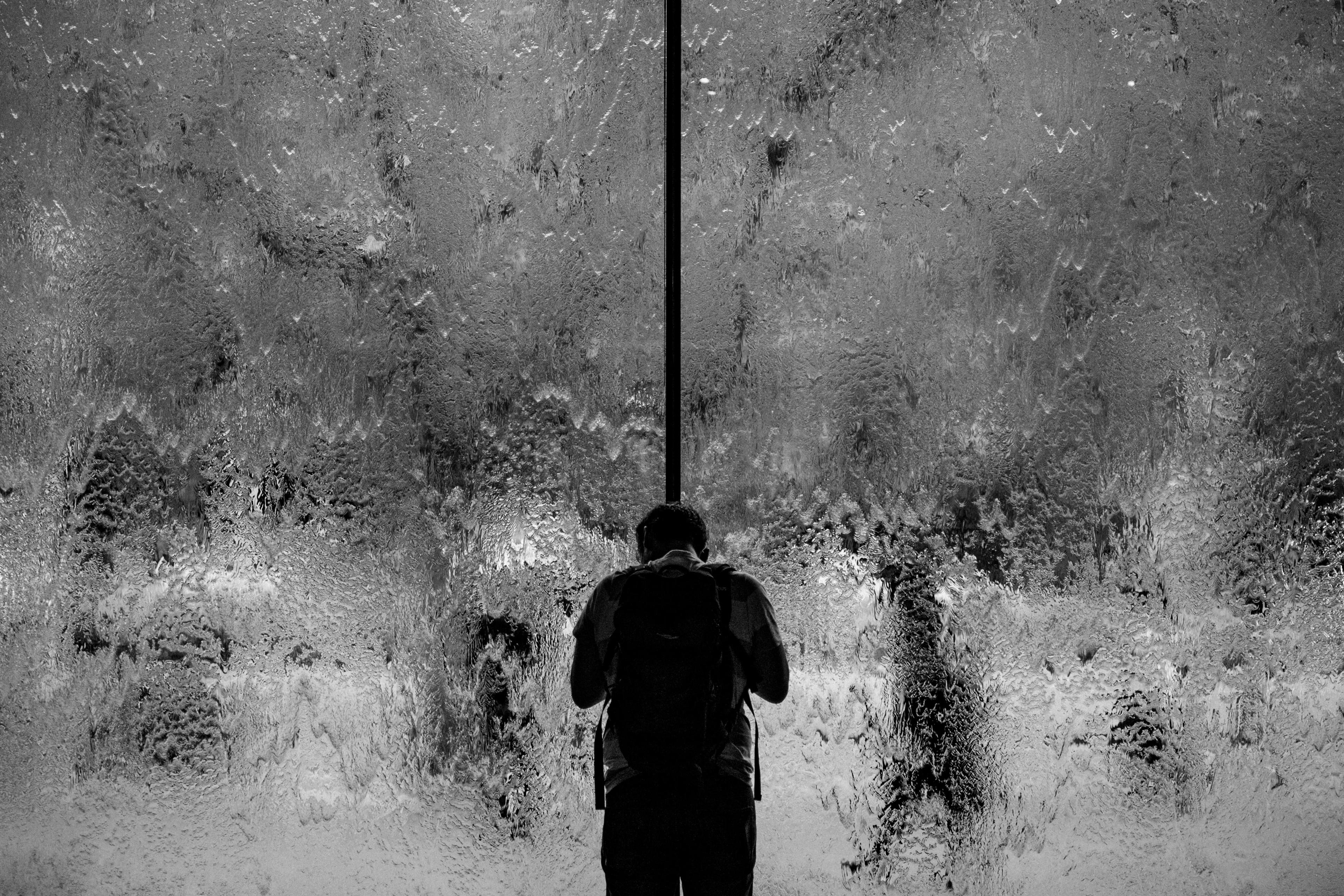
But it’s a mistake to think that all silences in mental illness fit this mould. As one person with bipolar disorder told me, there is a rainbow of silence in mental illness. Some come in darker colours, indistinguishable from the storm clouds of illness or stigma. But others are bright, beautiful, and offer relief from the tempest of distress. And many others fall somewhere in between.
As a philosopher of psychiatry, I also used to think of silence in mental illness as a shorthand for harm. Not only am I steeped in the common mental health slogans, but also in Western philosophy, an intellectual tradition that tends to equate speech with flourishing, and silence with misery. These ideas are particularly prevalent within my subfield. Within philosophy of psychiatry, the silence of people with mental illness is often assumed to be a symptom of epistemic injustice – a kind of wrong in which social marginalisation or prejudice undermines an individual’s ability to share or gain knowledge.
But, while examining how people with bipolar disorder navigate the epistemic injustice they face, I began to doubt the one-sided denigration of silence. I glimpsed the rainbow of silence.
For people with mood disorders, being silent is a vital and often hard-won resource
So I decided to have a closer look at silence in mental illness. My research has explored first-person experiences of literal silence in a category of mental illness known as mood disorders. This category includes some of the most diagnosed psychiatric conditions, including major depressive disorder or what is often called clinical depression, and bipolar disorder, an illness characterised by periods of high activity and energy known as mania as well as periods of depression. From a silence perspective, mood disorders are particularly noteworthy because, during episodes of depression, people tend to become unusually silent. Meanwhile, during episodes of mania, they tend to become extremely talkative. It is almost as though in depression, the capacity to speak has deteriorated, while in mania, the capacity to be silent has.
My research – which forms part of the Wellcome-funded Epistemic Injustice in Healthcare project (EPIC) – engages with a range of first-person accounts of mood disorder. These accounts have been drawn from interviews conducted by the EPIC team, autobiographies, and online forums and blogs. The research has also been guided by two advisory groups made up of people with mood disorders and mental health practitioners.
Contrary to the assumption that silence is intrinsically harmful, this research has revealed that, for people with these illnesses, being silent – that is, literally not speaking – is a vital and often hard-won resource.
One of the people we interviewed was a working single mother with bipolar disorder who would yearn for a peaceful silence in which she did not need to speak. Any mother might find this difficult to come by. But, having an overbearing mother of her own who had little sympathy for her daughter’s mental illness, this desire was particularly pronounced. Nevertheless, she had managed to carve out certain secret spaces, in which no one expected her to talk. She could simply be silent, and in silence:
[There were] days when I said I was in the office, [mum] comes round for the dog and the kids, I just went… and sat at the airport and watched planes landing… I knew… I wouldn’t get found up there… And there’s usually not very many people there. If there are it’s like dog walkers, or, yeah, it’s just peaceful and quiet.
She is far from alone in this. Many people with mood disorders crave this type of silence because it offers relief from social demands that their illness has rendered unmanageable, such as suppressing the urge to say things that might harm others or themselves, or their own cycles of dark thoughts.
It’s not because I’m ashamed. It’s because I know not everyone deserves to access that part of me
Some, like our interviewee, find silence in solitude and external quiet. That can mean escaping into nature or turning off the TV and computer or drawing in a colouring book or meditating. But peaceful silence is not always found in quiet solitude. Some enjoy it in noisy environments, listening to music or to the hum of friends talking at the pub or to the TV as it murmurs away in the background.
First-person accounts shed light on other kinds of valued silence too. Protective silences are among the most prominent. These are silences through which people try to protect themselves or others by not speaking. That can mean withholding thoughts that might frighten family, stemming a flood of speech that might overwhelm a friend, or not sharing one’s diagnosis during ‘Speak up’ campaigns at work. These protective silences are easily confused with those imposed by stigma, as another of our interviewees suggests: ‘If I don’t talk about my diagnosis in certain spaces, it’s not because I’m ashamed. It’s because I know not everyone deserves to access that part of me.’
Many of us take the capacity to be silent for granted. But in mood disorders, particularly during mania, even the most ordinary silences can become elusive. Here’s how one person describes it:
[I’m] struggling with telling everyone around me about EVERY personal issue I have. Like the constant urge to fill the silence or talk, and I cannot shut up until I literally spill every last detail about my personal life, like deeply personal shit, to people.
For those who do manage to be silent, it often involves unusual focus and specific techniques, such as jiggling their leg, sucking on their tongue, or digging their nails into their hands. And, even then, their silence may be precarious.
By assuming that silence in mental illness is always harmful and needs to be broken, we make it even harder for people to find and keep the silences they want. This happens despite the best of intentions. We could imagine someone much like the single mother above settling in for an evening with her family to watch Britain’s Got Talent. The voices from the TV and the idle commentary of her family push aside the dark thoughts circling in her head.
Then something unexpected happens. Rather than cue up the next performance, the hosts reach into her living room. They urge the importance of breaking the silence of mental illness and tell their viewers to take a minute to do just that among themselves. The woman’s family turn towards her. They suspect she’s unwell but don’t know if she has been receiving treatment for her depression. Perhaps they even encourage her to talk. However, she doesn’t want to talk, about her illness or anything else. All she wants is to enjoy this short, elusive period of silence. But it’s already too late.
It’s easy to infer that those who don’t share their experience are doing something wrong
While a situation like this may seem far-fetched, it isn’t. One of our interviewees related a similar experience:
I feel like I have to talk. People normally ask, what’s wrong? Are you OK? Do you need something? And I don’t always have the words to answer. I might just want to sit in silence, but I feel pressure to respond to… yeah, for people to make them feel better about my silence.
Our myopically negative understanding of silence in mental illness contributes to these pressures.
That understanding is mirrored and reinforced by public discourse on mental health. As one writer with mental illness observed, campaigns like Britain Get Talking can heap pressure on people to share their experiences. They celebrate people who are open about their diagnosis and experiences. While those people are brave, it’s easy to infer that those who don’t follow their example, those who are silent, are doing something wrong.
So what should we do? Should we stop encouraging people to talk about their mental health problems? Of course not. However, reducing mental health stigma and encouraging help-seeking doesn’t have to involve denigrating silence. We need to recognise that some kinds of silence in mental illness are constructive, elusive and hard won, and that making room for silence can sometimes be an act of care. To appreciate the value and harm of silence, we must learn to see it as a rainbow.