My father is perched on the edge of his chair, telling us about the days he used to play American football in college. Considering he has recently undergone major surgery, this alone is noteworthy. He is weak and exhausted, but recalling his past over a coffee with his neighbour Ruth has suddenly reinvigorated him.
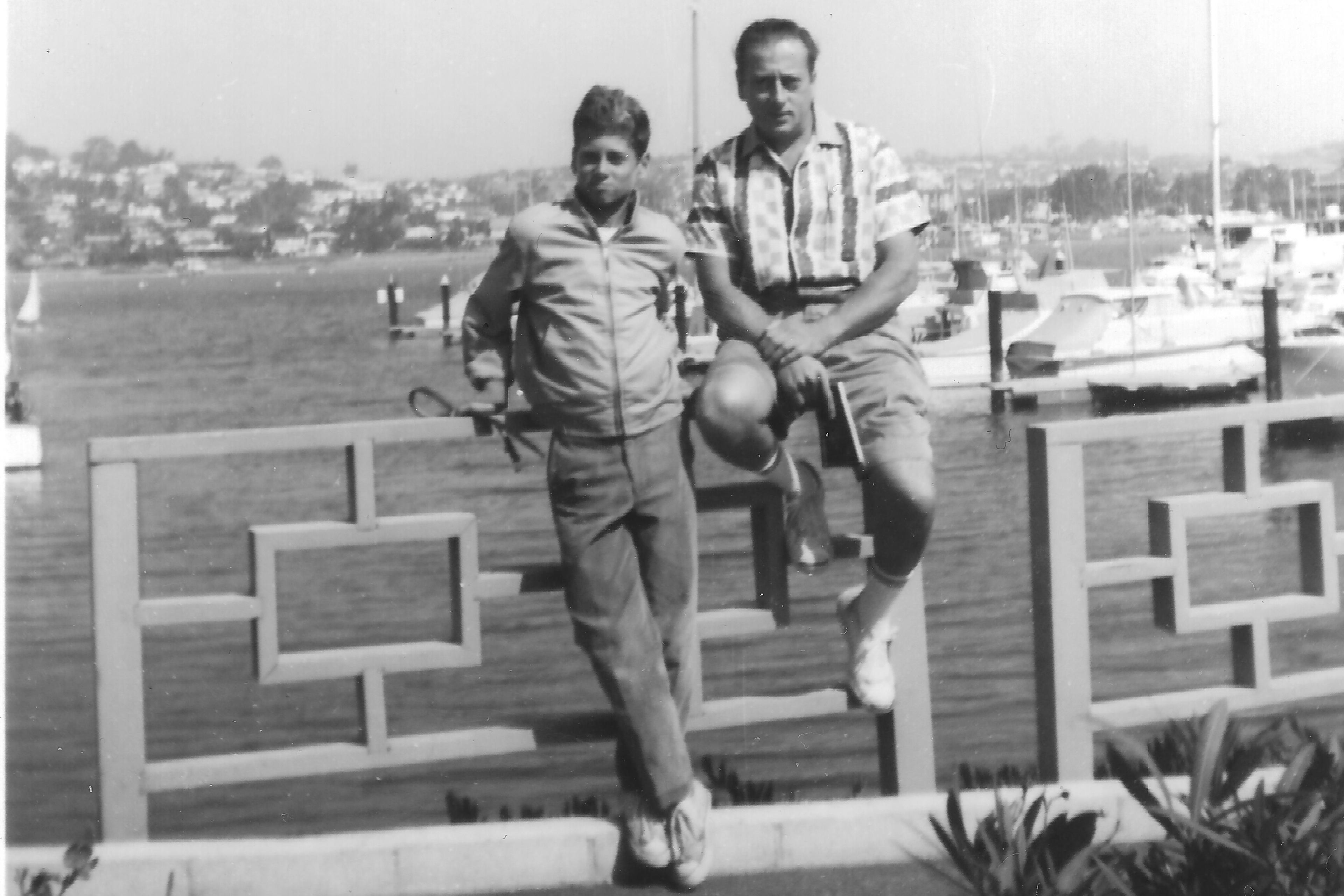
My father lives in the town of Plymouth, Michigan, which is close to Ann Arbor, home to the University of Michigan and its powerhouse football team. But he actually played at Eastern Michigan University, a smaller school just down the road.
On this occasion, he is telling Ruth about how he and his teammates would spend their weekend nights at bars in Ann Arbor, inevitably running into the players from the larger Michigan team. My dad recalls how they used to taunt the Michigan players, half-joking about how they’d dominate them in a game, if only given the opportunity.
The gem of his story comes after about seven minutes. It turns out that one of his rivals was Chris Hutchinson, who, after college, had a brief professional career. However, these days Chris is far better known as the father of Aidan, who plays for the Detroit Lions. Aidan Hutchinson is, by all accounts, a bona fide superstar.
Of much greater importance to Ruth is the fact that the Hutchinsons live just around the corner. This means that my dad’s shared history with Chris puts him at one, very small degree of separation from both a national and a local hero. Ruth is so impressed that she nearly falls out of her chair. We may soon be hanging out with the entire family, enjoying a barbeque.
There is one crucial detail about this story I have yet to mention. It didn’t really happen. It’s true that my dad played football, and I have no doubt that he and his friends taunted players from the University of Michigan. But, I am certain none were Chris Hutchinson. Chris was born in 1969, which was four years after my dad finished college. Their encounters outside the Crow Bar aren’t real.
A few years ago, my father was diagnosed with dementia. To get this diagnosis, a person has to perform poorly on various cognitive tests, several of which require memory. For example, the doctor will read a list of three words – apple, egg, yellow – and later ask whether you can remember them. Diagnostic tests for dementia also tap other aspects of cognitive functioning, such as spatial orientation, facility with language and abstract thinking. Nevertheless, dementia is commonly associated with memory loss, and my father’s scores on the memory questions were extremely poor.
People with prolonged dementia also sometimes believe things that aren’t true. Typical themes include beliefs that one’s belongings have been stolen, or that your nurse is your child. Several of my father’s firm beliefs are false, including that he frequently exchanged banter with Chris Hutchinson.
What distinguishes truly delusional beliefs is their stubborn persistence
The most recent version of the Diagnostic and Statistical Manual of Mental Disorders defines delusions as ‘fixed beliefs that are not amenable to change in light of conflicting evidence’. Taking this at face value, my father’s beliefs easily qualify as delusions. They aren’t problematic, at least not yet. So far, he hasn’t turned up at the Hutchinsons’ doorstep. Nonetheless, he does harbour false beliefs about his past, and he’s absolutely convinced of them.
It’s the utter conviction that may actually be the key to delusion. Many people hold false beliefs, some momentarily, some for a bit longer. But one thing psychiatrists point to as distinguishing truly delusional beliefs is their stubborn persistence. As one group of scientists put it in 2022, delusions are ‘basins of attraction’ that trap beliefs. Individuals experiencing delusions hang on to falsehoods, no matter what.
Shortly after Ruth leaves, my parents and I go over the triumph of afternoon coffee, when my mother suggests to my father that he has misremembered. He finds the idea completely absurd. Of course it was Chris Hutchinson. Who else could it have been? My mother remarks that Chris is simply too young – he hadn’t even been born at the time of the supposed banter with my dad. This strikes me as extremely powerful evidence that my father is wrong. Nonetheless, my father’s belief won’t budge.
First, he tries the rebuttal that Chris Hutchinson only looks young, and newspapers are mistaken about his age. This response aims to undercut my mother’s counterevidence, but it fails to convince. So he tries a more sophisticated tactic. He concedes that Chris Hutchinson is too young. He then insists he never meant that Chris, he meant Aidan’s grandfather, Chris Hutchinson senior.
This second reply is brilliant because it is not obviously false. Aidan’s grandfather would be around the right age, and there appears to be a family history of football. But, even so, it is untrue. Grandfather Hutchinson never played college football. My dad is confabulating on the spot to cover his tracks. He desperately wants to protect his memories from my mother’s onslaught.
More importantly, he doesn’t really believe the new permutation. The next morning, he reverts to the original story, where Aidan’s father is his rival from his college days. The possibility of an encounter with the grandfather has evaporated. It seems that a delusion can be so firmly ‘fixed’ in one’s mind that not even a friendly, more credible belief can displace it.
Rather than changing his mind when presented with counterevidence, he tries to explain it away
This sort of extreme resistance to counterevidence is puzzling to philosophers for whom sensitivity to evidence is an essential part of what makes a belief a belief. As the philosopher Andy Egan writes, intractability in the face of counterevidence makes one ‘uncomfortable with characterising delusions as genuine beliefs’.
However, on the other side of the argument are philosophers who claim that in fact many non-delusional beliefs are similarly impervious to counterevidence. Religious beliefs might naturally come to mind, but it goes wider than that. Experiments in social psychology have shown that people will often increase their confidence in a range of garden-variety beliefs when presented with evidence that they acknowledge contradicts those beliefs. So resisting evidence looks entirely consistent with genuinely believing something.
Moreover, my father does respond to evidence, just not the way we might expect. Rather than changing his mind when presented with counterevidence, he confabulates or tries to explain it away. This isn’t exactly ignoring evidence; it’s more like what the philosopher Carolina Flores calls an attempt to ‘integrate the evidence with [his] delusion and background beliefs’.
I’m still not sure whether to see my father’s delusions as beliefs. Couldn’t they be some other kind of attitude, like some sort of imaginative state? As a philosopher myself, when I consider this question, I feel like there must be a clear answer. But, from the standpoint of a son, I think there isn’t. Sometimes, it seems to me that he truly believes he knew Chris Hutchinson, like when he is refuting my mother. Other times, it feels like something he accepts for the sake of a good conversation. Still other times, I want to say that it is something he sort-of believes. It isn’t like the events didn’t happen at all. It’s just that the details didn’t occur the precise way he takes them to have happened.
Regardless, obstinacy of delusions in the face of counterevidence is not merely of academic interest to philosophers concerned with mental taxonomy. It is also significant because presenting people with counterevidence is the primary way we try to change their mind. My mother appealed to Chris’s age because she wanted Dad to recognise his beliefs were wrong, and then stop believing them. What else could she do? All the evidence is on her side, and if my father won’t accept that, how could anything change his mind? Should she try therapy, or medication? Or should she just leave him alone?
At a recent conference I attended, someone reported that their grandmother believed, every day, that it was Christmas Day. Her nurses would try to convince her that she was mistaken – they would show her calendars and iPhone home screens. Like my mother, they had evidence on their side. Like my father, the grandmother was unmoved. The person who shared this story was furious with the staff’s behaviour. After all, she said, what difference does it make? Why not just let her believe whatever she wants?
There is much to say in favour of this tolerant approach. But as much as I would like to adopt it, things aren’t so easy. Whether my father’s beliefs are true does matter, at least to some people. First, it matters to my mother. Last summer, she told me that when he reports falsehoods, especially ones that involve her, with such strong conviction, she feels like they must be true. Yet when she doesn’t remember the same events, she begins to feel, not like he has forgotten, but that she has. She then starts to think she may be losing her mind.
In many instances, the only person who can corroborate my mother’s sense of the past is my father. But if he is permitted to believe whatever he likes, she will become more untethered from her own history. How is that fair? The truth also matters to my father. He cares deeply about getting things right. If he were ever to realise that his beliefs were mistaken – and that we’d not bothered correcting them – I’m sure he would be deeply hurt.
He seems to have a rather strong emotional response to being directly contradicted
Fortunately, evidence and argument aren’t the only ways to change someone’s mind. When it comes to my father, perhaps a better strategy is to provide psychosocial scaffolds, or cognitive tools that make certain tasks easier. A colleague, who experienced psychosis, told me that she eventually learned how to tell when she was about to have a psychotic experience, and was then able to take countermeasures to forestall her delusions, such as avoiding triggers and engaging in meditation. Maybe a similar approach could help my father.
I’ve noticed that certain environmental conditions make it more difficult for him to appreciate evidence. For example, he seems to have a rather strong emotional response to being directly contradicted, and perhaps this undermines his ability to assess evidence. Indeed, some models in computational psychiatry appear to confirm that emotional intensity can make delusions more likely. So, if my mother wants to change my father’s mind, she might have more success by adjusting his environment to ensure he remains calm.
In cases of dementia, delusional beliefs are surely also partly the result of memory failures. One reason my father holds the belief that he knew Chris Hutchinson is that he simply cannot remember the truth. But it may be possible to scaffold his memory as well. Right now, he expends considerable energy trying to store and recall information inside his mind. If we can encourage him to write down more things in a diary, or to record them, perhaps this won’t just help him on a practical level, but he might also remember the truth more easily.
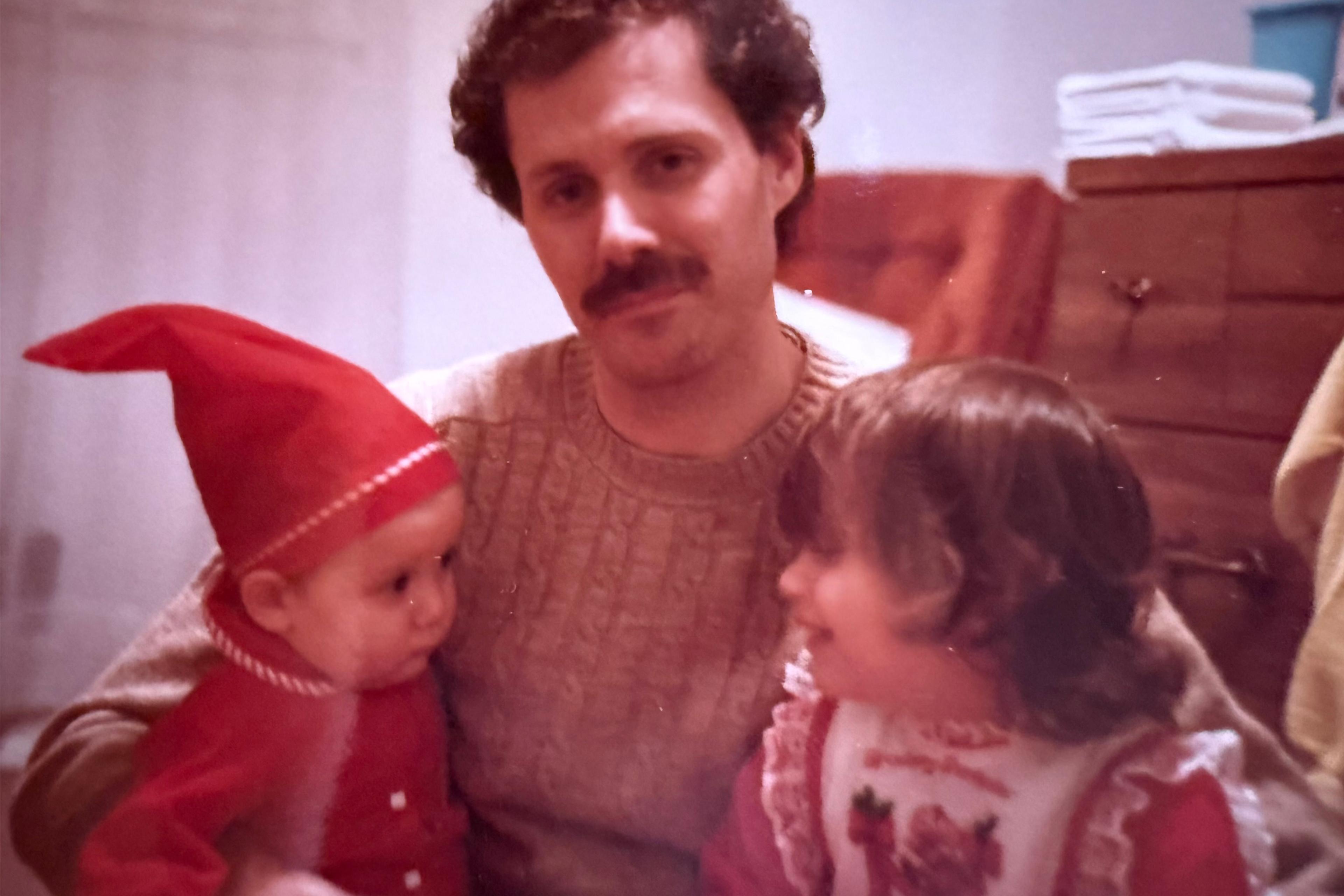
My father is approaching the end of his life. It is sad to see his mind deteriorate. But, with the right sort of mental scaffolding in place, I’m hopeful we might be able to diminish his delusional convictions, and help him retain some connection to the world.