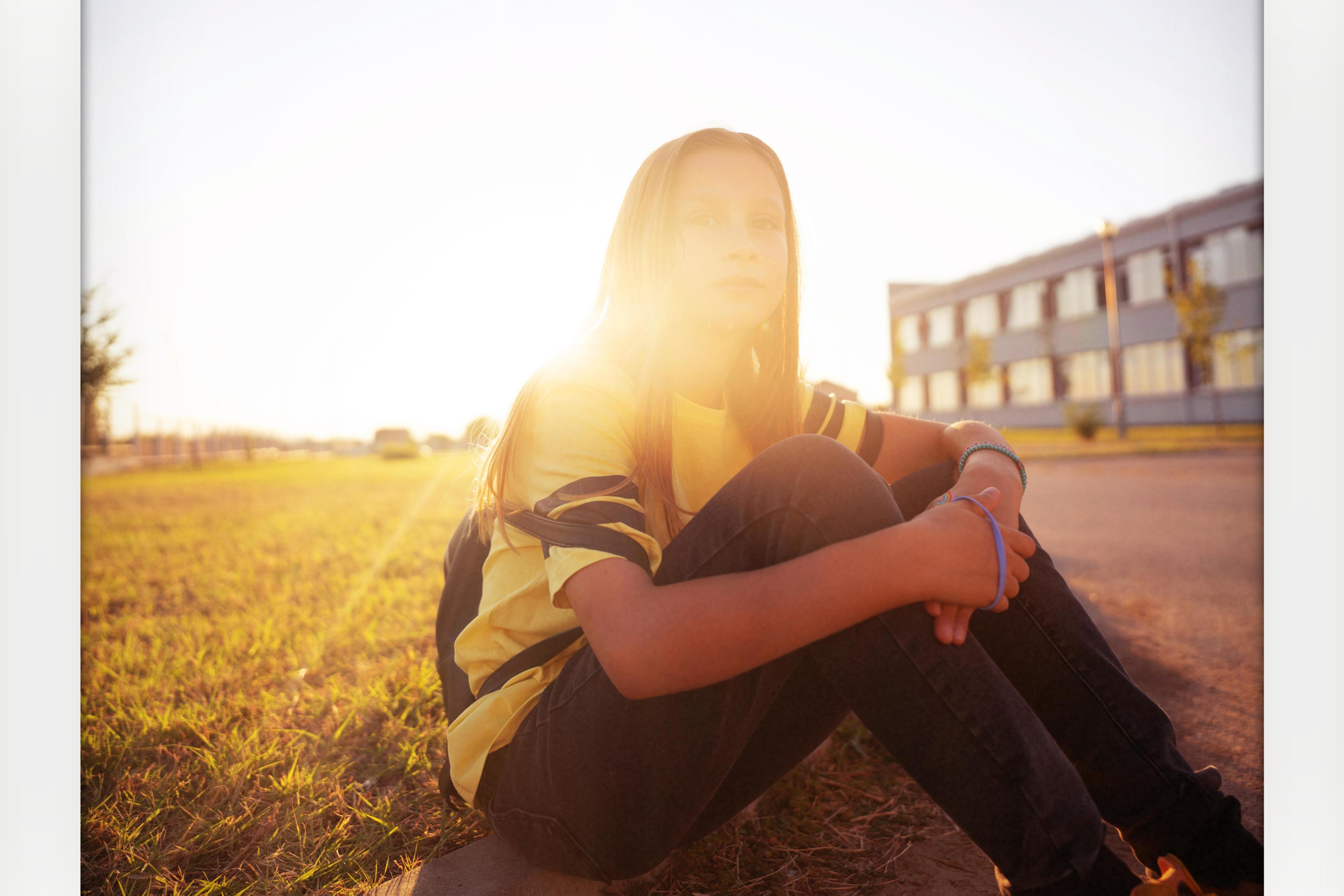
I’ve always had a complicated relationship with exercise. As a child, I was terrified to learn how to ride a bike; the whole endeavour felt like piloting a plane into the air. Sitting together on our front stoop, my dad would help me put on the padded wrist, elbow and knee guards usually used for rollerblading, secure but not too tight, protections that gave me a small but measurable sense of comfort. I’d buckle up my purple helmet, my mom taking pictures as I mounted my bike, glorious with its bell and white basket, its rainbow streamers and clickety sound-makers in the spokes.
‘I’ll hold on until you tell me to let go,’ he said.
We accelerated very slowly, down the driveway and onto the street.
‘Can I let go?’
‘No!’
My dad jogged me up and down the street, until I stopped feeling overwhelmed by the constantly moving visual field, the need to maintain balance at what seemed a great height, and to keep moving my legs. When I finally yelled ‘Let go!’ and he released me, it was the closest I’ve come to feeling weightless – the sensation vertiginous but thrilling.
At 14, my friend invited me to try yoga at our local community centre. On our first day, we walked there together after school; taking off my tight jeans and American Eagle T-shirt, I slipped into the comfort of hand-me-downs from my mum: elastic-waisted flowy pants and a large black T-shirt with giraffes on it. The teacher sat on her mat at the front of the room, speaking softly despite the screaming kids in after-school programmes right outside. ‘Close your eyes,’ she instructed. ‘Begin to notice how your body is feeling.’
My body… feels? I don’t know. I don’t like this, I thought we were going to stretch.
‘Now, open your eyes. Rest your hands on your knees and begin to make circles with your torso.’
OK, this I can do.
I hated how massive they were, too big to hide under my baggy shirt
‘Now circle in the other direction. Imagine a string is attached to the top of your head and is pulling your spine upward. Roll your shoulders back.’
Mmmm, that feels good. But it feels like I am sticking my boobs out.
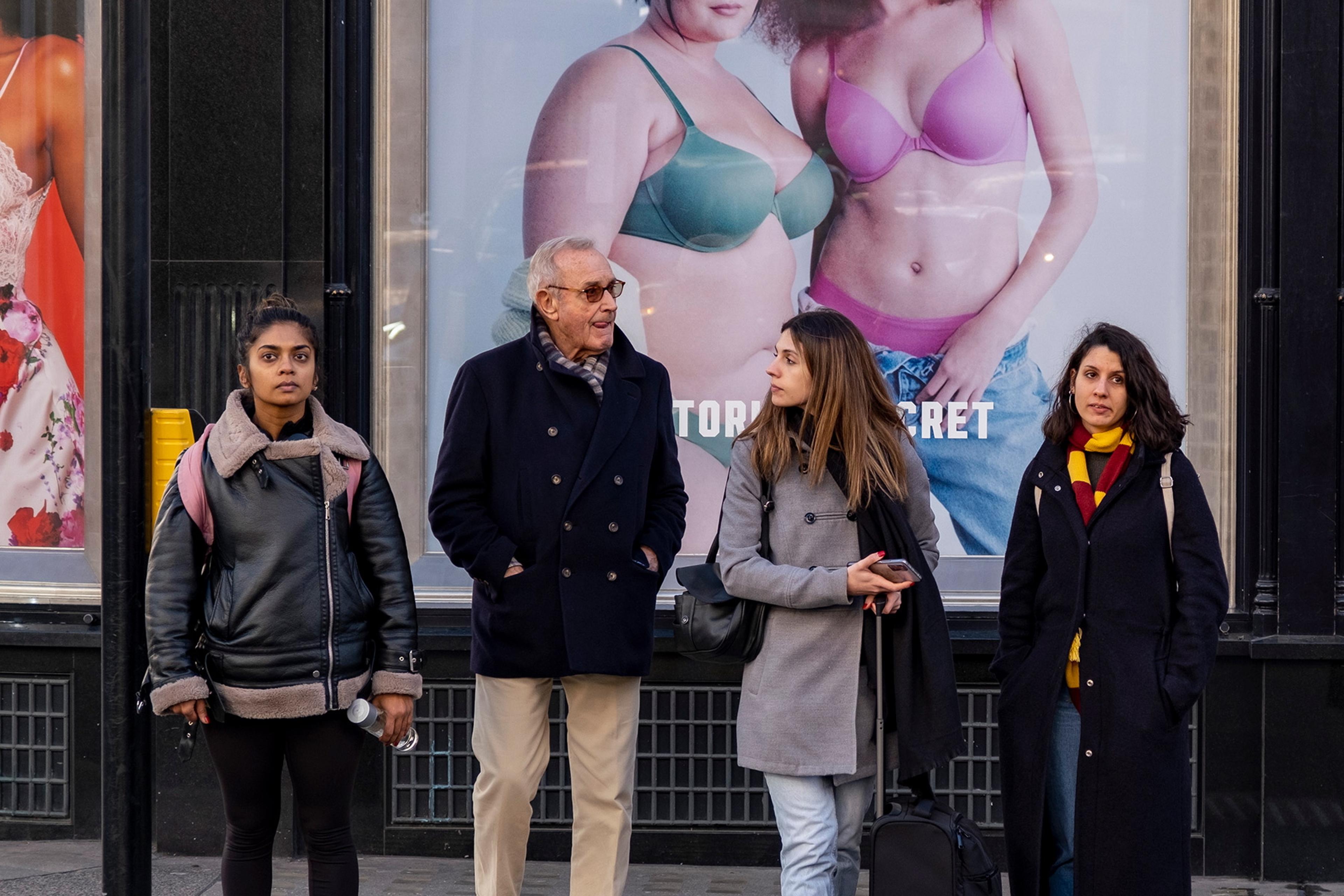
I looked down to check: trying to have good posture made them look even bigger. I hated how massive they were, too big to hide under my baggy shirt. For the rest of the class, I tried to ignore them, but they flopped and dangled and were completely in the way.
All this while, yoga remained a joyful point of connection with my body. At the community centre, our teacher had stressed how important it was to work on building strength and flexibility – an overemphasis on one to the exclusion of the other could lead to injury. As I flowed from pose to pose, I realised I could be soft and strong at the same time.
What I didn’t realise as a teenager was that exercise triggered my gender dysphoria, turning my body into a web of constriction and confusion. At age 23, I certified as an instructor, developing a daily practice that buoyed me through bouts of depression in subsequent years, then helped me cope with the anxiety of having to come out three times: first as queer at 28, then as nonbinary at 32, and then as a trans man at 33. Decades after I started, my muscles are doing the same movements, but in a body that feels distinctly different to occupy.
My complicated relationship with physical exercise, I ultimately learnt, may be due to sensory processing disorder (SPD), a neurological condition that affects how my brain processes sensory input. From the list of statements that could indicate a diagnosis, nearly all applied to me. I avoid visually stimulating environments, and I am sensitive to sounds. Check, check – I hate festivals, big crowds, and loud music. I often bump into things or develop bruises that I cannot recall. Check, check – I am stumbly and always covered in bruises. I have difficulty learning new motor tasks or sequencing steps of a task. Major check – acquiring new physical skills, such as learning to ride that bike, seemed near impossible. An SPD diagnosis felt freeing: I wasn’t inherently flawed; I simply had a disability that required accommodations and support.
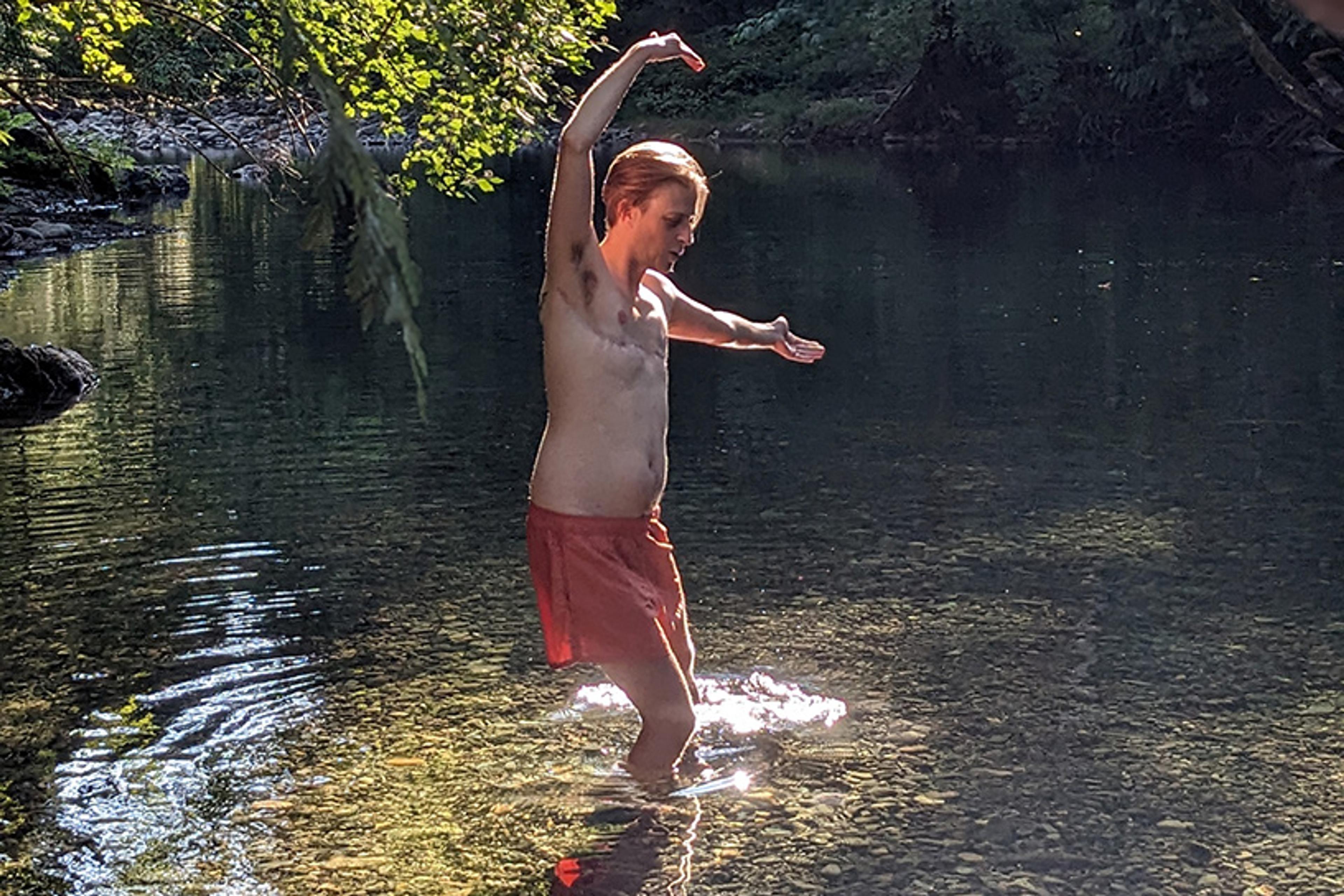
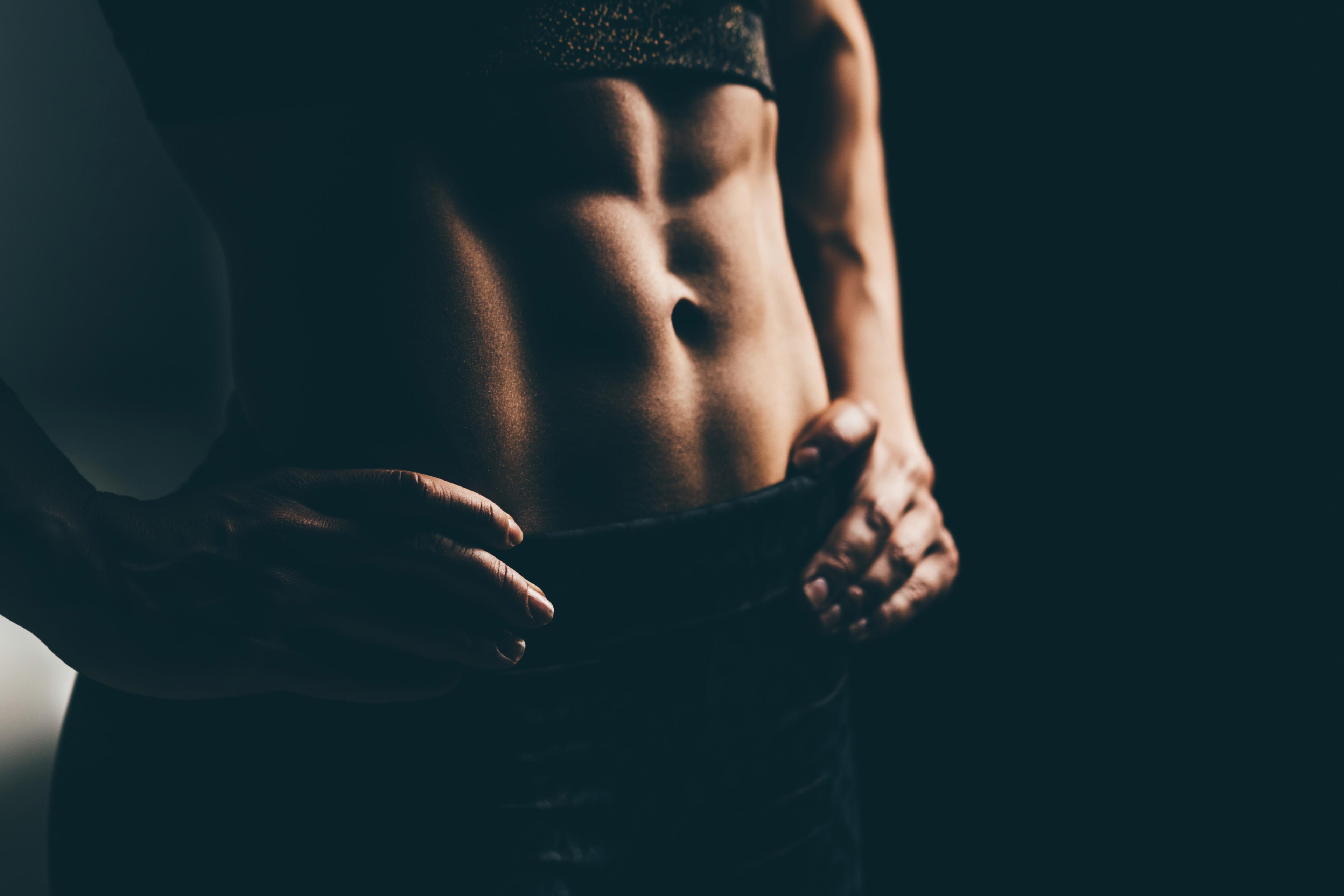
After nearly two years of testosterone, a year after top surgery and six months after a hysterectomy, the existence of my body gives me pleasure: a joy everyone deserves to feel. Joy joy joy when I look at my body: my round hairy belly, my small yet dense biceps budding under my freckled skin, my flat chest with a small patch of hair between my horizontal scars. Now, I can focus on my sensory system, curating a ‘diet’ of different sensory stimuli: swaying in a hammock, lying under a weighted blanket, dancing, skin tapping, active and passive yoga poses – rituals that energise and soothe me. I feel my spirit settling into my bones, no longer trying to find an escape.
It’s taken me some time to get here. When I started to transition, I felt new pressure to look like the muscular trans men I was seeing on social media, with their nearly invisible top-surgery scars, their V-shaped torsos with broad shoulders and big biceps, their wide chests with defined pecs, their tree-trunk legs. Despite being grateful to see any type of transmasc representation, I felt insecure: these men triggered my own gendered fears of being unattractive.
In rare moments of clarity since, I have started to feel the rightness of my kind of tender manhood
Passing for a man was on the minds of many trans men in my Subreddits – so much so that, on some forums, ‘Do I pass?’ posts were banned because otherwise they’d dominate the feed. I could relate; I wanted to pass too, if only to be gendered correctly.

When I got top surgery six months after starting T, more unconscious assumptions about being a man emerged. If I wanted to be seen as a ‘real’ man, I thought, I should have big muscles. As a nonbinary trans man, I have always felt disconnected from the qualities said to constitute a man – large, loud, assertive, unemotional, hard. I couldn’t understand why these binary gender tropes were plaguing me when I had not believed in them for years. Cognitively, I knew my soft body didn’t make me any less of a man. But I couldn’t feel it. In rare moments of clarity since, I have started to feel the rightness of my kind of tender manhood. I feel it when I see myself in the mirror: the new recognition that comes with it, of seeing myself and thinking: Yes, it’s me, finally.
At this awkward-pubescent stage of my transition, I am always wondering how people see me, my confidence an expanding bubble popped when a stranger ma’ams me. A few months ago, I was sitting on a hard chair in the waiting room of my doctor’s office, legs crossed tightly, back and chest hunched forward, when a couple entered the clinic. I instinctively curled my body into my chair so they knew the seats beside me were free. They sat opposite me, and I relaxed a little, returned my elbows to the chair’s arms.
I am increasingly aware of how 32 years of assumed womanhood has moulded my muscles to perform feminine smallness without conscious thought. I don’t want to flip from one binary to another and reenact harmful tropes of manhood, but I’d like to find a middle ground: no longer suppressing my body’s new natural instincts, while remaining aware of the space I occupy.
Muscle memory is hard to forget, easy to fall back into – as are gender tropes. But I want to be intentional about what muscles I choose to engage, the movements I choose to make, what I take from my past to bring to my future. I want to combine an old muscle memory with a new one: the strength and flexibility of my yoga vinyasas with the simultaneous masculinity and femininity of my nonbinary transness. As I flow from pose to pose, my body whispers: I can be all.