My bedroom did not grow colder. There were no strange whispers, no footsteps beneath the clack of my beige keyboard. Only a fracture of focus, some breach of solitude, told me the dog and I were no longer alone. I stopped writing but kept my eyes on the screen, WordPerfect then, a blue so bright it was like the sky or sea. My fingers still, I listened with the whole back of my neck.
It was a cold afternoon in the linger of the holidays, just days before 1998. The green curtains were drawn over both windows. Christmas lights were the only light, and each bulb cast a halo of white against the ceiling. Mindy was curled up on the bed. She was a mutt with a terrier’s foxy face and a beagle’s thick middle. She was 17 and I was 25 – almost 30, which to me, then, seemed like the midnight hour in fairy tales when all the magic breaks.
When I was still in college, my parents moved to Long Island, leaving Brooklyn, where they’d grown up and raised my two sisters and me. After graduation, I’d moved in for what I thought was a purgatorial stay in suburbia while I finished my first novel. Within four months, I had, but the novel did not sell. Meanwhile, I’d begun working as a receptionist at a Manhattan nonprofit – a job I filed under paying dues and fodder for anecdotes (Every time I picked up the phone, I had to say colitis). I’d resolved to finish another book before stepping into the world of rent and electric, afraid I never would otherwise. But after three years, there was no new book, and panic settled in like a low-grade fever.
That’s where I was when I took my hands off the keyboard and folded them in my lap. Slowly, I turned around.
My grandfather was standing behind me, in front of the armoire whose shelves held not folded sweaters, but books. He was the tall, almost gaunt Irishman he’d always been, his grey hair combed straight back from his forehead. He wore a white, button-down shirt with a collar and dark pants.
I looked over at Mindy to see her staring fixedly at the space where my grandfather stood. Consternation narrowed the little white lane between her ears. Then her brown eyes met mine, which were the same blue as the man who had suddenly joined us. Who is that? she might have asked. Or, if she remembered him, how did he get here?
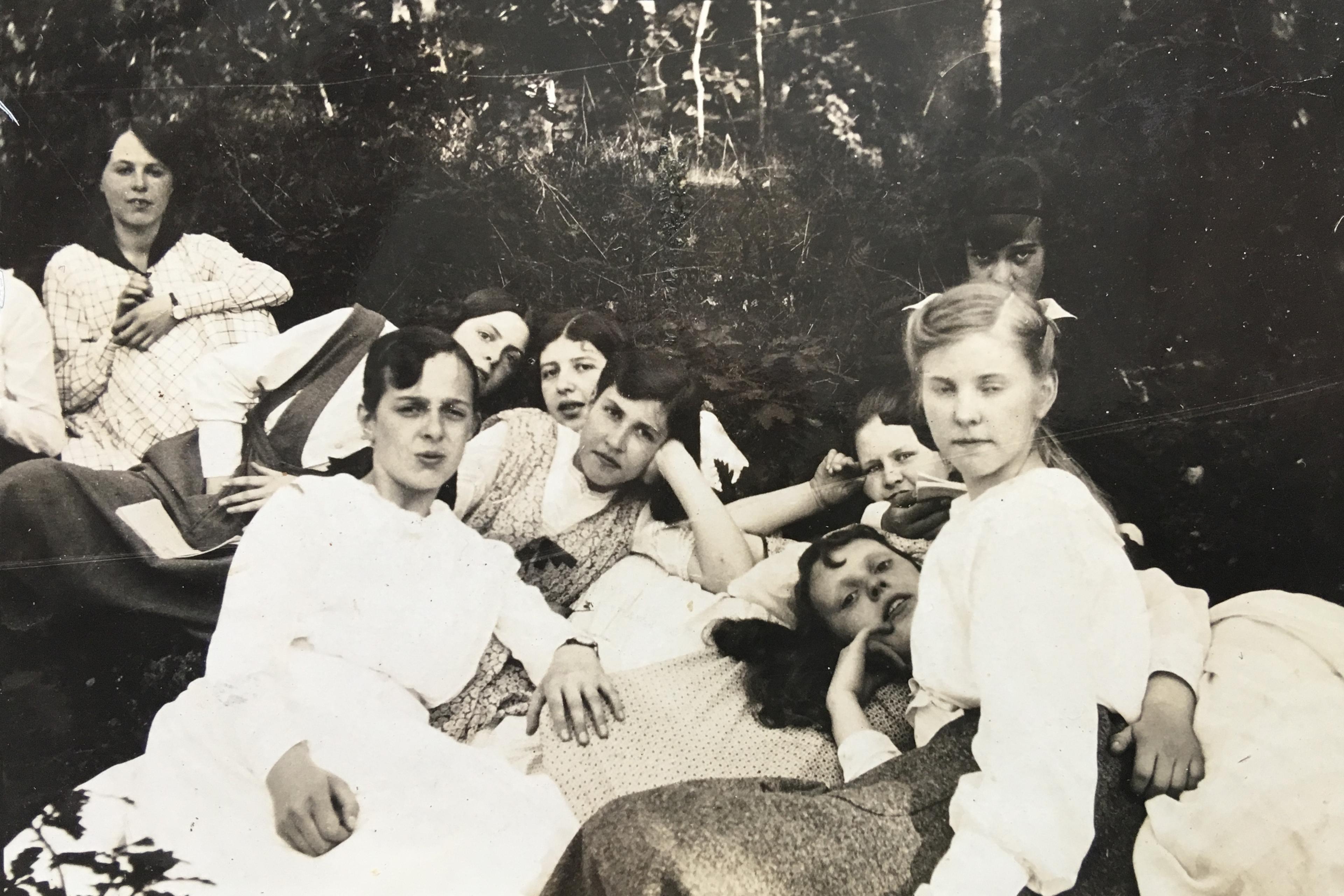
Edward Donohoe was born in Galway, Ireland in 1906, and he left for the United States when he was 19, working as a sandhog, a tunnel-digger, most notably on the crew that built Manhattan’s Lincoln Tunnel. In Brooklyn, he met and married another Galway native. Their daughter was followed by four sons, all of whom would join New York City’s fire department. I’m the 12th of their 14 grandchildren, and the second of three Kathleens.

Kathleen’s grandfather in Abbeyknockmoy, Galway, Ireland in the late 1970s
Opaque, but not quite see-through, he faded in earnest only at the knees. His feet were not visible at all. He’d been dead for 10 years, yet I wasn’t scared or even startled. Though I’d let go of Catholicism years ago, keeping only the holidays and the saints, those beautiful maniacs, its lessons had primed me for the paranormal: all those angels popping in with messages, apparitions of Mary appearing in Medjugorje and Lourdes and Knock. I already believed in the possibility of ghosts.
I faced the computer and swivelled again, framing the story as a party piece. An actual ghost was better than a locked door swinging open, or a shadow taking shape in the dark.
This is one thing about midlife – so many questions have already been answered
I am 52 as I revisit this memory now. I enter the room through the closed door, like my grandfather’s ghost, recalling how flimsy it was, how poorly it kept back the noise of the house. Fifty-two knows that 25 doesn’t tell anyone about the sighting, not for a long time. Just as the logic of a dream makes sense only to the dreamer, the story proved hard to tell. She’s only able to do so when directly asked, and the first person who does hasn’t yet been born.
From the foot of the bed, 52 can see the white text on the computer screen. The sentences look like clouds or whitecaps against the blue. The book was eventually finished, but long after leaving Long Island. Twenty-five has it exactly backward. Productivity comes only with independence.
This is one thing about midlife – so many questions have already been answered. In the summer after the ghosting, Mindy stopped eating, and we had to let her go. Twenty-five spent decades in this office or that, on her knees in front of the Xerox, trying to free the scrap of paper jamming the machine. In Brooklyn Borough Hall, wearing a blue dress from Gap, she married a New York transplant who’d grown up in Miami. She completed the first draft of her third novel just before noon on her 40th birthday, after which she closed her laptop and joined her husband and two-year-old son for a Halloween festival at Brooklyn Botanic Garden, which was just a few subway stops from their apartment. This was the novel that got published, in another four years.
Everything 52 knows, 25 will find out. At 52, it’s my grandfather who intrigues me. Though the mechanics of haunting held no interest then, now I wonder if it requires nerve, like bungee jumping, or if it’s a talent, like singing. In Irish folklore, thresholds are known as ‘thin’ places, where the boundaries between worlds are easily crossed. Entering another dimension could be like stepping from one room into another. Or maybe to haunt is to visit a city where you once lived, finding it both familiar and different, humming along just fine without you. It could be like visiting a museum where the ghost treads carefully around the exhibits. A sighting could be the dead tapping on the glass behind which the living live.
I’ve passed an odd Rubicon. Should my life end in my 50s, it will be a life cut short, but not a short life
As the one being haunted, 25 may have believed she was the locus, but 52 understands that it was always about the ghost. My grandfather was at once the 19-year-old Irishman sailing for Baltimore, and the 81-year-old American who succumbed to cancer in Brooklyn. I wish 25 had thought to ask him what it was like to have not just many answers, but all of them. What it’s like to exist beyond the epilogue.
I am 29 years younger than my grandfather was when he died. Midlife mathematics is jarring. I’ve passed an odd Rubicon. Should my life end in my 50s, it will be a life cut short, but not a short life. Tragic, but not a tragedy-at-large. A stranger who happens upon my obituary won’t sigh and say she had her whole life ahead of her. A half-century is a lot of time.
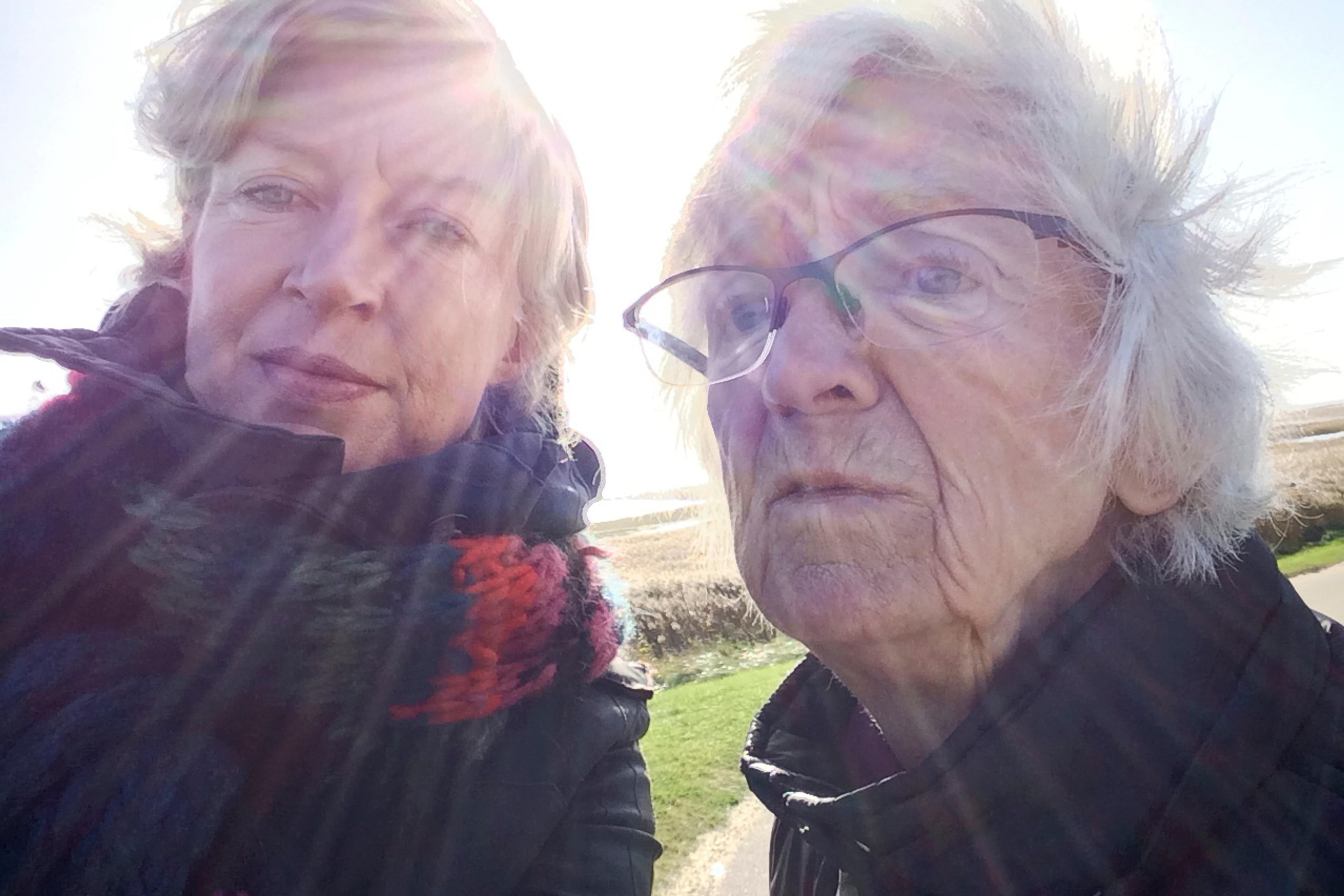
It shows. Of course it does. In midlife, I find myself facing the sceptical mirror. At 16, I catalogued the good, like the eyes, the eyebrows, and the not-so, like the pointy chin, the non-Michelle Pfeiffer lips, searching for a preview of the final face. Final, then, meant early 20s. Now, when my reflection surprises me, when the grey hair I pay to vanish mingles with the brown again, I pull tricks. I look by window-light, or slightly in profile, or without glasses, or five steps back, just to briefly see a younger version of myself again.
But I’m not mired in a midlife crisis; I understand some mistakes can’t be undone. I’ve made wrong turns that won’t be reversed. Some dreams are closed. Some are not. There won’t be a second child. Maybe we’ll own a house someday. There is still time for reinvention, for new experiences, but there are more years behind me than ahead.
After exchanging glances with the dog, 25 faced the computer again but did not resume writing as the afternoon turned to dusk. When I turned around again, my grandfather had disappeared. Mindy put her head on her paws.
Here, the memory fades. I assume I got back to work on the book that I believed might be in Barnes & Noble one day. I had dinner, watched television, walked the dog. Longed to be elsewhere. But I don’t specifically recall and, in fact, I don’t remember much about 1998, in general.
Because of my experience, I tend to believe the quiet ghost stories are the ones most likely to be true
In the Catholic liturgical calendar, the months after Christmas and before Lent are called Ordinary Time. It would surprise 25 to know that, once you have lived long enough, and you’re well beyond the yardstick of school, it can be hard to remember what you were doing in a random year. I have to think, to draw a map to it with milestones. In 2005, I started that job. I was still in that apartment in 2007 because it was 2008 when we moved in together. The baby was born in 2010 and, after that, time cleaves to before and after. So many years lived, it’s impossible to cherish or hate them all. Much of life passes in ordinary time.
An internet quiz predicted my child’s eyes would be green like his father’s, but our son’s eyes are blue, like mine. When he was about six, he asked me if I’d ever seen a ghost. I’m not sure what inspired the question. Something on YouTube, probably. I hesitated, then said that I had. He believed me without being particularly impressed. I get it. Because of my experience, I tend to believe the quiet ghost stories are the ones most likely to be true.
These days, my writing desk is in the entry hallway of the two-bedroom Brooklyn apartment where we have lived for 11 years. My chair almost touches the wall behind me. So, when I pause – that is, stop tapping on the elegant black keyboard that makes writing sound like rain – it’s to my left or right I glance, not behind me. And I think about who I might appear to someday, hopefully not soon, when I know both what it is to live and what it is to haunt.