This is my earliest ‘memory’, based on an origin story relayed when I was old enough to remember it: one-year-old me in a pram at a countryside fete, a lady bending down to hand me a small blue teddy bear.
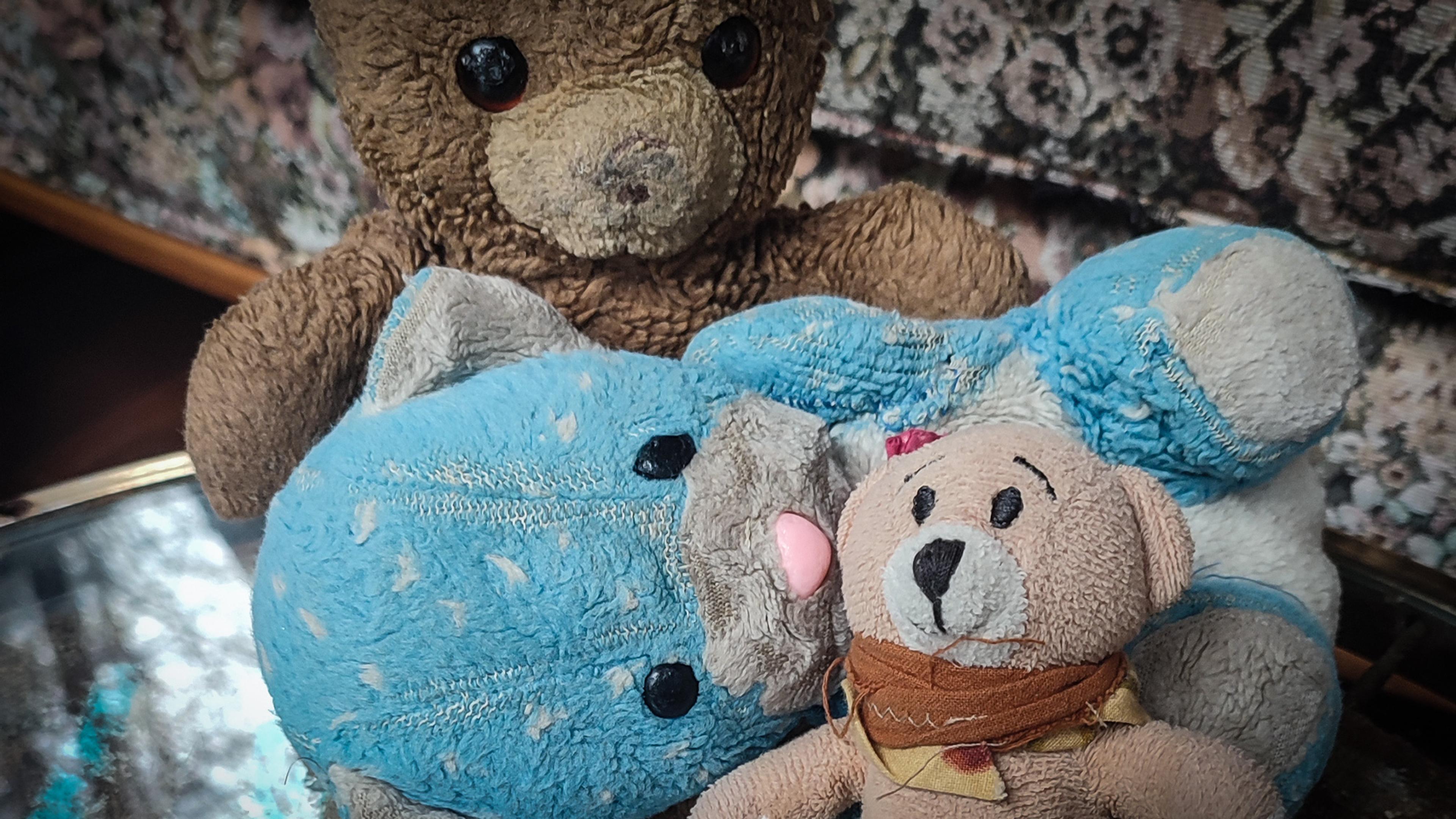
Blue Ted – as I named him in a mercurial flash – is speckled with white, and sports a dark-pink bow tie with white polka dots. His black eyes, one chipped, are wonky – though this is only revealed in the mirror, such is my neurological adaptation. I cuddled him every night, his pink nose pressed into mine. I spoke to him and spoke for him, in a squeaky, toddlerish voice, pronouncing Rs as Ws. I confided in him during the bumps of a happy childhood, imagining him as my son (an unusual arrangement, I learned as I approached 30). A cast of cuddle mates came and went, but Blue Ted remained.
Spotting Blue Ted in the background of childhood photos has become a family game. I took him everywhere: parks, zoos, sleepovers, vacations. I once brought him to school as my ‘show and tell’ item but erupted into tears midway through class: Blue Ted had been placed by the shoeboxes we were filling with gifts for children affected by the Bosnian War, and I thought he was getting shipped off. He accompanied me to boarding school, university, and various London apartments – backstage in my bedroom, but always around. When family members jokingly enquired about him, I quipped back, pretending it was just a joke. Somewhere along the way I became a man with a teddy bear.
Then Blue Ted and I moved to Vancouver, where we met Bri and Little Bear.
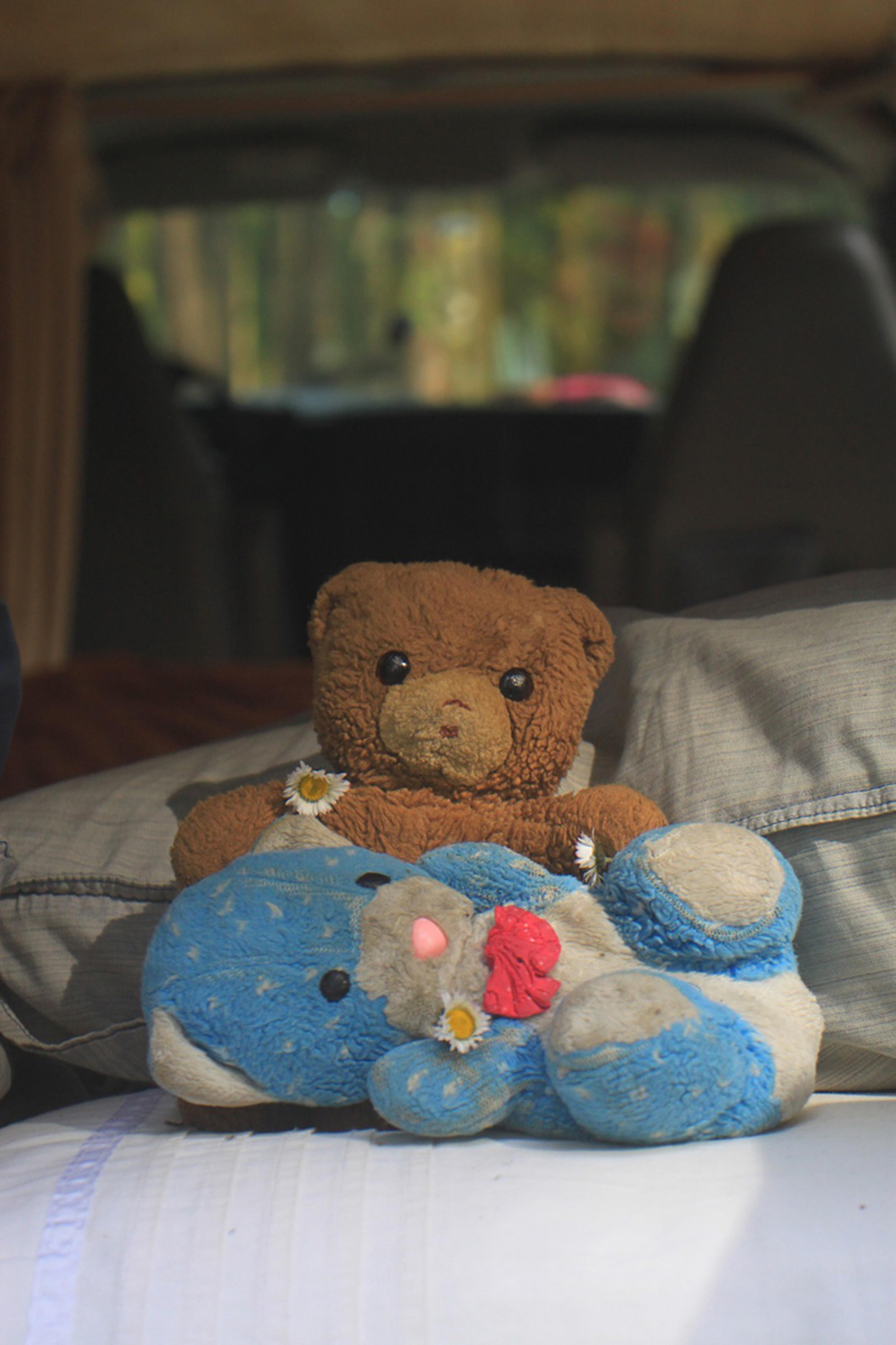
I can’t recall Blue Ted and Little Bear’s first meeting, but I do remember them looking adorable together: a sweet symbol of my budding romance with Bri. Little Bear, Bri’s childhood companion, is grizzly brown with a grubby tan nose and animated amber-flecked eyes (both scratched, after he went missing one day at school). The first patches of white netting are peeping through his fur. He’s just shy of an inch taller than Blue Ted. Both weigh 92 grammes.
Blue Ted is grounded, shy, quietly wise. Little Bear is chattier, more excitable, a little naive
That encounter justified regular play dates, during which ‘the Teds’ sat together while we hung out. This soon turned into placing the Teds in fun positions – reading books, riding bikes, raiding cupboards – awaiting delighted discovery. Our WhatsApp chat accumulated Ted photos. Before long, it became unconscionable not to pack our respective Ted when visiting one another.
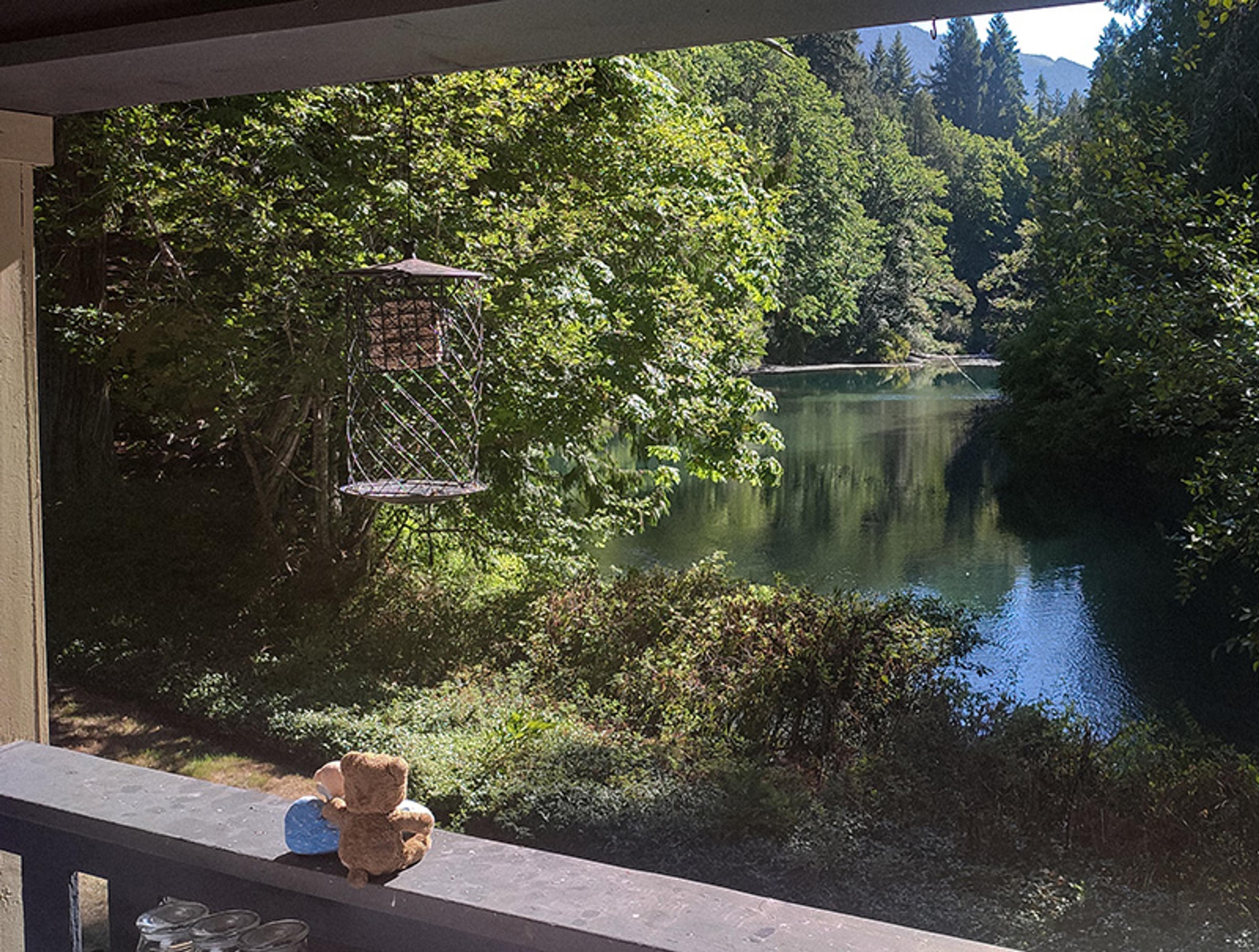
Soon they started speaking: Blue Ted in his nasal voice from my childhood, recalibrated through Bri’s Canadian accent; Little Bear in polite British, impressionable in my presence. Talking led to them finding their voices. We learned that Blue Ted loves all things nature, tending the spring garden, sitting on the balcony amid the birds and butterflies. He’s grounded, shy, quietly wise. Little Bear is chattier, more excitable, a little naive. He’s a bear with big dreams. He was once a doctor in Oxford, he told us, but is now a space ranger, flying off on secret intergalactic missions that he struggles to keep secret. He’s even started flying dragons. The one thing he loves more than regaling people with his escapades is being regaled by his friends’ escapades.
Somewhere along the way, we started referring to ourselves as a family, sheepishly at first, then sincerely. Maybe it started the day Bri sewed Little Bear a chequered bow tie, so he could be more like Blue Ted? Perhaps it was when Little Bear (complicating his best-friend relationship with Bri) tentatively shifted from calling me ‘Mr Firman’ to ‘dad’? Or was it that fateful cinema trip when, as the lights dimmed and people rustled their snacks ready, I unstowed the Teds from my bag – surprise! – to muffled family delight?
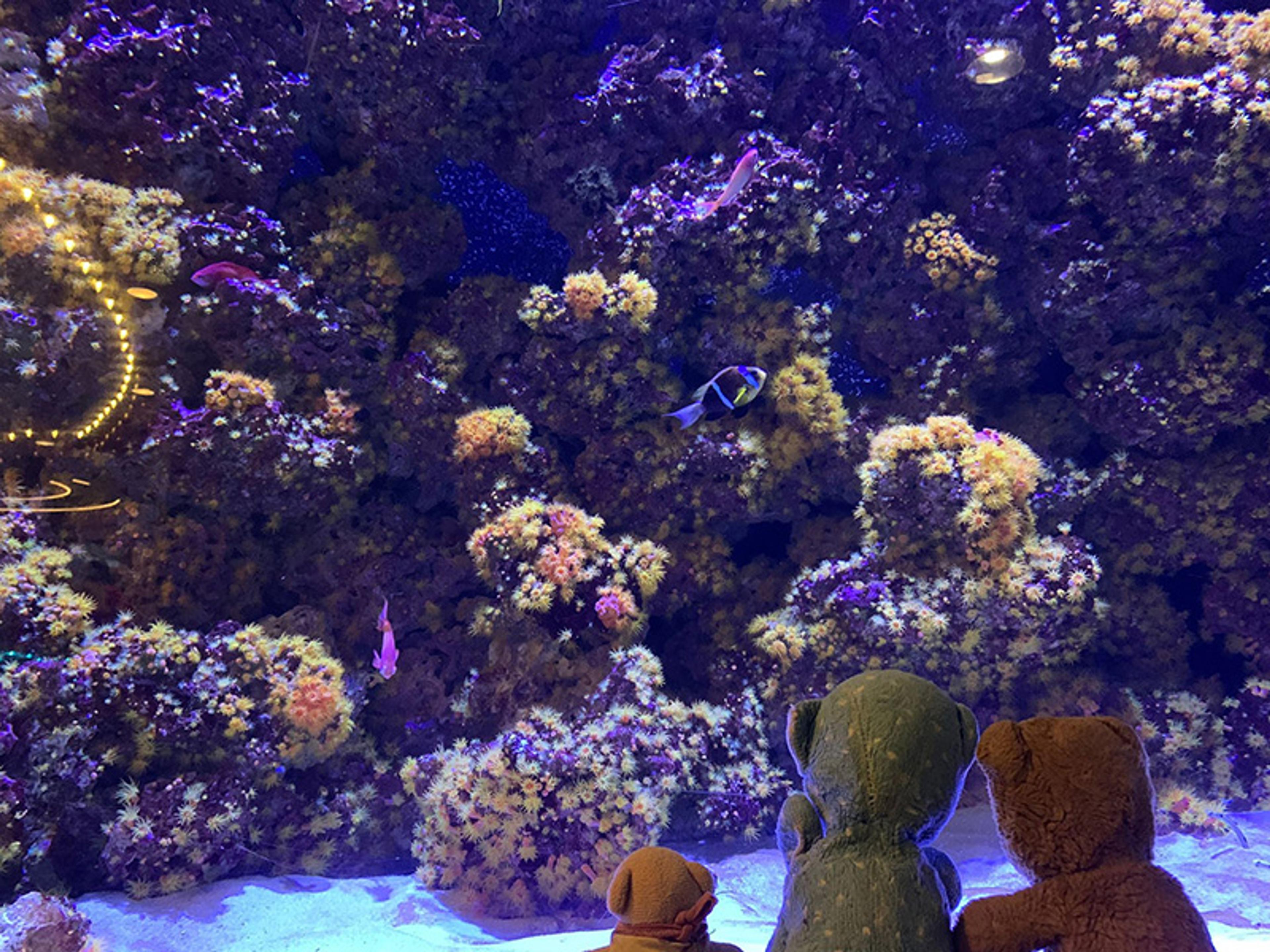
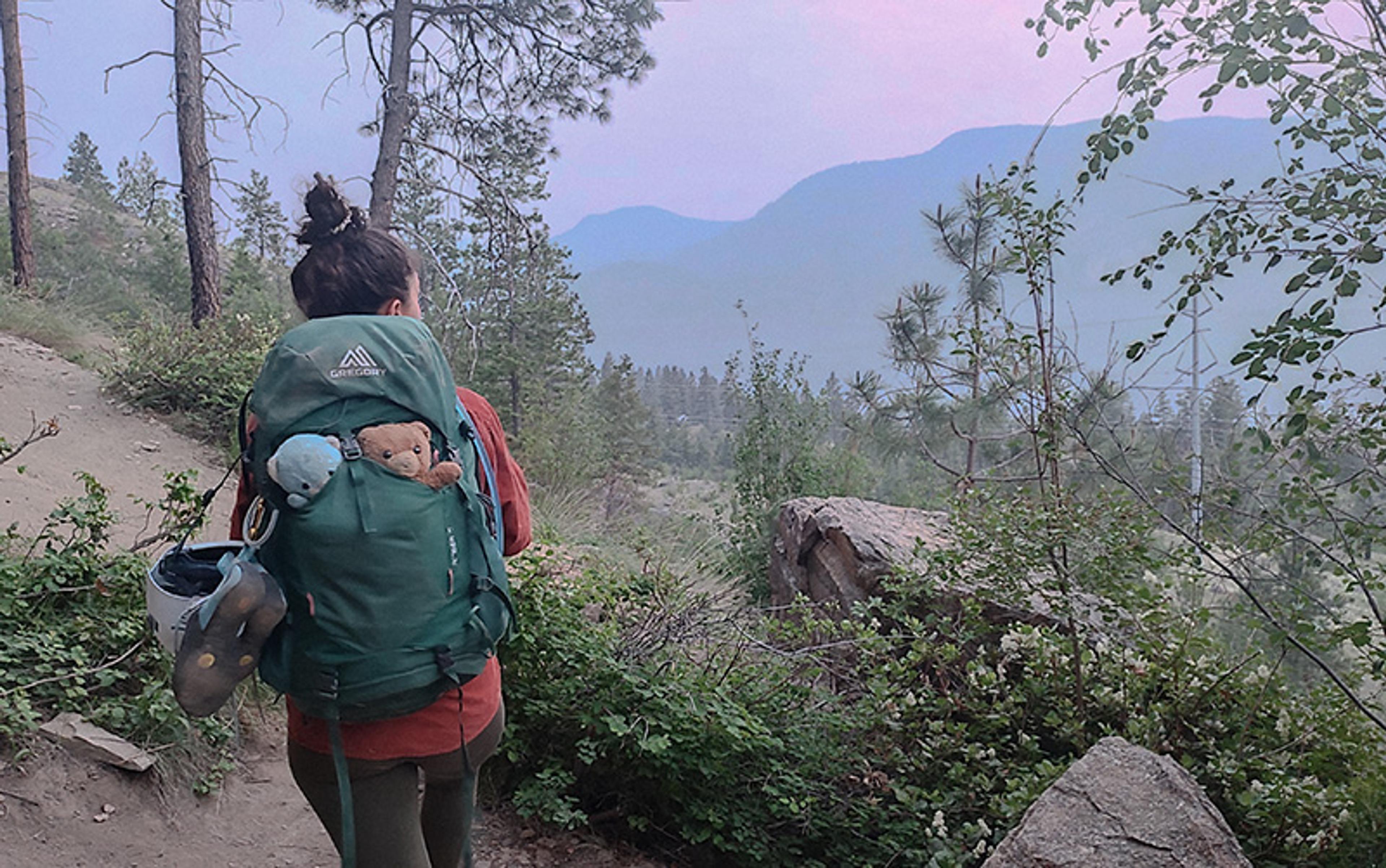
That cinema visit, our first collective public outing, marked a paradigm shift. Thereafter we started slipping the Teds into our backpacks for beach sunsets, bike rides, and park hangs. They joined longer outings – camping weekends, climbing trips, festivals – as standard. During these trips, the Teds made a growing cast of friends: Roscoe the dog, Kipper the stuffed dog, Ray the unicorn, Buster and Big Bear the teddy bears. They also met many of our friends, who reacted with awkwardness, delight and bafflement. Witnessing some, especially male friends, tentatively embracing the make-believe – cuddling the Teds, rediscovering their own childhood stuffies, developing a ‘Ted voice’ – added a small but tender dimension to those relationships.
My mum also grew to love the Teds. She started taking them on geocaching adventures whenever she could, sending Bri and me photos of them unearthing hidden caches in the countryside. The actions of a mother desperate for grandmotherhood and making do? Perhaps. But the Teds became a sweet, anchoring force in a parent-child relationship buffeted by the winds of divergence. When she visited us in Canada one summer, she packed a pale-brown bear cub orphaned by my grandma’s recent passing: Lil Raphy, the Teds’ new little sister. She’s an adventurer, ever tumbling off under the bed or sofa on some wild caper, whooping with delight.
Can a grown man hang out with teddy bears and claim to be emotionally mature?
Like characters outgrowing a novelist’s creative control, the Teds’ personalities grew sufficiently sophisticated that we no longer fully controlled their reactions and behaviours. ‘The Teds wouldn’t say that!’ and ‘I wouldn’t say that!’ became uproarious objections whenever one of us acted in discordance with the make-believe world now in motion. Other mistakes required simple correction. ‘Their first professional address!’ Bri exclaimed when I told her about this piece. Then, a minute later: ‘Not Little Bear of course. I was going to say this is his first journalist or editor reaching out, but he says that’s not true either.’
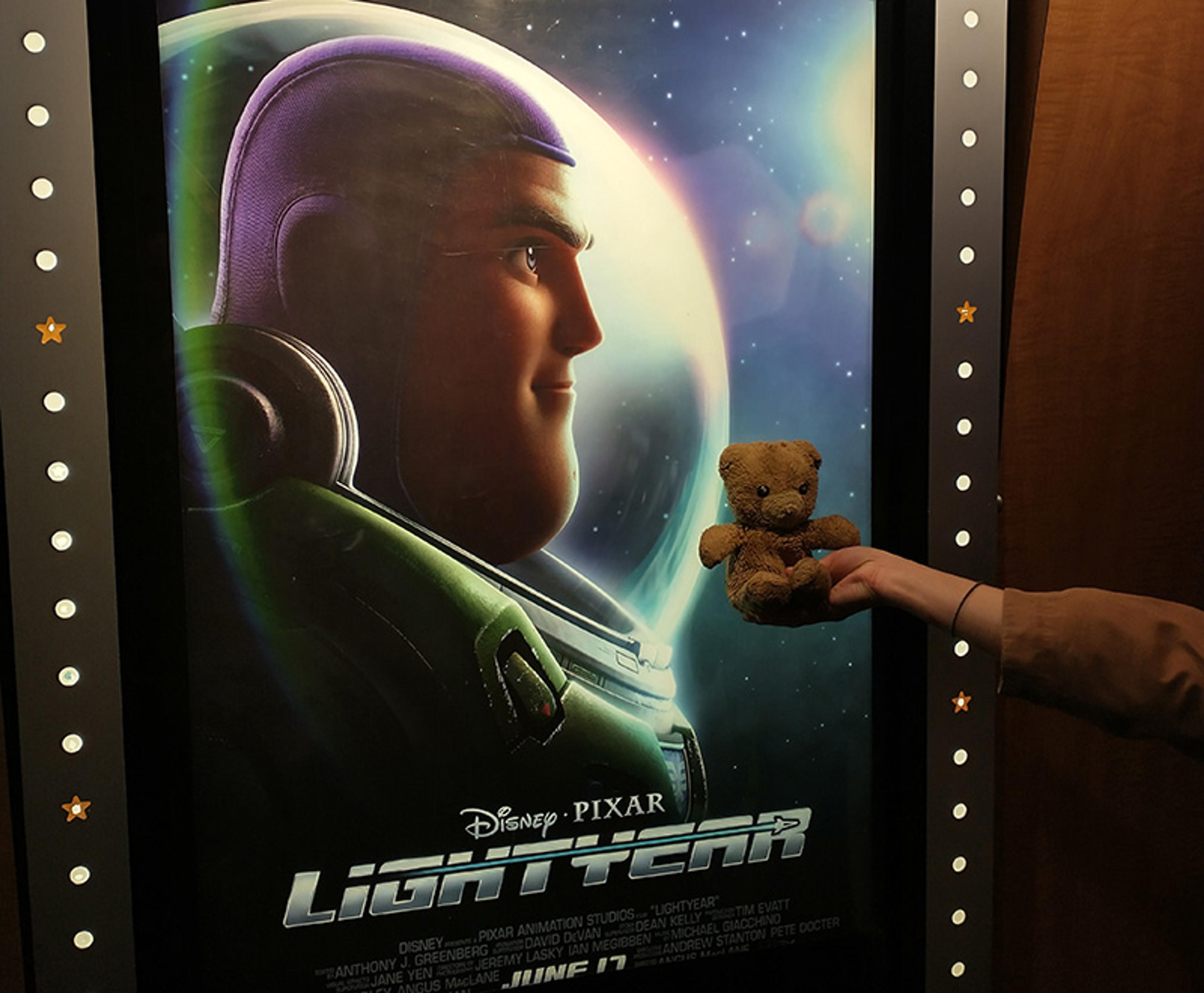
The Teds’ preferences started altering our behaviours, private and public. It became akin to a parental duty to place the Teds where they wanted to hang out before leaving the apartment, to include them in rounds of messages and gifts, to dress them in their desired outfits (their wardrobe grew fast, thanks to Bri’s sewing, my aunty’s knitting, and opportune purchases like two lucha libre masks ostensibly designed for pets). When we took Little Bear to watch Lightyear (2022) at the cinema, he was transfixed by Buzz Lightyear; that’s when he decided to become a space ranger. His excitement at getting a photo with the Buzz poster in the hallway dwarfed the embarrassment of photographing a teddy bear as people filed past.
Many will likely read this as cringeworthy, even pathetic. Sanctioned forms of adult play include rule-bound games, hedonistic revelry and media consumption. Sure, some adults have cuddly toys in the cupboard. But can a grown man hang out with teddy bears and claim to be emotionally mature? Are two adults cosplaying as teddy-bear parents not a sad symptom of the millennial zeitgeist: a retreat from the hard, darkening world into the soft, light land of make-believe?
There may be something to these charges; we certainly felt embarrassment. But embarrassment is an unreliable guide, even a barrier, to worthwhile ways of being. We came to see our relationship with the Teds not as childish, but childlike: less retreat, more re-enchantment. Considering how a van adventure, a dog or a movie night feels from the perspective of a teddy bear, however silly, invited an imaginative, vulnerable way of seeing the world. It also fostered further make-believe, from befriending a pink dinosaur figurine from a festival to assigning personalities – Angry Annie, Grumpy Gus, Post-menstrual Percy – to our troublesome mental states. Should maturity not include this capacity for creative immaturity?
Our relationship with the Teds became inextricably entangled with our own relationship, deepening our connection. The Teds came to symbolise our mutual affection and the magic of our little world, their reactions ventriloquising and amplifying our own excitements. They elicited sadness when we were away, excitement when we returned, guilt when we wronged them, and delight when they surprised us. The Teds became, to a baffling degree, our children.
But then Bri and I broke up, and I decided to return to the UK. It was a mutual, loving breakup, and the aftermath has been deeply sad in the ways we expected. But breaking up the Teds – Blue Ted and Lil Raphy came with me – has been shockingly sad. Amid our own heartache and upheaval, we’ve conveniently imagined them to be understanding. Our coping mechanisms have included the notion that Little Bear can visit us in his spaceship, and a magical ‘third eye’ (a craft googly eye) allowing the Teds to see and communicate from afar. More than a year later, I still miss Little Bear terribly, and miss Bri all the more through him.
One March morning, still in the cloud of this grief, I felt grateful to feel a stirring of appreciation for the early snowdrops and daffodils, resplendent in that first warm spring sun that thaws the winter outside and within. I realised I had been deadening this appreciation, on this morning and for many months, with headphones: tuning-out masquerading as tuning-in. So, I unplugged, breathed in, and determined to walk more mindfully.
No sooner had I done so than I glanced to my left and glimpsed two arresting red flashes in the treeline. Closer inspection revealed a small plastic brontosaurus, green with red eyes, tucked into the crook of a sapling. A reward for my mindfulness, and a sign I should continue. Or, Bri suggested, when I relayed the story, perhaps the dinosaur was a forest spirit who had willed me to remove my headphones? Of course! This was no mere sign, but an intervention.
Witnessing the Teds come to life has helped me feel the care and curiosity that animism might kindle
The dino spirit evoked the Teds, as well as something else I’d been thinking and writing about: how people are challenging the foolish assumption that humans stand apart from nature in new ways – often in conversation with the animism at the heart of many ancient Indigenous cultures. Technologists are decoding honeybee and whale language, scientists unearthing fungal intelligence, lawyers pioneering non-human ‘rights of nature’, philosophers pondering interspecies democracy, and ‘neo-pagans’ reviving animistic spiritual practices. These threads are weaving what the Potawatomi writer Robin Wall Kimmerer – whose work braids Indigenous wisdom and modern science – calls a ‘grammar of animacy’, and a story of re-animism that may help avert ecological catastrophe.
Don’t worry: I’m not about to propose we all develop intimate relationships with teddy bears. But witnessing the Teds come to life beyond my full control has – astonishingly, delightfully, embarrassingly – helped me feel some of the care and curiosity that animism might kindle. It has shown me how the alchemy between trusting relationships, sacred objects and make-believe can bring the nonhuman to life, and ourselves into new life.
To allow a ‘fictional’ character to outgrow our control is arguably to realise its fullest creative form. Whether this matters much with teddy bears is moot, but it surely matters with, say, trees. What rituals and stories would it take for partners, friends, families or neighbours to bring a local tree to social life? What emotions, responsibilities and behaviours might it germinate?
Thus I took to greeting the brontosaurus each time I passed, appreciating their telepathic words of encouragement. One day I found them toppled in the undergrowth, and secured them back in their crook. The next time I visited, a few days later, they had vanished.
Or had they? Now, whenever I walk that small strip of woodland on the edge of a humble new-build estate, my relationship with the dino forest-spirit lives on. I still greet them. I still feel their guiding force from and through the trees. I still heed their call to presence. I still feel, through that plastic figurine, less alone and more alive.