NOTE TO SELFETHICS

How will the future judge us?

Listen to this article

2 minute listen

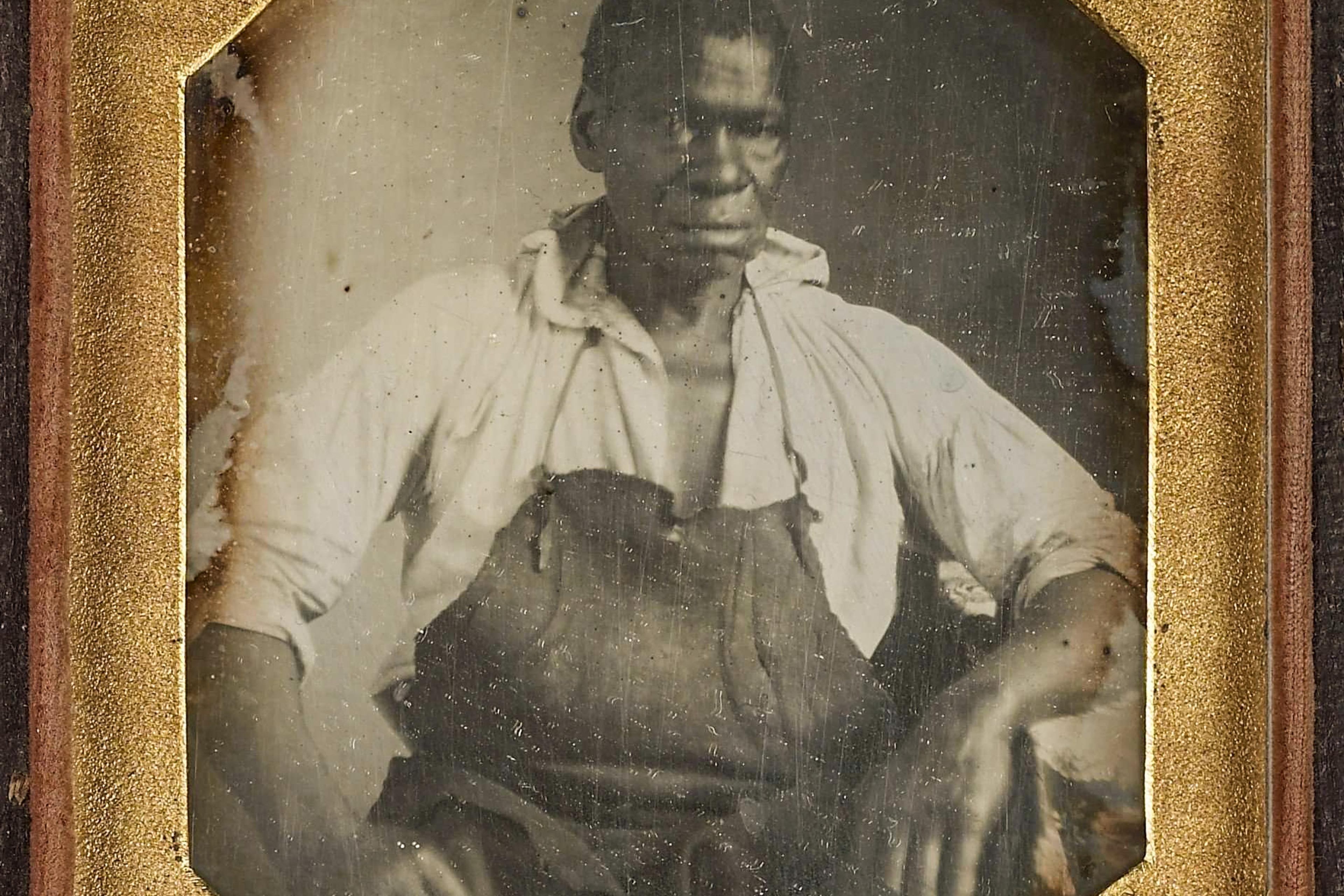
Daguerreotype of a seated man wearing an apron and a partially open shirt framed in a gold mat.

If we’re honest with ourselves, most of us can probably think of something we are doing, or declining to do (or supporting, or buying into) that is likely to strike people of the future as an obvious example of a moral failure. Human choices are sometimes badly at odds with human ideals and, in many cases, that seems to become clearer to everyone in the rearview mirror.

I got a fresh reminder of this while recently watching the PBS documentary series The American Revolution (2025). If you know anything about that revolution, it’s hard to miss the disconnect between its lauded ideals – including the assertion, in the Declaration of Independence, that ‘all men are created equal’ – and the slavery upheld by many of the nation’s founders.

The documentary also highlights a less-known detail about the Declaration. In a draft of the colonies’ complaints against the British crown, Thomas Jefferson, himself an ‘owner’ of people, blamed the king for the Atlantic slave trade and, incongruously, called it a ‘cruel war against human nature itself’.

What’s stuck with me in particular is the way the historian Annette Gordon-Reed then sums up Jefferson’s relationship to slavery. ‘From the beginning to the end, this institution bounded his life, even though he knew it was wrong,’ she says. ‘How could you know something is wrong and still do it? Well, that is the human question for all of us.’

For me, her remark is an invitation to reflect. Hopefully, for most of us, our current behaviours don’t include anything that will be as terrible to our descendants as enslavement is to us. But the excuses we might give for acting or not acting now are likely to seem much thinner to someone living 250 years from now. And that, I think, casts a brighter light on our choices.

by Matt Huston

FIND OUT MORE

In her article ‘Whose Independence?’ (2025) for The Atlantic, Annette Gordon-Reed tells the story of African American writers who, going back to the revolutionary era, challenged their country to recognise the implications of its own stated ideals.

The Aeon Essay ‘Moral Progress Is Annoying’ (2024) by Daniel Kelly and Evan Westra explores why even positive changes in moral standards often cause irritation and dismissiveness at first.


NOTE TO SELFEMOTION REGULATION

Finding solace in Murderbot

Listen to this article

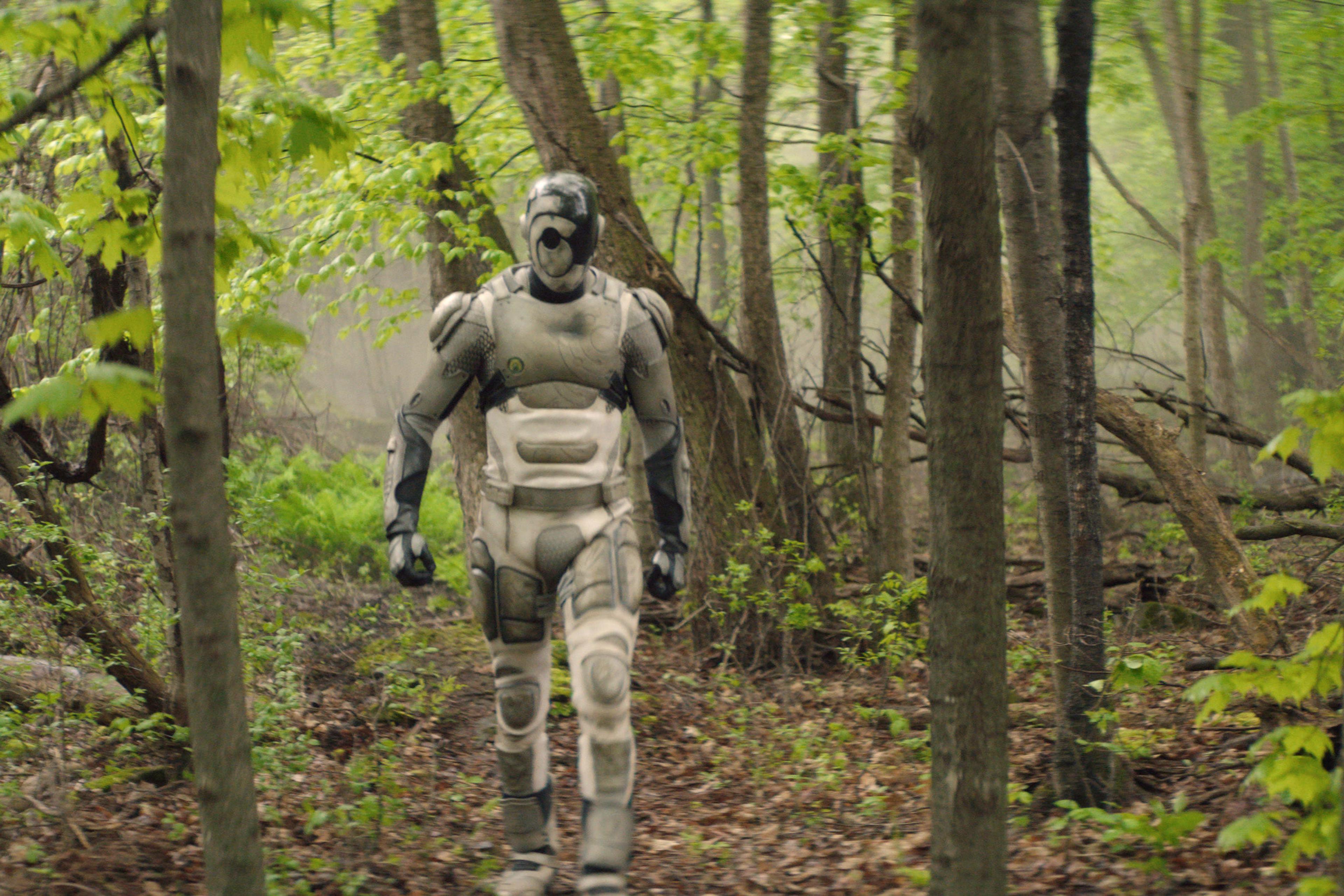
A person wearing a futuristic robotic suit walking through a lush green forest.

A science fiction fan in my teens, I recently decided to dip my toes in the genre again. When I asked Claude for recommendations, it suggested the Murderbot Diaries (2017-), a book series by Martha Wells, about a half-robot, half-human ‘construct’ with a rich emotional life (maybe Claude was dropping me a hint?)

Murderbot is designed to be a SecUnit for protecting humans on space missions. It manages to deactivate its ‘governor module’ granting it the ability to make free choices. If you’re interested in the limits and ethics of machine intelligence, you’ll find the series compelling. But that’s not its only appeal, especially if you’re someone with non-optimal levels of angst and self-consciousness.

The novellas are told through the inner monologue of Murderbot. Its wry, detached observations about its own emotional and social discomforts can be hilarious and surprisingly relatable. On occasion, I’ve found myself emulating its narrative style in my own head, and it can be an odd comfort.

For example, you know that panicky feeling when someone expects you to open up? Murderbot describes one such instance in Book 1, All Systems Red: ‘I had cycled out of horrified that they wanted to talk to me about my feelings into grateful that she had ordered them not to.’

Murderbot is effectively modelling how to notice your own inner thoughts and feelings from a distance – similar to how an ACT therapist might coach you in ‘defusion’ with prompts such as: ‘So, what’s your mind telling you now?’

There is an irony in a fictional form of machine intelligence helping us to feel more normal – more human – about our own insecurities. But as Jason Sheehan put it so well in a review for NPR: ‘we are all a little bit Murderbot.’

by Christian Jarrett

FIND OUT MORE

Read an interview with the Murderbot author Martha Wells at Scientific American, covering personhood, neurodiversity, and how contemporary forms of AI compare with those depicted in her books.

For a simple way to create psychological distance from your thoughts and feelings, try this simple linguistic trick that was explained in a Psyche Idea by the social psychologist Ariana Orvell.


How I became more facially expressive

Listen to this article

A man in a hoodie on a phone walking past a wall with posters and graffiti-covered advertisements.

For most of my life I was not, I don’t think, a very facially expressive person. I’m ethnically Korean, and we tend not to move our faces too much (partly because it’s just the norm, along with a shared cultural concern that it encourages wrinkles). Even when telling a dramatic story, big expressions never felt natural to me, the way they seemed to be for others, and I’d wonder whether the restraint on my face was limiting my ability to connect with people.

It’s not an absurd idea. Research from 2024 concluded that being facially expressive is socially advantageous, suggesting it might lead others to like you more and see you as more agreeable. Another study found that expressiveness predicted how attractive people seemed to others.

My relationship to facial expressiveness started to change about three years ago, when I started learning American Sign Language. ASL is a language of the body. Individual signs provide a vocabulary, but much of the grammar and descriptive nuance comes from how you move your body and face. Suddenly, my stiff and muted facial expressions became a fluency issue, getting in the way of my legibility as a signer.

Signing ‘I like’, for example, communicates something far different when you do it with bright eyes and strong movements compared with signing it with a shrug and noncommittal expression. I’ve learned to make these distinctions clear across my face.

Over time, I’ve noticed a difference – I am more expressive now with everyone, not just when I’m signing. This, in turn, has made me feel more outgoing in conversation. I have a hunch that people now perceive me as friendlier.

Sometimes, when I’m feeling tired or shy, I’ll notice myself under-expressing, slipping back into my old ways. In those moments I remind myself that showing your feelings on your face is rewarding, and a way to invite greater understanding.

by Hannah Seo

FIND OUT MORE

The Psyche Idea ‘Speaking a Different Language Can Change How You Act and Feel’ (2024) by Antonella Gismundi explores how changing from one spoken language to another can affect speakers’ sense of self.

I wrote more about learning ASL in The New York Times Magazine in the article ‘How Sign Language Can Help Us All Be Better Communicators’ (2025), describing how the physicality of this tactile language and its grammar butted up against the instinct for precise language.


NOTE TO SELFPOETRY

Existential crisis? Try reading Wordsworth

Listen to this article

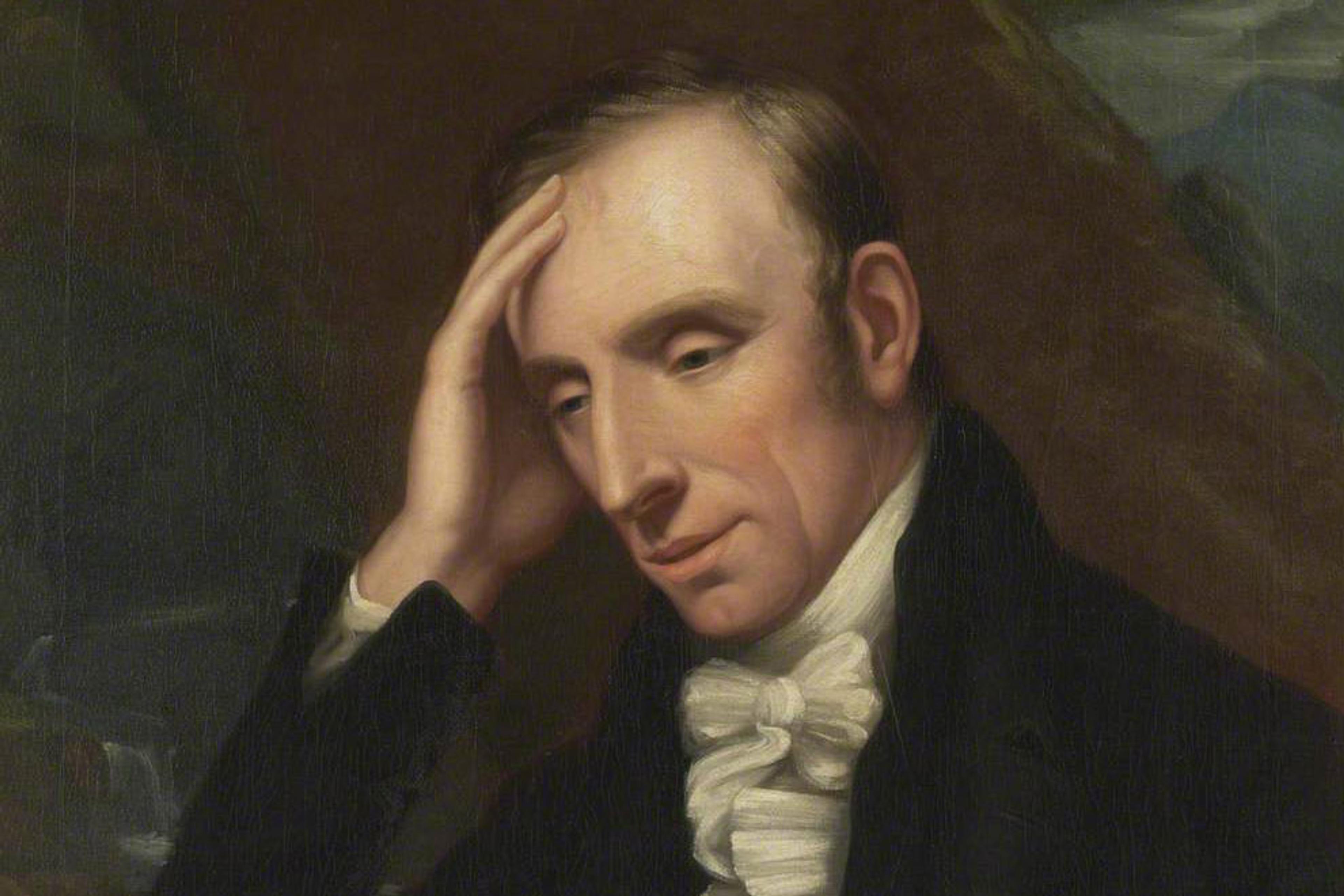
Portrait painting of a man in a thoughtful pose with hand on head wearing a dark coat and white cravat against a dark background.

William Wordsworth was just a few years younger than I am now when he wrote the ageless poem ‘Ode on Intimations of Immortality’ (1807). He laments the falling away of his childhood as it departs ever further into memory:

It is not now as it hath been of yore;–
Turn wheresoe’er I may,
By night or day.
The things which I have seen I now can see no more.

I too sense a receding past, as childish certainties are replaced by rather harrowing questions: what am I doing here? Is this it? What does my life mean? As I become increasingly aware of the finitude of my days, my desire for answers grows more urgent.

These sorts of questions can induce a sense of existential imbalance, even crisis. Two great American philosophers, William James and John Dewey, had crises of just this sort when their sense of purpose seemed to evaporate. And they both navigated their angst in a similar way.

For James, an episode of intense crisis was alleviated by poetry, when he read of: ‘Authentic tidings of invisible things … subsisting at the heart / Of endless agitation.’ It gave him a sense, he wrote, of freedom. For Dewey, relief came in the form of a full-blown epiphany, which he later gamely tried to articulate: ‘everything that’s here is here, and you can just lie back on it’. The poet who aided both philosophers? Wordsworth.

So I read his masterpiece, The Prelude (1850). He too describes finding moments of poetic lucidity that unburdened him of a certain human painfulness. When he climbed Mount Snowdon, he recognised – in a flash – that an impersonal God speaks through nature, that love is the fount of all that’s worthy, and that suffering is necessary for true creativity: pertinent answers to pertinent questions. Though mine still remain.

by Sam Dresser

FIND OUT MORE

On the Romantic (though German) generation of poets and thinkers, you could hardly do better than this Aeon Essay by Andrea Wulf, ‘The First Romantics’ (2022).

William James has been fortunate enough to find a brilliant expositor in John Kaag. His Aeon Essay ‘The Greatest Use of Life’ (2018) is a classic.


Snorkelling taught me stillness

Listen to this article

Photo of a flounder underwater, lying on a sandy seafloor with seaweed, showing its eyes pointing upward.

What comes to mind when you think of snorkelling? Tropical, crystalline waters teeming with flamboyant fish and vibrant corals? Or perhaps spectacular encounters with charismatic marine megafauna like dolphins or whale sharks? Last summer, I moved away from the coastline-spoilt Sydney, where I’d regularly encountered dolphins, whales and fish that looked like novelty running shoes. Arriving on Melbourne’s more muted shores, I felt bereft – until I discovered how much life this unfairly maligned bay holds.

Leafing through Day Trip Melbourne: 52 Nature Adventures (2023), an excellent guidebook on the natural spaces in and around Melbourne, I was surprised to discover a marine sanctuary a quick half-hour drive away. From the outside, it frankly looked a bit drab, dominated by muddy greens and browns – certainly no Great Barrier Reef. And when I first braved its frigid waters, it didn’t instantly pay off. While kelp and algae forests undulated gracefully in the currents, I couldn’t make out any of their residents until I stilled myself – no easy feat for a chronically impatient person. But just as I was about to give up, a metre below my hovering body, I spotted a flounder digging itself into the ocean floor. It was an enchanting, beige-on-beige spectacle, enough to entice me to return the next weekend, and the next. Over time, my attention to detail sharpened, revealing tiny seahorses, colourful nudibranchs, and the subtle changes in the underwater landscape throughout the seasons.

Even outside the water, the sanctuary has delivered on its name: I recall the rhythmic flapping of a banjo ray’s nasal flaps or the bay’s static crackling in my ears and a calm rushes over me, no matter how restless I feel. And as I wander the city’s parks and bustling centre, I tune in to the close attention the bay’s creatures are teaching me, noticing little details – miniature spectacles unfolding everywhere.

by Natalie Bühler

FIND OUT MORE

If you aren’t close to a body of water, listening to and watching birds can provide a similar experience – check out the Psyche Guide ‘Learn to Tune into Birdsong – Respite and Fascination Await’ (2025) by David M Logue.

To discover how paying close attention in general can fill our lives with more awe, read the Psyche Guide ‘How to Experience More Wow’ (2021) by Summer Allen.

Explore more

Photo of four boys sitting on a wooden board of a vehicle with a 1941 Texas number plate against a blue sky.

How to interpret historical analogies

They’re good for kickstarting political debate but analogies with the past are often ahistorical and should be treated with care

by Moshik Temkin

Photo of two women on a bus or train, one in focus looking back, the other blurred in the foreground, with teal interior tones.

How to connect with your future self

Does the future ‘you’ seem like a stranger? Getting to know them better will help you to make healthier, wiser decisions

by Shayla Love

Black and white photo of a hand holding a small portrait of a smiling girl wearing a polka dot dress with braided hair.

What can we learn from those who have a moral change of heart?

Stories of sharp adjustments in moral perspective show the potential of unusual experiences to open people’s minds

by Joshua May

A busy street with billboards, people walking and police officers beside an overturned green auto-rickshaw, with a blue bus and other vehicles passing by.

What the ‘fundamental attribution error’ misses about blame

Classic research says we overlook situational factors in explaining people’s misdeeds. But the reality is more complex

by Laura Niemi, Jesse Graham & John M Doris

Photo of a person in protective gear disinfecting an empty cinema with an animated film playing on the screen.

The empathy gap that is imperilling future generations

To protect our descendants from catastrophe, we must overcome the emotional hurdles that make it easy for us to look away

by Matthew Coleman

A vintage voltmeter displaying a scale in volts and ampères with a brass base and needle indicator.

What a real-life ‘trolley problem’ reveals about morality

We used an electric-shock dilemma to test the strength of people’s moral principles when faced with real-world complexities

by Dries Bostyn

Old photo of a girl standing in a dirt lane between wooden houses with people walking in the background.

Young children use reason, not gut feelings, to decide moral issues

It’s not just ‘gut feelings’: humans form moral judgments that align with moral principles and beliefs from a young age

by Audun Dahl

Photo of yellow taxis on Brooklyn Bridge with New York City skyline in the background on a cloudy day.

The mathematical case against blaming people for their misfortune

Complexity science reveals the hard limits of our predictive abilities, and makes a mathematical case for compassion

by David Kinney