NOTE TO SELFHISTORY OF IDEAS

What could have been?

Listen to this article

2 minute listen

History didn’t have to happen the way it did. Unless you are the most dogmatically dull determinist, it’s clear that things could’ve gone otherwise. Franz Ferdinand’s driver might’ve not gotten confused, saving the archduke from his assassin. Hitler might’ve been killed in his car collision; Lenin might’ve not had a stroke. The course of titanic events depends on so many minor moments.

The question of ‘What if?’ has become an obsession of historians since the 1990s, what they call counterfactual history. The historian examines possible consequences of these non-events, thereby assessing their original assumptions and exploring the ways that some conditions weigh heavier than others, and why. For an elaboration of this, I recommend Niall Ferguson’s edited collection Virtual History (1997), an excursion down roads not taken.

This got me thinking about counterfactuals in my own life. Ferguson likens counterfactual thought experiments to a historian’s laboratory. Perhaps it’s best to think of one’s past decisions in similar terms: a means to learn about oneself, the conditions that created those circumstances, and what can be done now. What if I had decided to work harder? What if I had made that phone call? What if I simply lied?

For me, considering all the past possibilities that have gone into creating the present is life-affirming. At the bottom of any sustained rumination about the past and its unrealised alternatives is a sense of contingency. Contingencies signify everything that is the case but could have been otherwise: the accidents rather than the necessities. There is no world where two plus two doesn’t equal four; there are many worlds in which I made better choices. Dwelling on contingencies makes you realise that the present wasn’t inevitable. It is fragile and for that reason more precious.
by Sam Dresser

FIND OUT MORE

The wonderfully affirming Aeon Essay ‘You’re Astonishing!’ (2022) by Timm Triplett on the unlikeliness of your own existence brings to life the extraordinary contingencies that make you possible.

Published in 2013, the Aeon Essay ‘Parallel Worlds’ by Andrew Crumey on the multiverse delves into the many other ways that things could’ve been.

Finally, as a much younger person I once discussed modal realism – an adjacent concept about other worlds – in this Aeon Video.


NOTE TO SELFMENTAL HEALTH

Stargazing really is good for the soul

Listen to this article

A full moon shining through clouds in a dark night sky above silhouetted treetops.

Recently, I met a group of people in Chile who not only embrace the dark, but actively seek it. I was visiting the telescopes of the Atacama desert, which has astonishingly clear, dry skies, perfect for astronomy. Here, light is strictly controlled. Signs reading ‘Dark Is Beauty’ encourage people to switch off, close blinds, and even drive without headlamps. The reward is a night sky so vivid you can see other galaxies with the naked eye – such as the Magellanic Clouds, appearing as pale green smudges on the black.

Back home, this led me to read a thought-provoking 2024 paper by the psychologists Christopher Barnes and Holli-Anne Passmore, proposing a ‘Night Sky Connectedness Index’. They argue it’s important to measure people’s relationship with the night sky (or lack of it), because, in a world where artificial light is obscuring the stars, we may be losing mental health benefits. It’s well known that people with a strong connection to nature have better wellbeing. Such individuals are more likely to flourish, function well psychologically, and report higher levels of personal growth. Yet Barnes and Passmore point out that the literature supporting this relationship has mainly focused on daytime activities, such as birdwatching or forest bathing.

Until I read this, I’d rarely thought about how I access nature at night. In the winter especially, I see daylight as my tonic. Darkness has its dangers, of course – I have no plans for midnight forest bathing – but there’s nothing stopping me switching off the lights at home, and looking up.

All this brought to mind the joke about the drunk man searching for his lost keys under a streetlamp. When asked why he’s searching only under the light, he replies ‘It’s easier to see here.’ All the while, what he needs is in the dark.

by Richard Fisher

FIND OUT MORE

The Psyche Idea ‘The “Panzoic Effect”: The Benefits of Thinking About Alien Life’ (2025) by the astrobiologist Graham Lau argues that there are myriad psychological upsides that come with reflecting on the potential of extraterrestrial life.

Contrary to popular belief, winter does not necessarily dampen human cognition. To discover why, read the Psyche Idea ‘What Happens to Our Cognition in the Darkest Depths of Winter?’ (2021) by the psychologist Tim Brennen.


A common misunderstanding about genetics

Listen to this article

A dark building with a brightly lit orange window at night, surrounded by dimmer blue-tinted windows.

Barely a day goes by without a new genetic finding in the news. These stories – although aimed at the public – often include scientific terms that are widely misunderstood.

I am a sleep researcher. Together with some colleagues, we investigated this problem in the context of insomnia. We first asked participants what they understood by the ‘heritability’ of insomnia. Heritability is a key genetic term that often appears in news stories and refers to the extent to which genetic influences explain differences between people. Less than a quarter of our sample selected the correct answer from four options; almost half of them chose one of the incorrect options that stated that heritability refers to the chance that someone will pass insomnia on to their children.

This suggests that when many people read about a disorder like insomnia being moderately heritable, they misunderstand what this means. Understanding genetic information matters, not just in terms of scientific understanding, but because of how it could shape people’s treatment decisions.

Most medical organisations recommend cognitive behavioural therapy (CBT) as the first-line treatment option for chronic insomnia. However, when we asked our participants about the effectiveness of different treatment options for people reporting insomnia, their answers were swayed by whether we suggested that their insomnia was caused by genes or the environment. If we suggested that the insomnia had a genetic cause, they thought CBT was less likely to be effective and drug treatments more effective as compared with when we suggested that the insomnia had an environmental cause.

This is a stark reminder of the importance of the public communication of science. Not only to avoid misunderstandings, but because of the real-life consequences that could follow.

by Alice Gregory

FIND OUT MORE

For a longer version of this argument, check out my editorial for the Journal of Child Psychology and Psychiatry.

For a philosophical take, read the Psyche Idea ‘Our Big Problem is Not Misinformation; It’s Knowingness’ by Jonathan Malesic (2023).


NOTE TO SELFETHICS

How will the future judge us?

Listen to this article

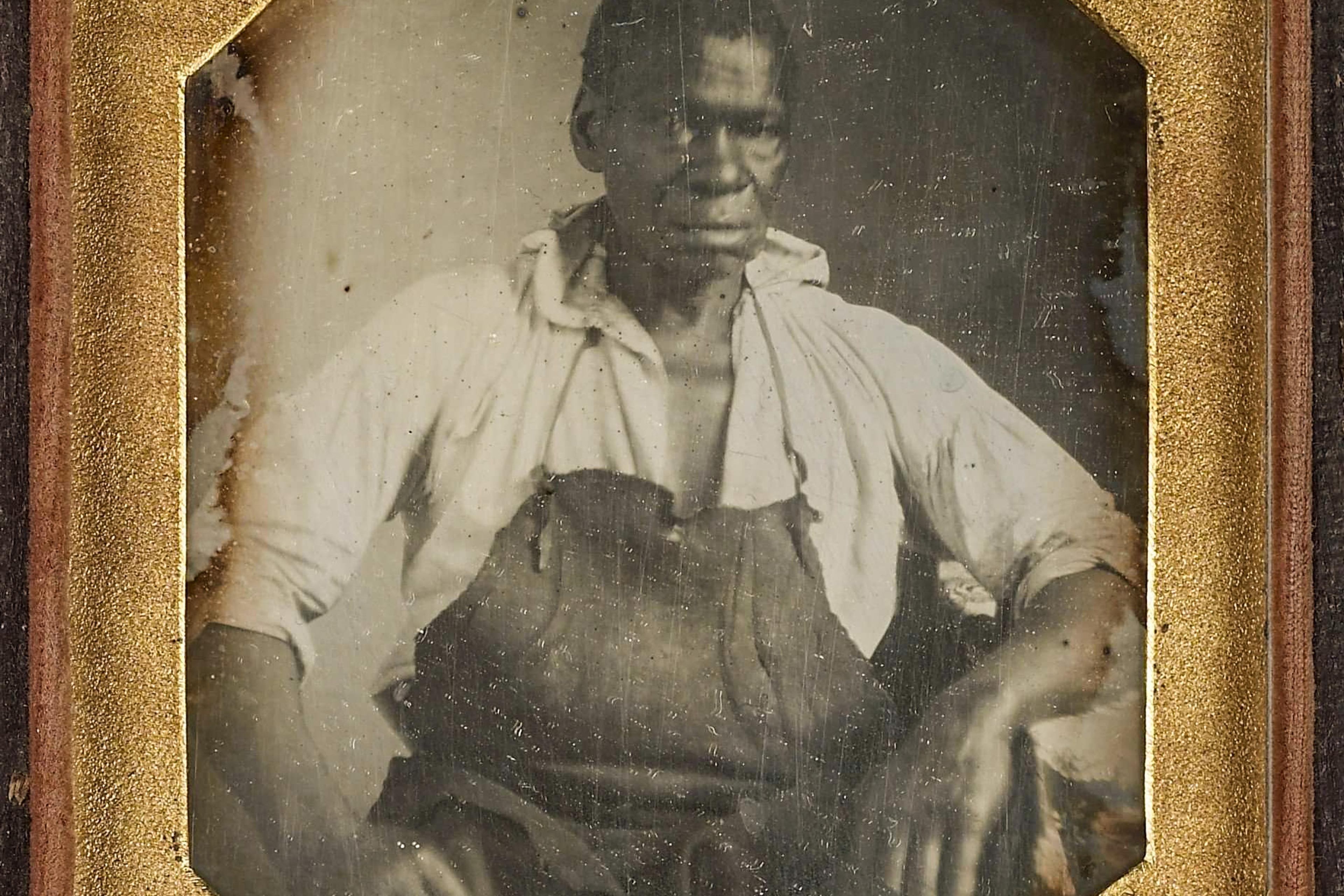
Daguerreotype of a seated man wearing an apron and a partially open shirt framed in a gold mat.

If we’re honest with ourselves, most of us can probably think of something we are doing, or declining to do (or supporting, or buying into) that is likely to strike people of the future as an obvious example of a moral failure. Human choices are sometimes badly at odds with human ideals and, in many cases, that seems to become clearer to everyone in the rearview mirror.

I got a fresh reminder of this while recently watching the PBS documentary series The American Revolution (2025). If you know anything about that revolution, it’s hard to miss the disconnect between its lauded ideals – including the assertion, in the Declaration of Independence, that ‘all men are created equal’ – and the slavery upheld by many of the nation’s founders.

The documentary also highlights a less-known detail about the Declaration. In a draft of the colonies’ complaints against the British crown, Thomas Jefferson, himself an ‘owner’ of people, blamed the king for the Atlantic slave trade and, incongruously, called it a ‘cruel war against human nature itself’.

What’s stuck with me in particular is the way the historian Annette Gordon-Reed then sums up Jefferson’s relationship to slavery. ‘From the beginning to the end, this institution bounded his life, even though he knew it was wrong,’ she says. ‘How could you know something is wrong and still do it? Well, that is the human question for all of us.’

For me, her remark is an invitation to reflect. Hopefully, for most of us, our current behaviours don’t include anything that will be as terrible to our descendants as enslavement is to us. But the excuses we might give for acting or not acting now are likely to seem much thinner to someone living 250 years from now. And that, I think, casts a brighter light on our choices.

by Matt Huston

FIND OUT MORE

In her article ‘Whose Independence?’ (2025) for The Atlantic, Annette Gordon-Reed tells the story of African American writers who, going back to the revolutionary era, challenged their country to recognise the implications of its own stated ideals.

The Aeon Essay ‘Moral Progress Is Annoying’ (2024) by Daniel Kelly and Evan Westra explores why even positive changes in moral standards often cause irritation and dismissiveness at first.


NOTE TO SELFEMOTION REGULATION

Finding solace in Murderbot

Listen to this article

A person wearing a futuristic robotic suit walking through a lush green forest.

A science fiction fan in my teens, I recently decided to dip my toes in the genre again. When I asked Claude for recommendations, it suggested the Murderbot Diaries (2017-), a book series by Martha Wells, about a half-robot, half-human ‘construct’ with a rich emotional life (maybe Claude was dropping me a hint?)

Murderbot is designed to be a SecUnit for protecting humans on space missions. It manages to deactivate its ‘governor module’ granting it the ability to make free choices. If you’re interested in the limits and ethics of machine intelligence, you’ll find the series compelling. But that’s not its only appeal, especially if you’re someone with non-optimal levels of angst and self-consciousness.

The novellas are told through the inner monologue of Murderbot. Its wry, detached observations about its own emotional and social discomforts can be hilarious and surprisingly relatable. On occasion, I’ve found myself emulating its narrative style in my own head, and it can be an odd comfort.

For example, you know that panicky feeling when someone expects you to open up? Murderbot describes one such instance in Book 1, All Systems Red: ‘I had cycled out of horrified that they wanted to talk to me about my feelings into grateful that she had ordered them not to.’

Murderbot is effectively modelling how to notice your own inner thoughts and feelings from a distance – similar to how an ACT therapist might coach you in ‘defusion’ with prompts such as: ‘So, what’s your mind telling you now?’

There is an irony in a fictional form of machine intelligence helping us to feel more normal – more human – about our own insecurities. But as Jason Sheehan put it so well in a review for NPR: ‘we are all a little bit Murderbot.’

by Christian Jarrett

FIND OUT MORE

Read an interview with the Murderbot author Martha Wells at Scientific American, covering personhood, neurodiversity, and how contemporary forms of AI compare with those depicted in her books.

For a simple way to create psychological distance from your thoughts and feelings, try this simple linguistic trick that was explained in a Psyche Idea by the social psychologist Ariana Orvell.

Explore more

Black and white photo of a spiral pattern resembling a spiral staircase or vortex with concentric circular rings.

Uncertainty isn’t a human flaw, it’s a feature of the world

They bring contrasting perspectives, but a literary scholar and a physicist agree on the wisdom of embracing uncertainty

by Richard C Sha & Nathan Harshman

Photo of an antique celestial globe with brass armillary sphere detailing constellations on a decorative background.

Recognise free will is an illusion and reap the emotional benefits

The idea that all our choices are determined by past events may seem dispiriting – but it can be emotionally liberating

by Francis Merson

Photo of soldiers in camouflage sitting on a rocky terrain at dusk with a smoky horizon and distant lights in the background.
ETHICS

What luck in war reveals about the role of chance in life

From the battlefield to the playing field, don’t overlook the role of luck. It shapes how we judge others, and ourselves

by Andy Owen

Photo of people standing near a large crack in a concrete floor, emphasising the depth and rugged edges of the split.

Allow error into your life and experience the joy of surprise

Neuroscience theories see the human brain as an error-minimising machine. But that overlooks the joy of the unexpected

by Leyla Loued-Khenissi

Photo of a paint colour swatch booklet with various shades of blue, yellow and neutral tones in rectangles.

How to use ‘possibility thinking’

Have you hit an impasse in your personal or professional life? Answer these questions to open your mind to what’s possible

by Constance de Saint Laurent & Vlad Glăveanu

Vintage photo of a group of women in white dresses lounging outdoors on the grass, with trees in the background.

In a journey through time I’ve seen the past imprinted on the present

Memory allows us to break free from chronological time, to extend ourselves beyond a single life to embrace earlier generations

by Vicky Grut

A dimly lit street with parked cars at night. A building has a large, vertical “HOTEL” sign illuminated.

For maximisers, bad choices really sting

We all make wrong decisions, but if you’re a ‘maximiser’ rather than a ‘satisficer’, the regret hurts all the more

by Richard Fisher

Long-exposure photo of a road at night with blurry, colourful light trails from car headlights and taillights against a dark background.

Self out of joint

Sudden amnesia untethered me from my past. Was I the same person or had I become someone else?

by Steven Hales